

Francis George Gasden Shorley, known as George, was born on the 22 January 1883 at Higham Ferrers. He was the son of Francis and Annie Shorley and was one of 11 children. The Shorley family moved to 202 Wellingborough Road, Rushden and from there George attended the Moor Road School. He transferred to Alfred Street Junior School on 30 June, 1891and left on 24 January, 1896 to work in the shoe trade. According to the 1901 census George was working as a shoe rivetter, no doubt in one of Rushden’s many boot and shoe factories
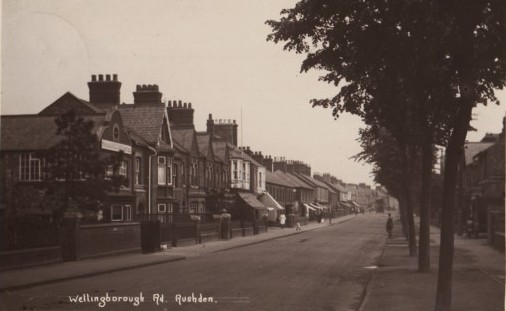
202 Wellingborough Road is in the row of houses on the left of the picture
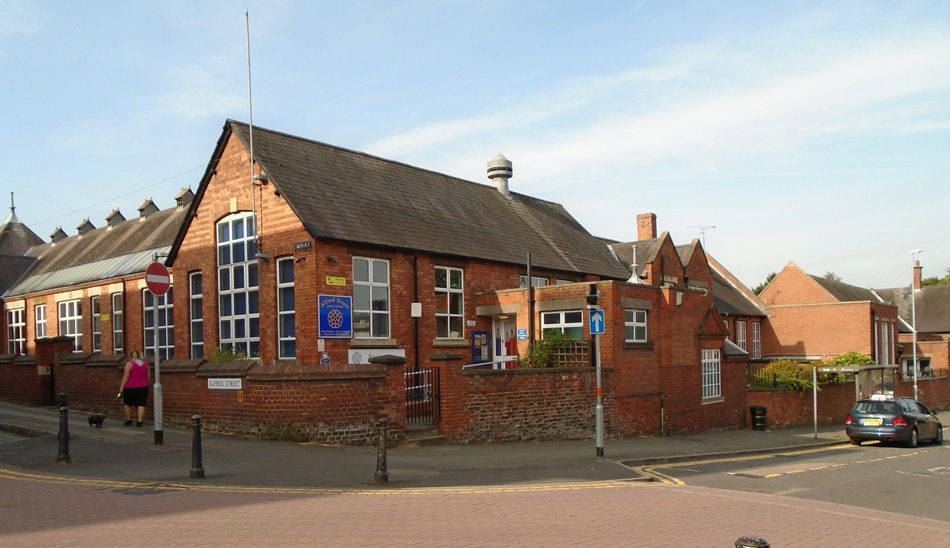
Alfred Street School (now known as Alfred Lord Tennyson School)
By the 1911 census George was living in the Rowton Lodging House in Arlington Road, Camden Town, London and his occupation was given as Bootmaker. These hostels were created by philanthropist Lord Rowton and were intended to provide a cheap accommodation for low-paid working men needing somewhere to live. They were to be better than anything else that was available at the time.
Montagu Corry, 1st Baron Rowton, known as Monty, was born in London on 8 October 1838 and died on 9 November 1903. He served as Private Secretary to Benjamin Disraeli from 1866 until Disraeli’s death in 1881. He was well known for creating the Rowton Lodging Houses.
The architect for the bulk of the houses was Harry Bell Measures FRIBA, who also designed the tube stations for the Central London Railway in 1900.
There was also a Rowton House in Highgate, Birmingham, which opened on 29 June 1903. It was built by the Birmingham Rowton Houses Ltd, from the designs and under the supervision of Harry Bell Measures.

Lord Rowton
The first Rowton House was built at Vauxhall and opened in December 1892. The Camden Town Rowton House was the sixth to be built and opened on 7 December 1905 providing 1103 beds.
The ground floor and basement contained the entrance hallway, dining room, smoking lounge, reading room, washrooms, barber’s shop, shoemaker’s and tailor’s rooms, clothes and boot cleaning rooms, parcels room etc. The upper floors contained large numbers of private cubicles each of which contained a bed, chair, shelf, and a chamber pot. A basic cubicle cost 6d per day and there was no access during the day. The Camden Town Rowton also offered special bedrooms at 6s per week, which were larger than the basic cubicle and had more furniture.
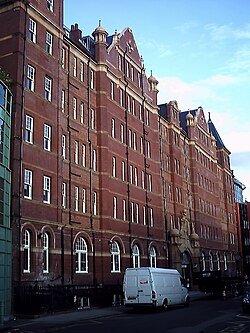
Now called Arlington House and is converted into luxury apartments
During World War I George was in the 13th London Regiment. In August 1917, Mrs. Sibley, secretary of the Wellingborough Road Roll of Honour, received a batch of letters from men whose names appeared on the list acknowledging the gift sent to them. Among them was a letter from George Shorley in which he said: “I sincerely hope we may soon all find our way back to good old Rushden.”
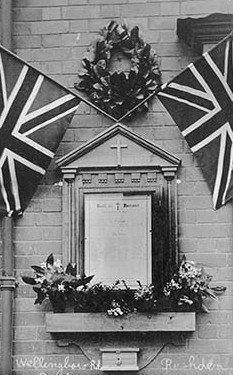
The Wellingborough Road Shrine
Sadly, in December 1917 George’s parents received the news that their son had been killed in action on 27 November. He was 34 years old and had been in France about 18 months. He is commemorated on Cambrai Memorial, Louveral. Panel 11, and on Rushden War Memorial.
The War Diary for the London Regiment (Kensingtons) 1/13th Battalion for 27 November 1917, records :-
After continuous shelling by enemy during the morning, at 3 p.m. the enemy put down a heavy barrage on the whole of the Brigade front until 4.20 p.m. Under protection of this barrage the enemy delivered an attack on our Bombing Blocks which was repulsed by ourselves and the RANGERS.
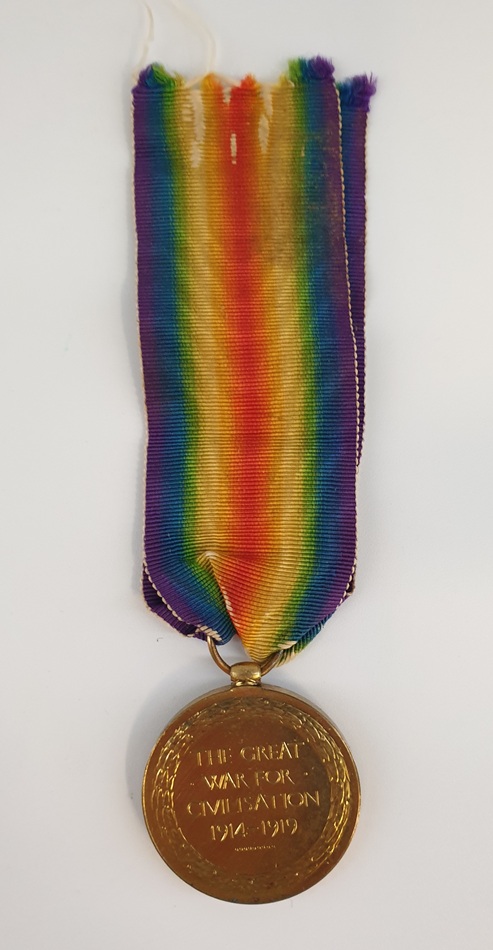

The Great War for Civilisation 1914-1919 medal awarded to 4905/491957 Pte. Francis G. G. Shorley which has recently been donated to Rushden Museum.