

Life in Rushden in July 1925 started with a report in the Rushden Echo of a fire at the National Provincial Bank in High Street. The premises had been extensively improved and redecorated, and the family had just moved back in, although they were not at home when the fire started. Fortunately, Miss Joan Heygate, daughter of the manager Mr. F. L. Heygate, returned to the premises with her friend, Mr. Arthur Knight, at about 7.30 pm, and discovered the fire. At the same time Mr. W. Neville, tobacconist, noticed smoke coming from a high window, and both he and Mr. Knight gave the alarm at the Rushden Fire Station.

Rushden Fire Station in Newton Road
Second Officer W. Packwood, with fireman Tear, drove the tender to High Street where a good supply of water was obtained direct from the main. New gas masks, recently purchased as necessary equipment for the Brigade were brought into use for the first time. The fire had started above the ground floor and was rapidly spreading upwards and outwards into the rooms but was clear of the business premises. The firemen were able to prevent the fire from spreading to the roof and other buildings, but the unsparing use of the water meant that the rooms were water logged with a flood several inches deep. Eventually a cut had to be made to allow the water down into the public area of the building and from there out into the street.
Considerable damage was done to clothing, bedding and furniture, with the estimated cost of once again restoring the bank premises to be over £1,000.
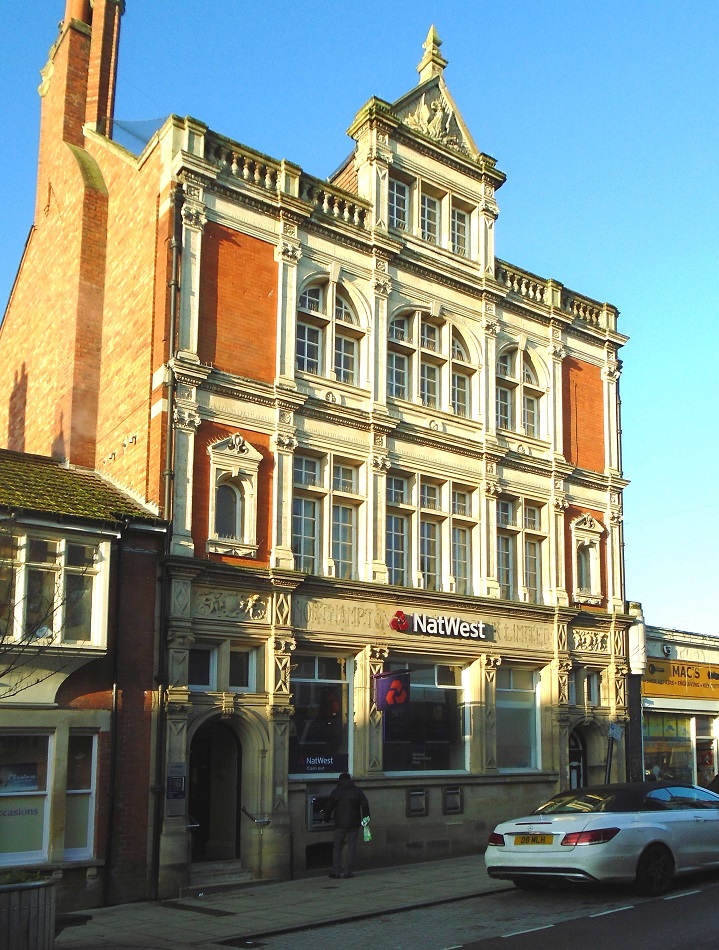
The National Provincial Bank, later Nat West
Although the Rushden Fire Brigade had used a considerable amount of water extinguishing the fire at the National Provincial Bank, the Rushden Echo was able to report that the effect of the drought so far on the local water supply was practically negligible. The water level at Sywell had fallen about a foot. In the drought of 1921 it fell 2ft. 2in.

Sywell Reservoir
At the Council Meeting held on the 8 July 1925, it was decided that the new street off Higham Road was to be called Prospect Avenue. It was reported that a letter had been received from the County Surveyor stating that the Roads and Bridges Committee had approved the council’s estimates for the maintenance of the Main Roads in this district for the year 1925-1926 amounting to £2,567 2s. 6d.
In May 1925 the council had written to the Postmaster General requesting a sub post office in the south end of Rushden. A letter from the Postmaster General, dated 23 June, had been received in which he stated that there had been no material change in the circumstances since the matter was last under consideration, and he therefore regretted that he was unable to accede to the application.
At the same council meeting there were complaints from Councillor Knight about the state of the High Street on Sunday mornings. He thought it was “the untidiest street in England” whereas it used to be “the tidiest street in England.” The Surveyor, Mr. Madin, pointed out that two men were employed at 6am on Sundays to clear from the Green to the Railway Bridge, and thought perhaps paper had blown from the side streets. Newspapers and fish and chip bags were being thrown down in the street, but it was decided that until the council provided bins they were partly at fault. The matter was referred to the Highways Committee.
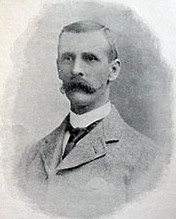
Councillor Fred Knight
On the 17 July the Rushden Echo reported a gas explosion which occurred the previous Sunday lunch time at 116 Wellingborough Road. Residents in the area heard a loud explosion and the sound of breaking glass when the gas oven in the home of Mr. and Mrs. Sibley exploded. Mrs. Sibley had just put a shilling in the meter and as she returned to the kitchen the explosion occurred and she was thrown back through the door. Fortunately it was found that no serious damage had been done, and only one pane of glass was broken. The dinner was ruined but the explosion shook all the soot down the living room chimney so the chimney sweep wouldn’t be needed for some time. Mrs. Sibley had a slight burn on her arm but was otherwise unhurt.
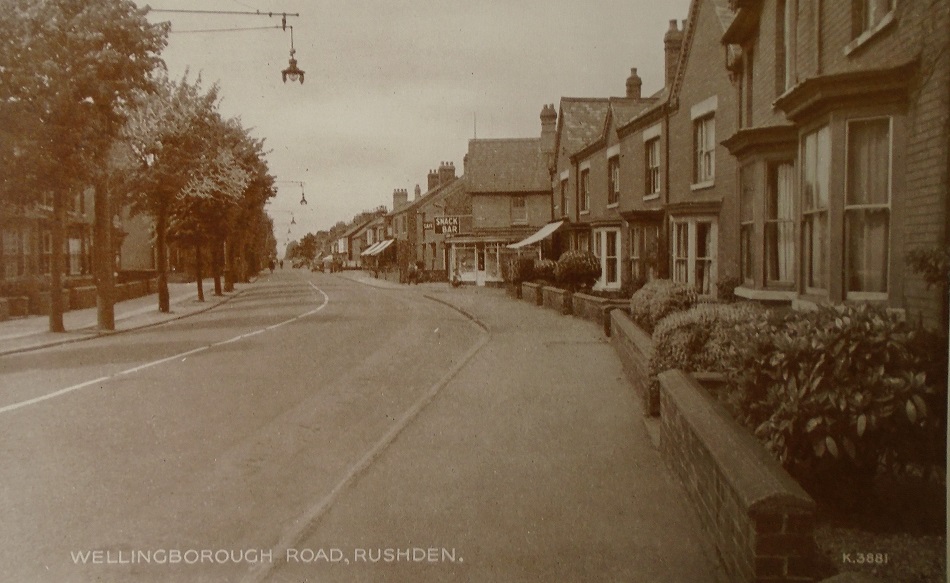
Wellingborough Road, Rushden with No. 116 in the row of houses on the right of the picture
It had been decided that the new school in Hay Way was to be called Rushden Intermediate School, and on the 24 July the Rushden Echo reported that good progress was being made with the provision of the school. The Education Committee had met with the Headmasters in the town to discuss the question of the transfer of the children to the Intermediate School. The children who had gained promotion marks in 1924 and 1925 would be admitted, leaving places to be filled by other scholars. There would be a written exam followed by an oral examination and the best scholars would be chosen for the Intermediate School.
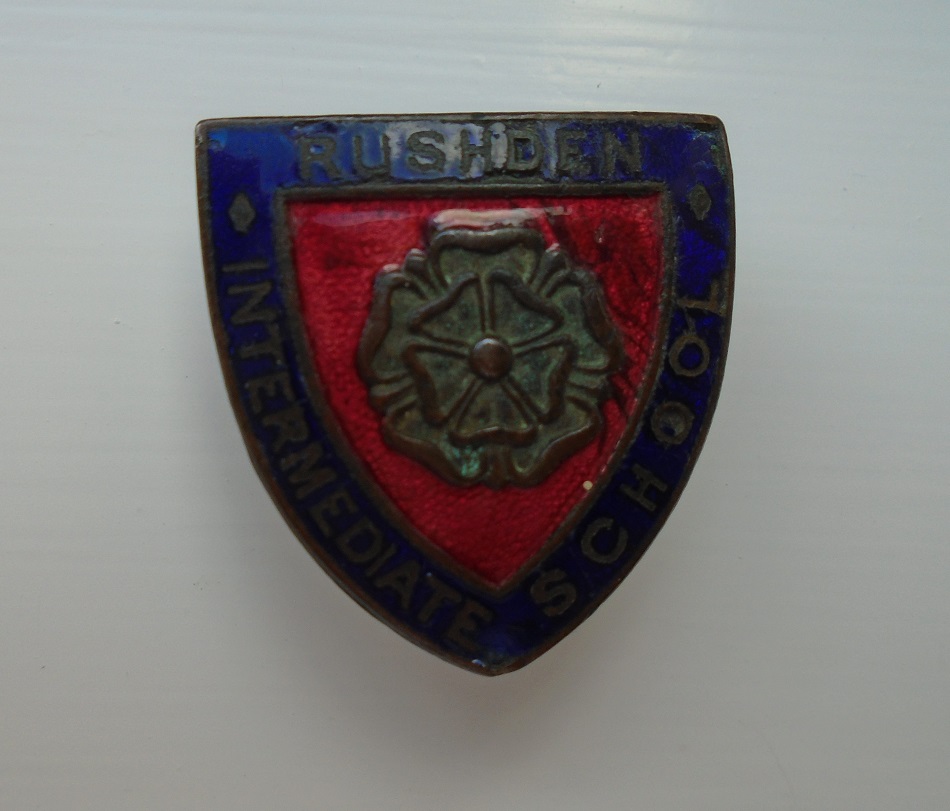
Rushden Intermediate School Badge
With regard to the children to be transferred from the North End Mixed Schools it was suggested that a letter be sent to the parents asking them which other school they would prefer the children to attend, pointing out that accommodation was limited and therefore they could not guarantee they would get the school of their choice. Does that sound familiar?