
In June 1935 the Rushden Echo and Argus reported that the miniature portrait, from the collection of the late J. Pierpont Morgan, and thought to be of Mrs. Pemberton, was to be sold in London and was expected to make £3,000. The portrait was painted by Hans Holbein the younger during the reign of Henry VIII on a circle two inches in diameter which had been cut from a playing card.
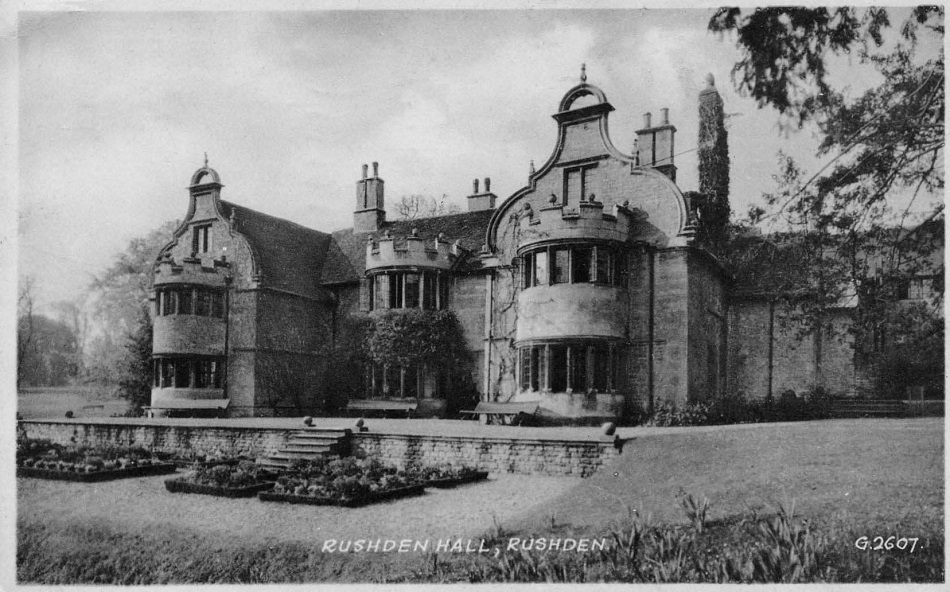
The Pemberton family occupied Rushden Hall from 1461 to 1641, and the portrait was thought to be that of Mary, wife of Robert Pemberton, commemorated in St. Mary’s Church, Rushden.

The Pemberton statues in St. Mary’s Church, Rushden
The following week it was reported that the miniature had been sold “for the enormous price of £6,195 (5,900 guineas)” at Christie’s in London to Lord Duveen. It had previously been sold in 1904 for around £2,800.
Following the sale the National Art Collection Fund asked Lord Duveen how much he would sell the miniature for and he agreed to sell at the price he had paid. Viscount Bearsted subscribed £1,000 and with other money available the committee was able to buy the tiny portrait.
A few days later the miniature was on view at the Victoria and Albert Museum where it still remains.

The miniature portrait of Jane Small (nee Pemberton) now in the Victoria and Albert Museum

The reverse of the miniature showing the Pemberton arms quartering with another.

The Pemberton Arms
It has since been established by the Victoria and Albert Museum that the portrait is that of Mrs. Jane Small, nee Pemberton. Mr. Small was a merchant of some importance in London and they were near neighbours of Hans Holbein which probably explains how the miniature came to be painted.
Jane Pemberton was the God-daughter of Thomas Pemberton of Rushden, and in his will dated 1542 was left his “beads of corall and sylver.”