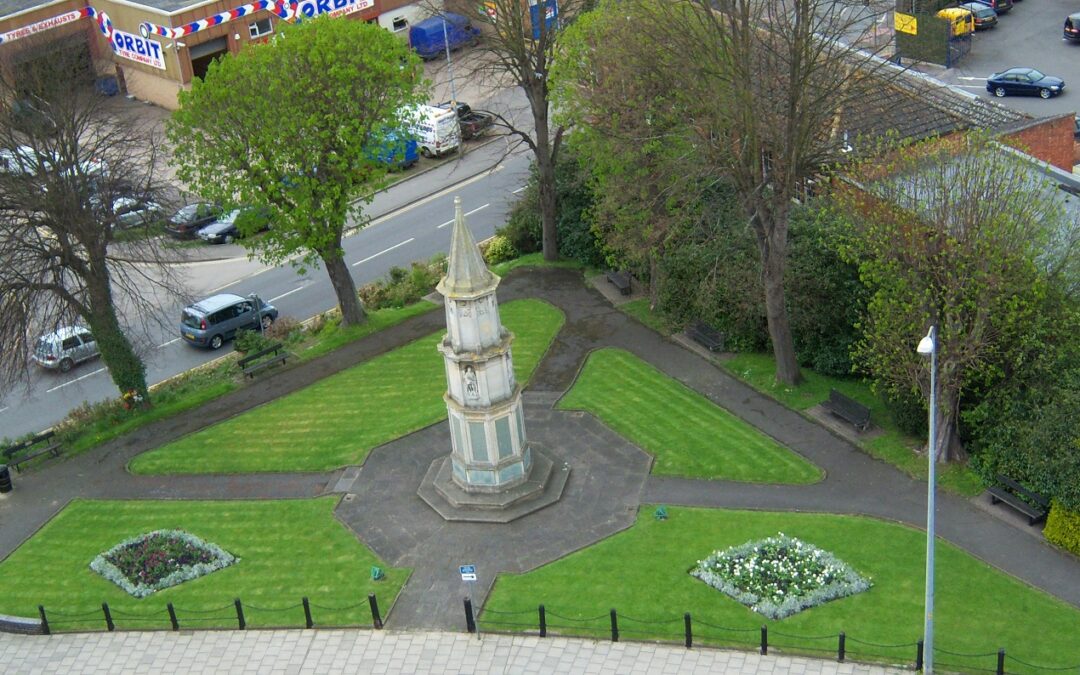
There are 420 men named on the Rushden War Memorial for WWI, but besides those there are others whose names, for whatever reason, are not on there. There were also men who died after the war had ended but as a direct result of injuries received. The total must be nearer 450 and out of a population of 15,000 that was a huge loss to the town.
The first Rushden man to be killed in action, on the 28 August, 1914, was Lance Corporal Harry Knight of the Household Cavalry 12th Royal Lancers. His parents received news of his death in a letter from Sergeant H. E. Bushill, 12th Lancers. He wrote as follows:-
“It happened the day the 12th Lancers charged and made such havoc of the Germans about the end of August. ‘A’ Squadron (Corporal Knight’s) were the first to oppose the enemy with rifle fire from high ground. We were to engage the enemy thus while other squadrons went round the hill and charged the Germans killing 400 of them. Our casualties were nine killed and eight wounded. In the mean time ‘A’ Squadron kept up a continual fire on the Germans, doing considerable damage. While this occurred your son got hit. We carried him back out of the firing line. The doctor was there shortly afterwards and dressed him, and said he was dangerously wounded. He was then taken, along with others, on the ambulance waggon to a place called Moy, where we had been. There were a lot of wounded Germans, too.”
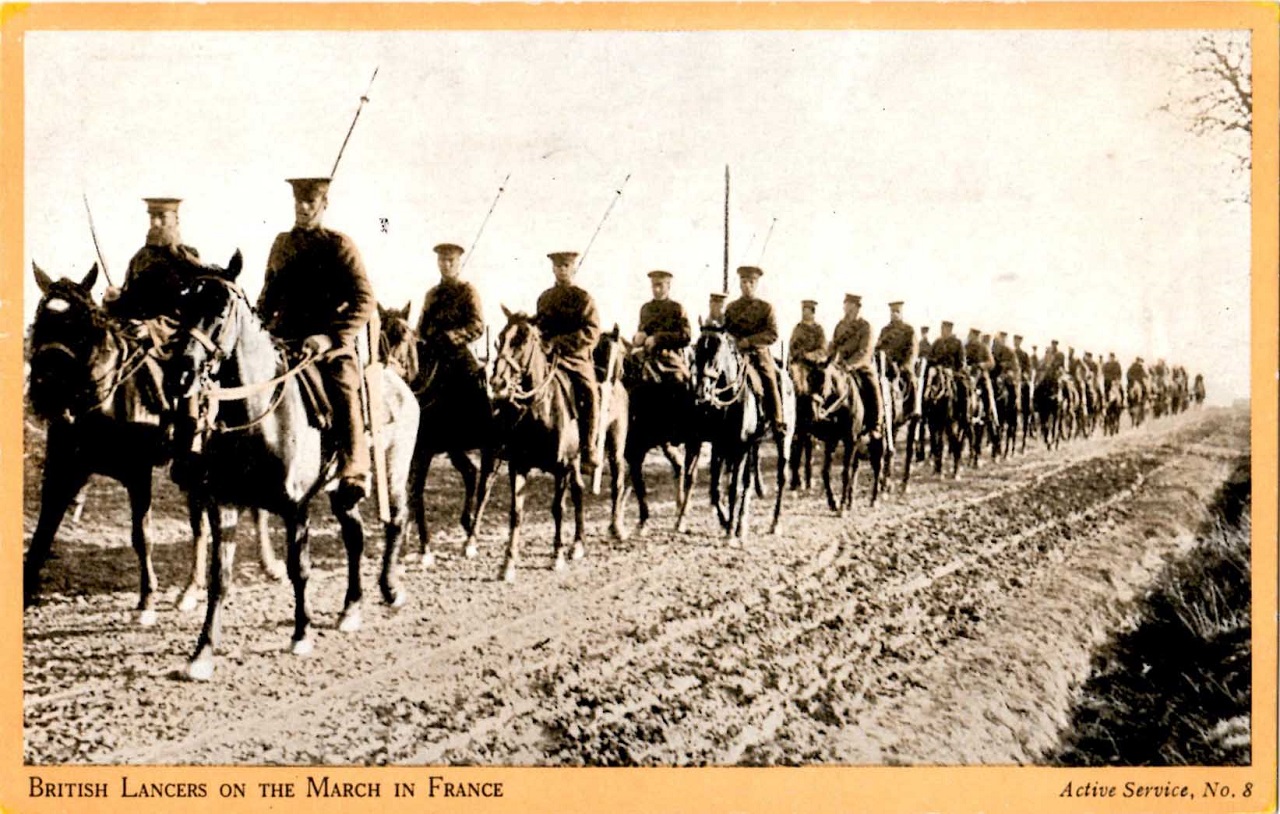
The Lancers on the march in France
L/Corpl. Knight is commemorated in the Chauny Communal Cemetery British Extension, and also in Rushden cemetery.
In September 1914 the Rushden Echo printed extracts from a letter sent by Private Joseph W. Hinde to his parents in North Street, Rushden. In the letter Private Hinde said – “It has been raining for three days straight off. We have an oil sheet, one blanket, an overcoat and what we stand up in. We get wet through and have nothing to change into.”

These medals were awarded to Private Robert William Hinde, younger brother of Joseph
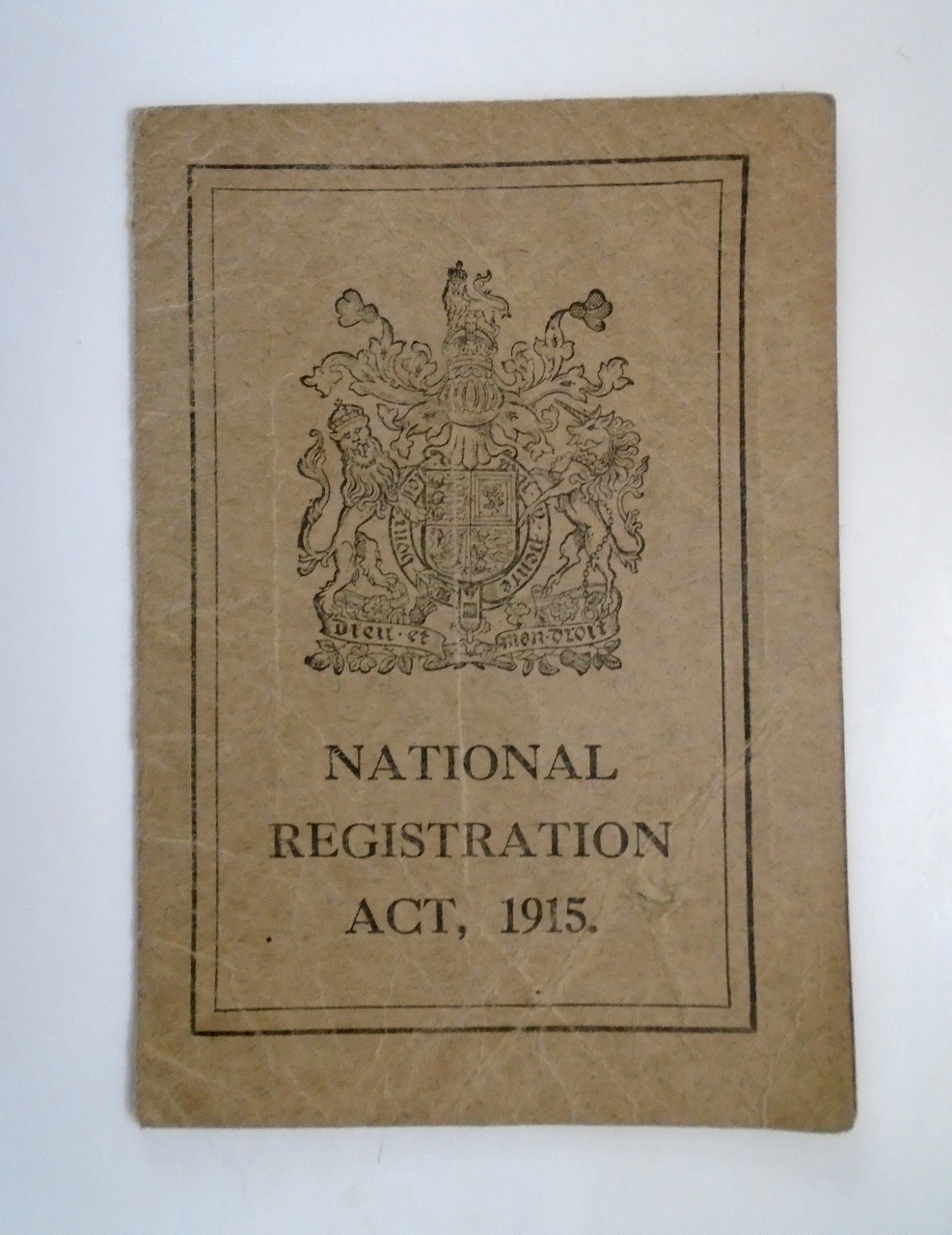
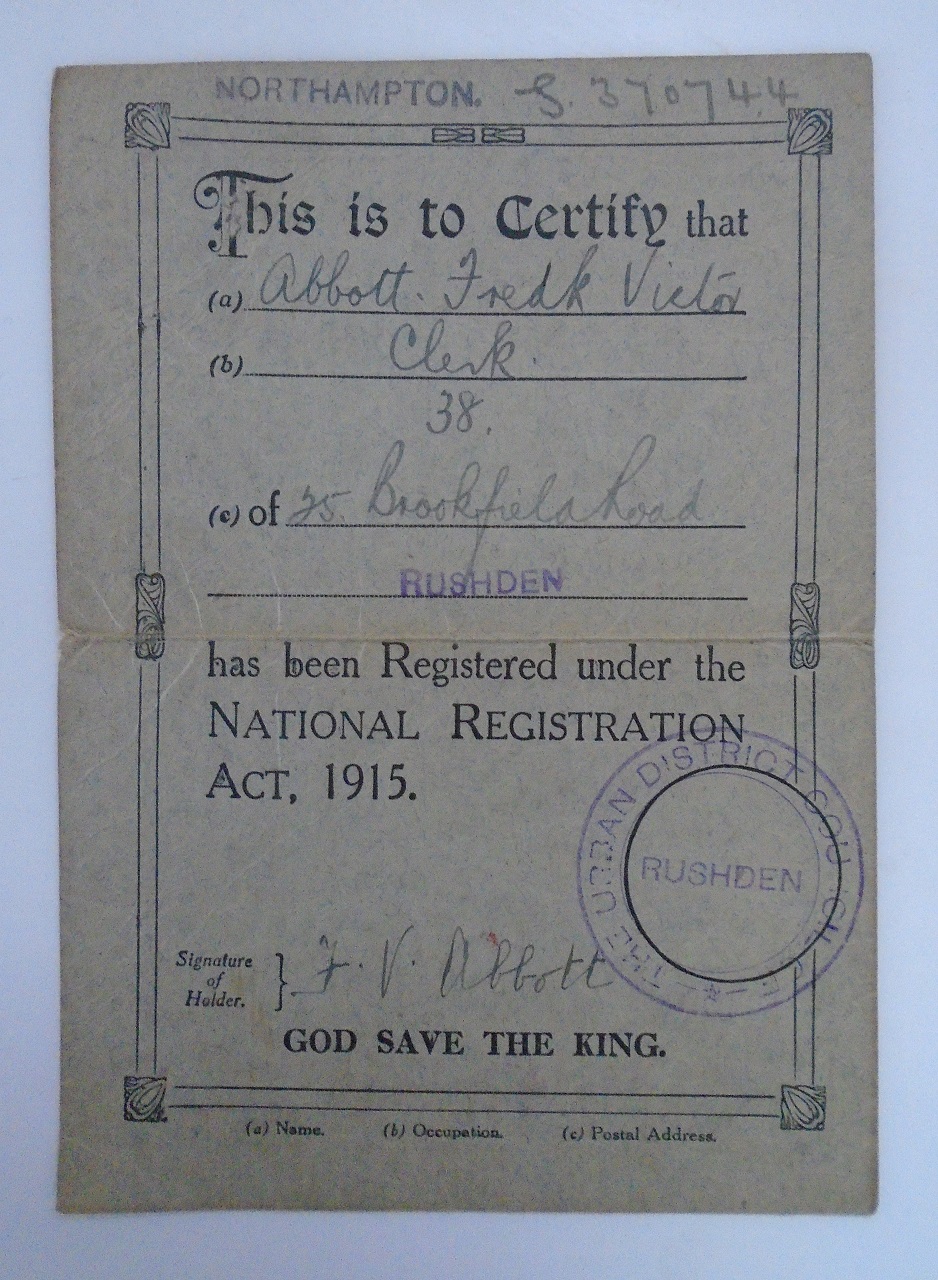
1915 was the year of the National Registration Act when all inhabitants had to be counted. Monday 9 August was the day the work of delivering the forms began. Rushden was divided into 21 registration districts and all enumerators were volunteers, several of them teachers.
There were 10 volunteers covering the nine districts in the northern division of the town, and the 12 districts in the southern division were covered by 12 volunteers. The 21 districts were quite large with some having nearly 200 houses. Only two were found to be uninhabited. The forms had to be ready for collection by Monday 16 August.
By 1916 Conscription had been brought in and Local Tribunals were set up to hear cases appealing for exemption. The five members of the Rushden Tribunal were Mr. T. Swindall, Mr. C. Bates, Mr. F. Knight, Mr. G. Miller and Mr. C. Cross. The Tribunal met in the Council Buildings and was also attended by the hon. Clerk, Mr. G. S. Mason, Mr. John Mason, the military representative, and Mr. Eady Robinson from Higham Ferrers who watched the interests of agriculture.
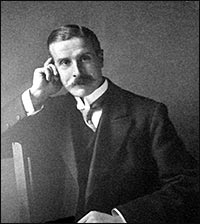
Mr. George Miller
One of the cases heard in 1916 was that of an applicant under the Military Service Act on domestic grounds, his father was blind and an invalid. One brother had been killed and two brothers were now serving. He was the only one left to earn anything.
Mr. John Mason: This is a very hard case indeed.
Six months exemption was granted, the decision being received with applause by the public.
Some cases were easier to decide. A professional sportsman, at that time engaged in a shoe factory, applied for exemption on domestic grounds, stating that he supported his invalid mother. It was held that with the army allowance, and with lodgers she took in, the mother would be none the worse off.
Exemption refused.
At a meeting of the Tribunal at the end of May 1916, 139 cases were heard, mostly from the boot and shoe trade. In view of the Russian Army order, exemption for three months was granted in every case, on the recommendation of the Military Representative, endorsed by the Advisory Committee.
Several cases of one-man businesses came before the Tribunal and, in view of the instructions received from Mr. Long, exemption for two months or more was granted in each case.
The Tribunal in each instance urged the importance of the men joining the Volunteer Training Corps, in order that they might secure some military training.
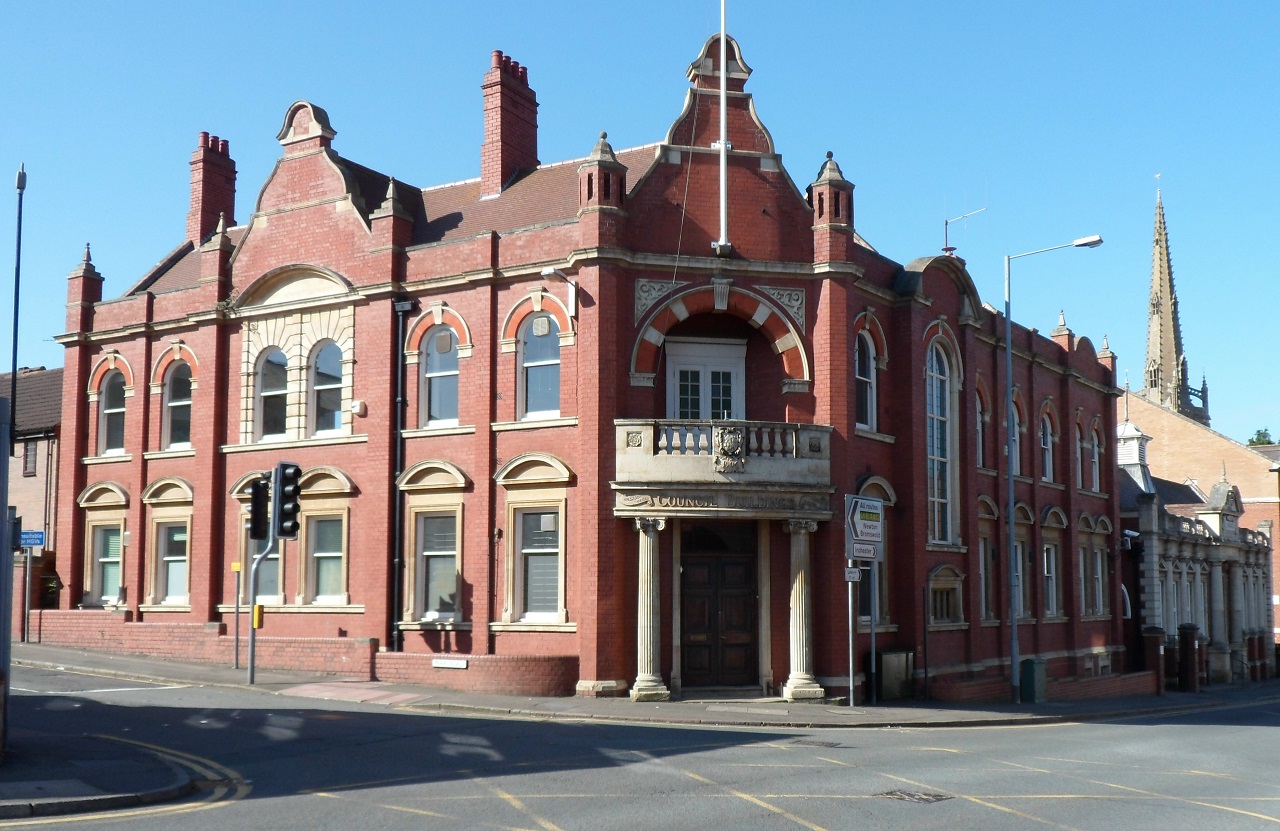
The Council Buildings where the Tribunal meetings were held
1917 saw the appearance of the Street Shrines in Rushden. These memorials were erected in most of the streets in the town, sometimes several streets combined, and bore the names of the men who were serving their country. The residents of the streets held concerts, whist drives and other events to raise money to send to the men.
On the 11 May 1917 the Rushden Echo reported that the committee of the Newton Road, Pratt Road and Robinson Road Roll of Honour have sent 3 shillings to each of the 50 lads abroad. This week they are sending 2 shillings each to the 40 or 50 lads who are in training in England. Mrs. L. Perkins, the secretary, received many letters of thanks from the recipients. Among the letters was one from Private S. G. Hardwick, of 25 Pratt Road, with the B.E.F. in France, who wrote: “It is very good of you and the people of your district to get this splendid Roll of Honour, showing us lads that the people at home are still thinking of us, as we think of them.
From Sapper A. Winson, in France: My sincere thanks to you and the committee, and if I get back to Rushden safely I shall make a point of thanking you personally. I am pleased to say I am in the best of health, but I shall be glad when the war is all over. I think we are giving Fritz something to be going on with.
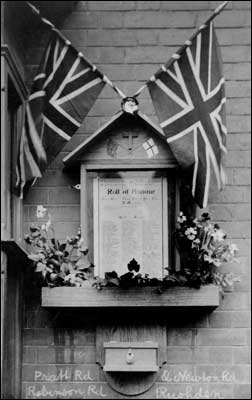
The Street Shrine for Newton Road, Pratt Road and Robinson Road
When the Armistice came Rushden inhabitants celebrated with the rest of the country, but the main peace celebrations were not held until July 1919.
One Rushden man to be killed in action in November 1918 was Frederick Charles Bridgment of the 5th Battalion, Royal Inniskilling Fusiliers, formerly of the Northamptonshire Regiment. He died on November 8, aged 46 years, along with seven other men in the battalion. The battalion were at Copreaux Farm and the war diary for the 11 November states :- 10.00 received message stating Armistice arrangements had been concluded and were to take effect from 11.00. Companies informed no firing after 11.00.
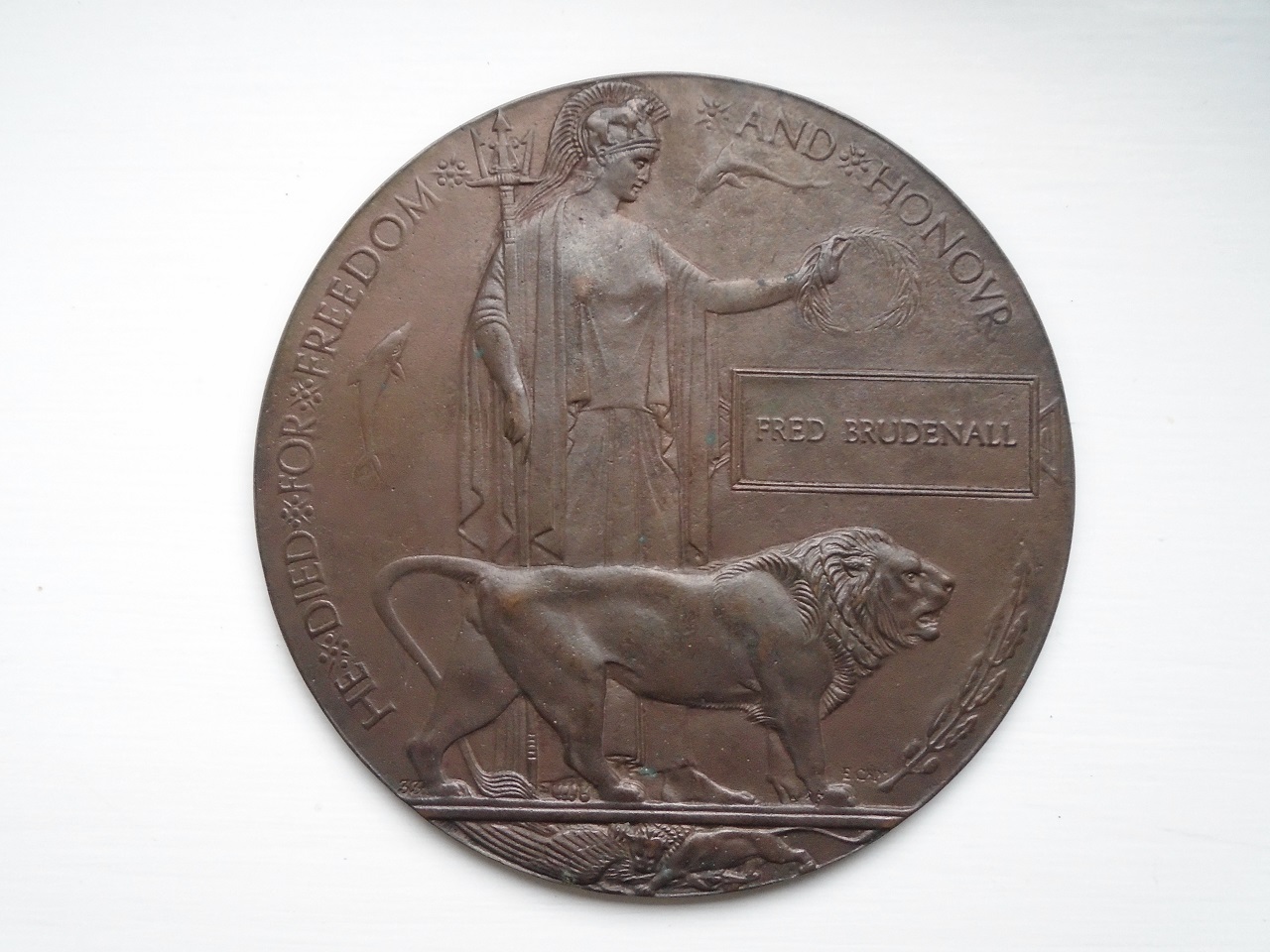
A Dead Man’s Penny. Private Fred Brudenall 20830 of the 6th Battalion Northamptonshire Regiment was killed in action on 19 September, 1918.