

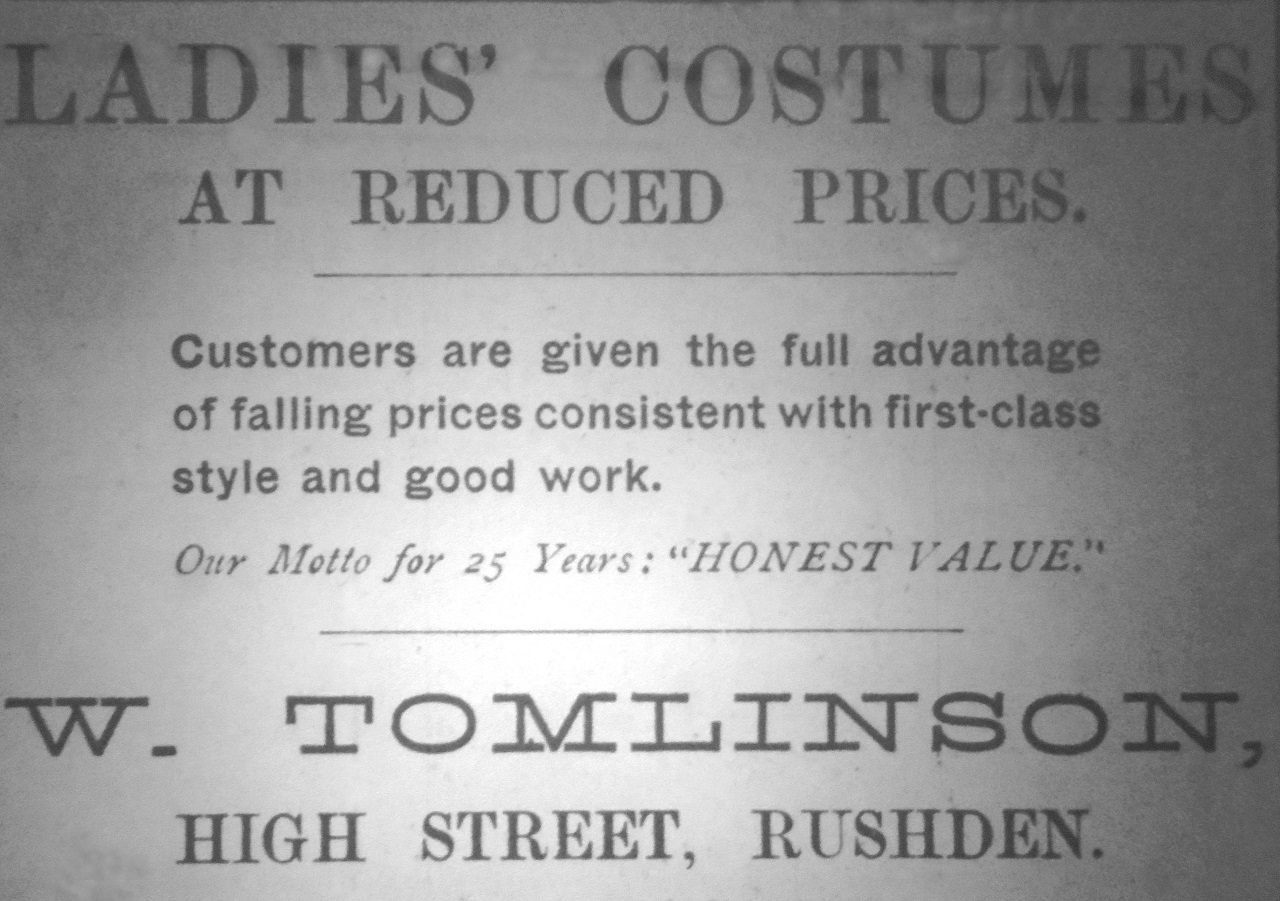
An advert from the Rushden Echo

Tomlinson’s shop was second from the right of this picture but probably not at the time of this postcard
On the 5 August 1921 the Rushden Echo reported one of the most destructive fires in Rushden for many years. It occurred on Saturday 30 July and was at the premises of Messrs. Jaques & Son Ltd., boot and shoe manufacturers, in Station Road. The fire was first noticed by Mr. C. Lawrence, who lived just above the factory, at about 11.15 a.m., and he immediately ran across the road to Messrs. Jaques and Clark’s factory and a telephone message was sent to the Rushden Fire Brigade.
The Fire Brigade, under the direction of Second Officer W. Packwood, were on the scene very quickly with the hose cart and did extremely good work in saving the home of Mr. G. W. Coles, J.P., which was separated from the factory by only a narrow cart road. Some men were able to get into the back of the factory and brought out as much stock as possible.
Unfortunately it was a long time before the Fire Brigade Steamer could get on the scene owing to the loss of time in getting horses to the Fire Station. Had there not been a good pressure of water (from a hydrant in High-street) the fire would have spread much further.
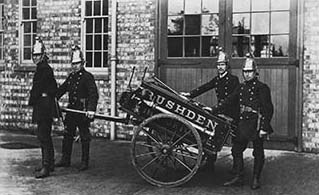
Rushden Firemen with the hose cart
The Brigade toiled ceaselessly for hours around the walls of the factory, and by about 2 pm it was possible,
with the aid of the fire escape, to attach ropes and pull down the loose brickwork. This provided interest for the hundreds of on-lookers (and not a little amusement when a breaking rope caused the firemen, some yards away, to fall into a heap!)
By late afternoon it was possible to enter the remains of the building and open the safes. Fortunately the contents were unharmed and the ledgers etc. were taken to Mr. Jaques’ home.
The damage was covered by insurance but accommodation had to be found for the employees so work could continue.
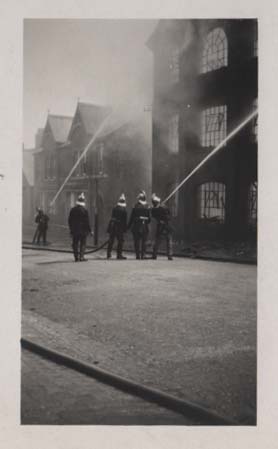
Rushden Firemen in action

The smouldering remains of the factory
Unemployment in the shoe trade was still high and during the previous six months the National Union of Boot and Shoe Operatives had sustained a loss of £38,147 on the general funds due to the large amounts paid out to unemployed members. £76,920 of this was paid from the Trade Fund and £19,685 from the State Unemployment Fund. During the previous twelve months £142,668 had bee paid for out-of-work benefit. Other money paid out included £14,408 in sick and funeral benefits during the previous six months. In the twelve months ending June, 1920, £10,508 was paid out in unemployment benefit, against the present sum of £142,668.

Alfred Sargent’s shoe factory in Portland Road, Rushden, built in 1915
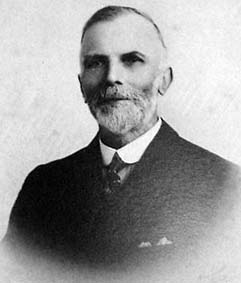
Alfred Sargent, founder of the business
The Rushden Echo reported that a plate glass window measuring about twelve feet by twelve feet, in Mr. Fred Cowley’s shop in the High Street, was smashed into hundreds of pieces by one of a flock of sheep that were passing at the time. The sheep had charged at its own reflection and completely demolished the glass which was nearly half-an-inch thick.
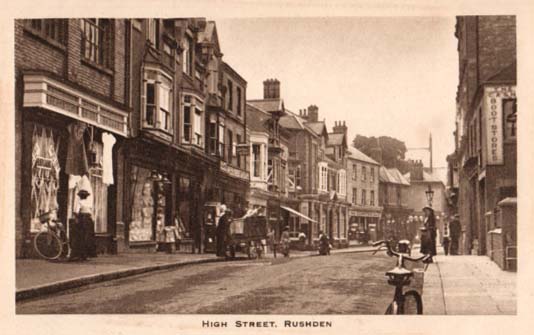
Mr. Fred Cowley’s shop is second from the left of this picture
Rushden’s War Memorial was under construction and at the Council Meeting a discussion arose as to whether the Council should consider the laying out of the Green. The general opinion was that the Council should undertake the work in order to make the ground suitable for the memorial. It was thought that if it stayed as it was children were likely to climb the monument and that it would be a disgrace to the town.
The stall holders who sold their goods on the Green would have to be found another site, and it was suggested they might be allowed in College Street. It was thought that it would be a boon for the town if the rowdy element could be moved from the front of the church and monument, and it would also reduce the amount of traffic. Mr. Knight said that he had a plan in mind and it was left to him to get further information.

Inside St. Mary’s Church, Rushden
The 1921 census showed that the population of Rushden was 13,511, with 531 more females than males. The population in 1911 was 13,354.