
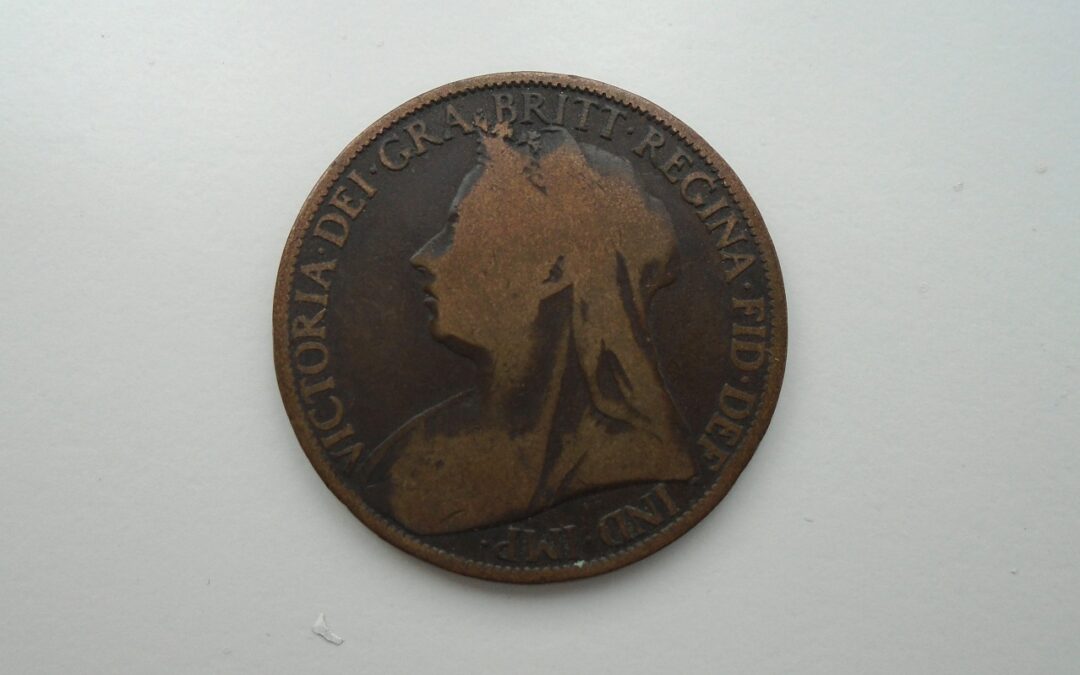
Queen Victoria died on the 22nd January, 1901 and her funeral was held on Saturday, 2 February, in St George’s Chapel, Windsor Castle. After two days of lying-in-state, she was interred beside Prince Albert in the Royal Mausoleum at Frogmore at Windsor Great Park. Rushden mourned along with the rest of the country. Every shop was closed and business was suspended. The minute bell tolled throughout the morning and muffled peals were rung on the church bells at regular intervals.
Memorial services were held at St. Mary’s Church and at the recently opened Independent Wesleyan Church in the High Street.

The interior of St. Mary’s Church. This photograph was taken by Samuel Powell, one of Rushden’s photographers, and is post-dated 1903.

The Independent Wesleyan Church in Rushden High Street.
In the afternoon people began to gather in the High Street. The Temperance Silver Band assembled at the railway bridge with their drums draped in black and each bandsman wearing a black silk scarf over the right shoulder and under the left arm. They marched to St. Mary’s Church playing the ‘Dead March’ under the conductorship of Mr. U. S. Baker.
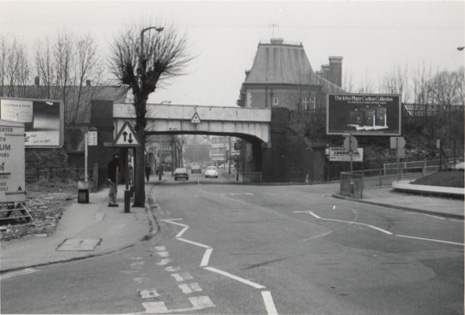
The railway bridge at the end of the High Street
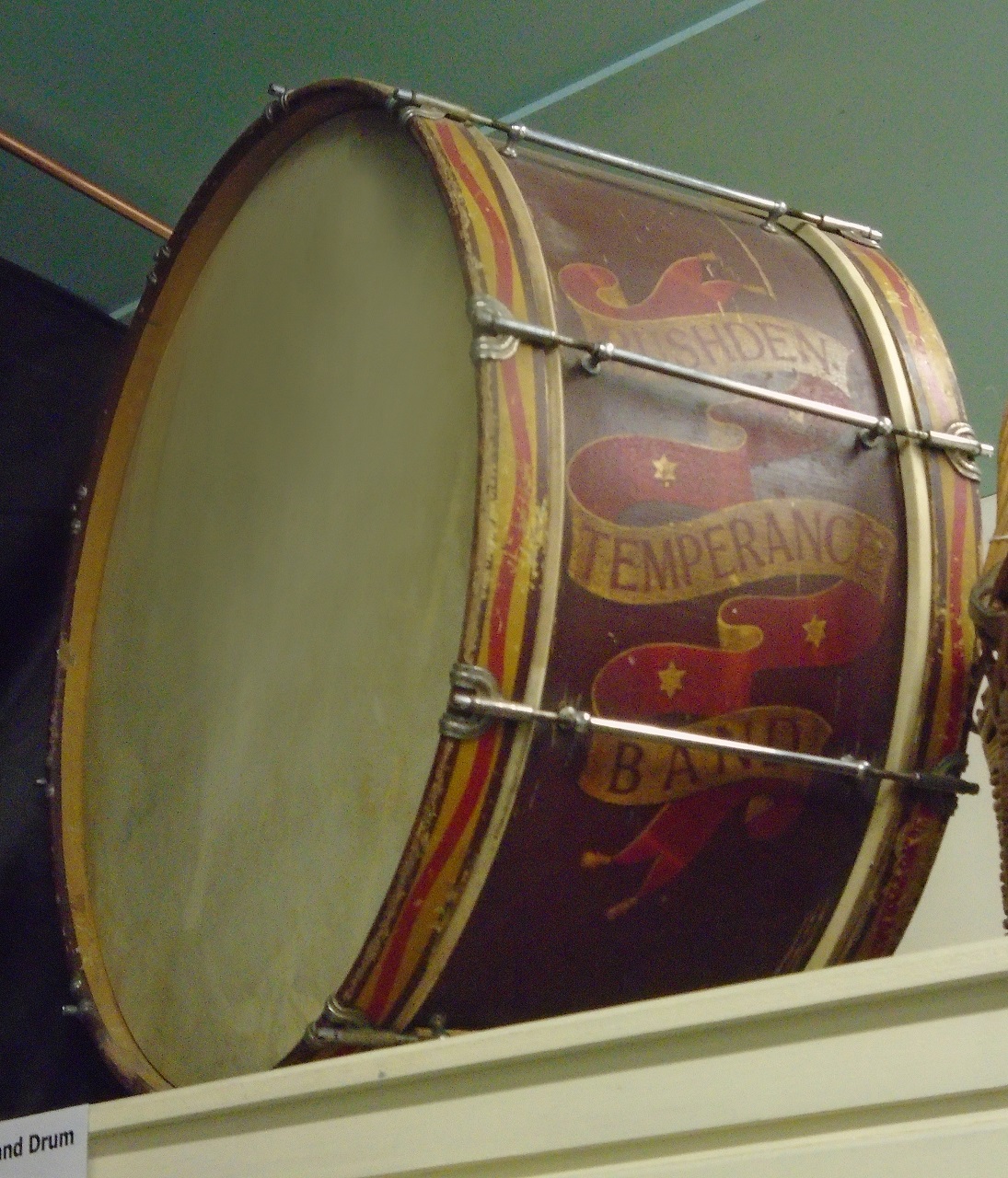
Rushden Temperance Band Drum
The local police force followed under the command of Inspector Onan, each policeman wearing a black arm band. They were followed by the postmen headed by Mr. Charles Hewitt, the postmaster, and were joined by the Rushden Corps of the St. John Ambulance Brigade, under the command of Superintendent Arthur Cave.
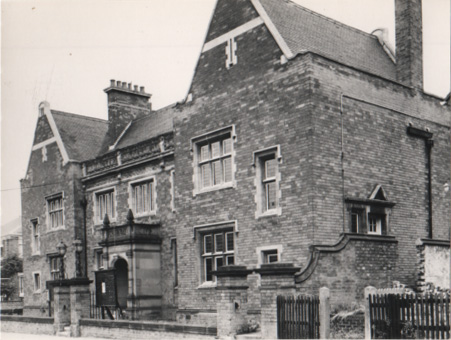
Rushden Police Station opened in 1900
Members of the Urban Council, the School Board, Poor-Law Guardians, and the Fire Brigade attended the service at the Independent Wesleyan Church, the procession from the Vestry Hall being headed by the Mission Silver Band who also played the ‘Dead March.’
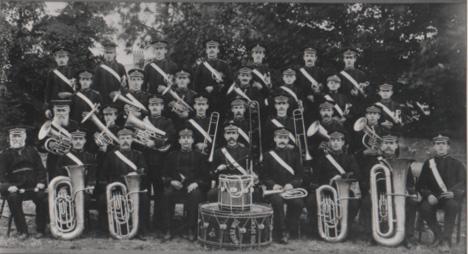
The Mission Silver Band
Queen Victoria’s reign was a long one and in 1897 she celebrated her Diamond Jubilee. Rushden joined in the celebrations with enthusiasm. The Urban Council had requested that premises be decorated and this was eagerly responded to. The High Street was highly decorated with flags and flowers and at night with colourful illuminations.
A large arch was erected at the junction of High Street and Newton Road, designed by Messrs. Preston and Wilson, in the style of a castle gateway. The woodwork was covered with canvas which was then painted, to look like stonework, by Mr. A. T. Nichols. Flags and evergreens were supplied by Mr. Seckington. At night it was illuminated by gas.
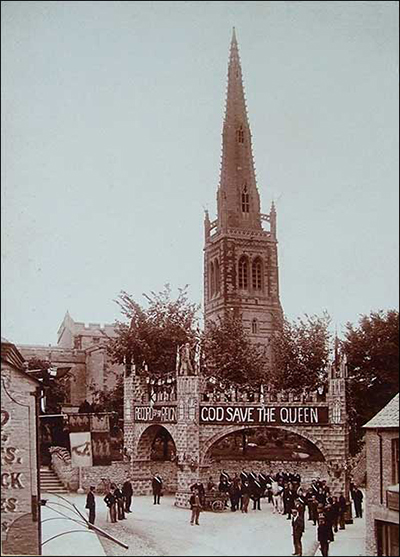
The Jubilee Arch at the junction of High Street and Newton Road
Many streets were adorned with flags and streamers. The gas illuminations in the main streets were lit on three evenings, and it was thought that everyone would feel regret when the town returned to normal.