


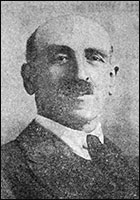
Dr. Baker
The above invoice for Professional Advice, Attendance, and Medicine, dated Midsummer 1920, was sent from Dr. H. Stainer Baker to Mr. Joseph Knight, Irchester Road, Rushden. Dr. Baker was born at Southsea on 25 December, 1864 and came to his first practice in Rushden in 1891 at the age of 27. He became the Medical Officer of Health for Rushden in 1913, succeeding Dr. Morris. In his Medical report for 1920 Dr. Baker expressed his views on the subject of food which he considered were particularly relevant in view of the increased prices.
He suggested that a mixed vegetable and meat diet suited most people best:-
Dried peas, Haricot beans, and lentils contain as much flesh forming material as meat, and are very much cheaper.
Oatmeal is a very rich food, but requires thorough boiling to make it digestible.
Potatoes are best when cooked in the skins, or steamed.
Onions, beetroot, and carrots are more nutritious than cabbages, but greens and fruit are valuable, as they keep the blood in good condition.
Banana, raisins, and dried currants are cheap and nourishing.
Sugar and treacle are useful foods, but jam is not nearly such good value as Margarine or dripping.
Herrings, bloaters, and kippers are most nourishing.
Frozen meat and the cheaper cuts contain as much nourishment as the best meat; excellent stews may be made from them with cheap vegetables.
Fresh foods are better than canned foods.
Dripping and margarine contain as much food value as the best butter; dripping is well worth buying. It is an extremely valuable food for children, who will take it readily with bread or toast or as dripping pudding. Suet pudding should be given to children who dislike fat meat.
Cheese is one of the cheapest and best of foods, and is rich in nourishment.
Cocoa is a food, and is more beneficial than tea or coffee.
Beer and spirits have small food value, and, at the best, are expensive luxuries for anyone in hard times, except under doctor’s orders.
Skimmed milk is a good drink for children, provided some dripping is given as well to supply the fat taken from the milk.
Dr. Baker died in a Nursing Home at Bedford in November 1921 at the age of 56. His successor, as Medical Officer of Health for Rushden, was Dr. O. A. J. N. Muriset, M.B., CH.B., EDIN.
The War Memorial Committee had practically approved the design of the monument to be erected on the Green in Rushden. It was to be four tiers high, rising from a stepped base, with the top tier being spire-shaped. There were to be four panels into which would be cut the names of the men of Rushden who lost their lives during WWI. The Committee were confident that the necessary money would be forthcoming to pay for the memorial, and were certain that the people of the town would approve the design.
It would mean the loss of a chestnut tree, but investigations proved that the tree was ‘standing dangerously’ and part of the trunk had been eaten away. It was agreed that the tree should come down.
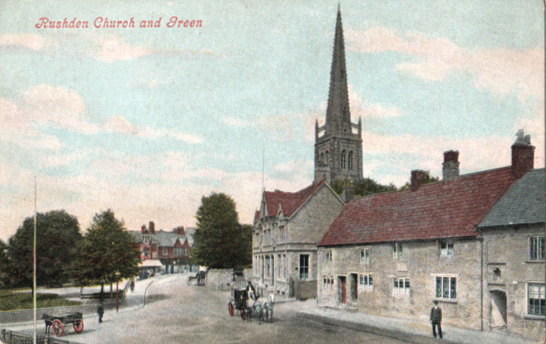
A postcard showing the chestnut trees on the Green.
The Education Committee reported that the quarterly average school attendances were :- Newton-road Mixed – 355.4 – 92.4%; Alfred-street Mixed – 282.3 – 92.9%; North End Mixed – 257.2 – 92.9%; Church of England Mixed – 191.5 – 89.6%; Newton-road Infants – 258.9 – 87.5%; Alfred-street Infants – 157.7 – 87.5%; North End Infants – 119.2 – 91.3%; Moor-road Infants – 150.0 – 88.3%; Church of England Infants – 126.0 – 88.3%.
Mr. Perkins reported that there had been a large increase in the number of students attending the Newton-road evening continuation schools. Several classes which had been suspended owing to the war had now been restarted. He was re-elected headmaster of the evening school for the next session. The appointment of Miss Alice M. Frank at the Moor-road school was also confirmed, and a letter of resignation was received from Miss Edith M. Tall from the Alfred-street school. Other appointments were Miss Lily Wooding to Newton-road Mixed school, Miss Winnie Wooding to Alfred-street Mixed school, and Miss Beryl L. Short, now at Isham and formerly at Irchester, to Alfred-street Infants school.
Schools closed on the 29 July for the summer holidays, to re-open on the 30 August.
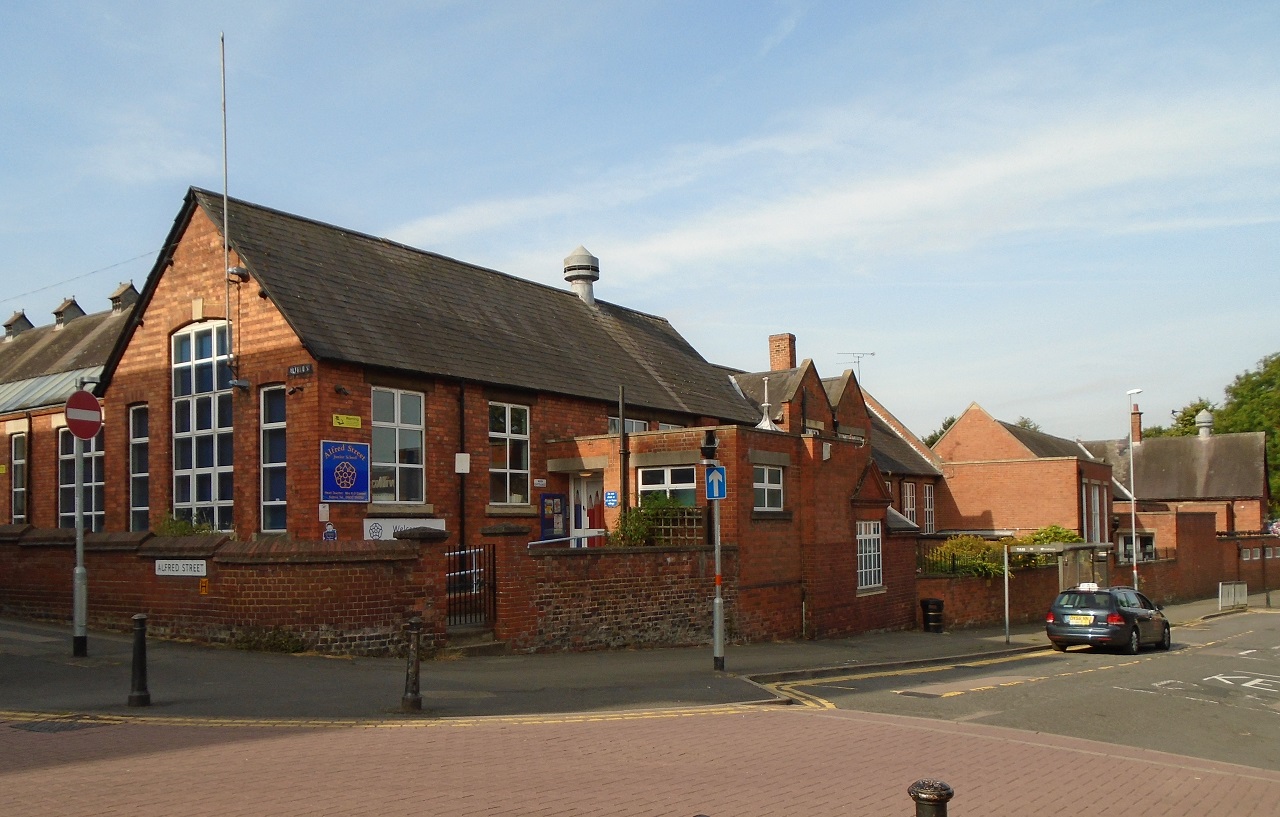
Alfred Street School
At the monthly meeting of the Higham and Rushden Water Board, the Surveyor, Mr. W. B. Madin, reported that the water in the storage reservoir overflowed during June, and in the month 5,588,000 gallons of water passed over the overflow gauge weir. He also reported that the rainfall for the year, at Rushden, was 9.10 inches, and for the month of June at the Bedford Road reservoir it was 1.45 inches.
The quantity of water consumed during the month at Higham Ferrers and Rushden was 9,581,000 gallons, against 8,222,000 gallons for the corresponding month of last year. The daily average was 319,366 gallons, against 274,066 last year.
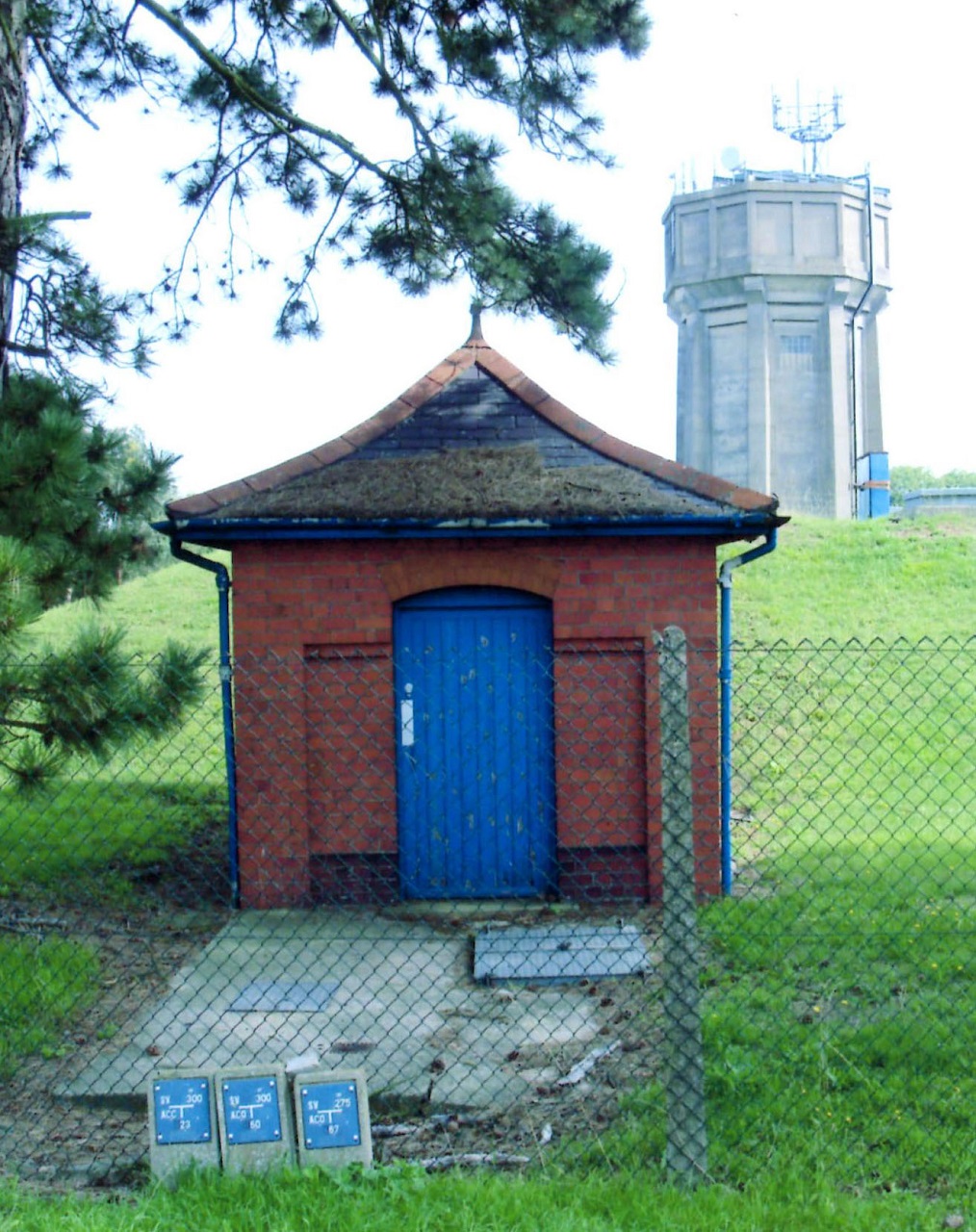
Bedford Road water tower
In 1898 the first Windmill Club was built on the corner of Windmill and Glassbrook Road, opposite the original meeting place. In 1899 a new addition was added at a cost of £850 and two houses were also purchased, Nos. 21 and 23. In July 1920 plans were passed for a further extension.
Also in July 1920 a religious service was held in the Windmill Club concert room to dedicate a memorial to members of the club who had served in the Great War. There were 138 names on the memorial, 16 of whom had fallen. The Roll of Honour was constructed by Messrs. Fattorini & Sons, Ltd., of Bradford, and cost £110.

The old Windmill Club in 2020 looking very sad
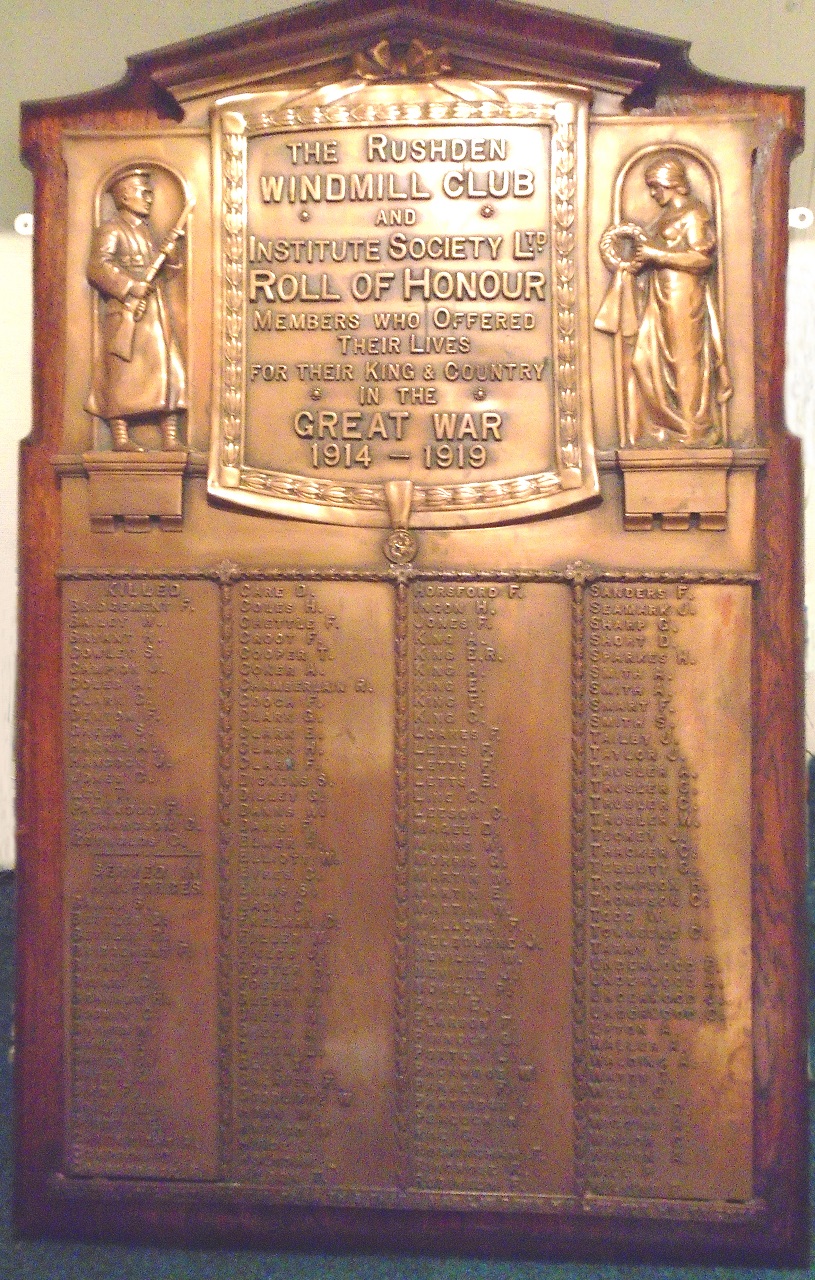
The Windmill Club Roll of Honour now in Rushden Museum
On the 14 July 1920 the Housing Committee of Rushden Council met to consider the question of fixing the rents to be charged for the houses in the course of erection in Trafford Road. Part of the General Housing Memorandum No. 8 allowed Local Authorities to charge initially low rents and to gradually increase them until an economic level was reached. The tenants should be advised that the low rents were a temporary concession due to the present situation.
The Committee had no hesitation in determining that the houses with two bedrooms were not equal either in condition or accommodation to the ordinary house at present existing in the town let at 5/9 per week and the houses with three bedrooms were not equal to those let at 6/6 per week and at these rentals would bear unfavourable comparison with the houses belonging to the Council on the King’s-road. The additions allowed by the Increase of Rent, etc., Acts in the case of existing houses would permit the 5/9 houses to be increased to 7/11 and the 6/6 houses to 9/-, and acting on this basis it was resolved to recommend that the rent of the two bedroom house be fixed at 8/- per week and that of the three bedroom house at 9/6 per week inclusive of rates in both cases, and the Clerk was instructed to submit this decision to the Housing Commissioner.
However, the Housing Commissioner considered that the proposed rents were much too low and suggested that the Council should consider rents of 12/6 per week exclusive for the parlour and three bedroom type house, and 10/- per week exclusive for the non-parlour type.
The committee felt that these rents were exorbitant and would result in the houses standing empty for a considerable portion of each year. The gross rents would amount to 17/- and 13/6 respectively, and were beyond the means of the persons for whom they were intended.

Houses in Trafford Road
In July 1920 Mr. George Barwick, aged 49, a representative of the Free Gardeners, died suddenly after collecting funds along the route of the Friendly Societies’ Parade. He collapsed outside St. Peter’s Church, and despite the efforts of the Rushden Ambulance Division and Dr. Davies, could not be revived. Mr. Barwick, who had lived in Co-operative Row for a number of years, was the son of Joseph Barwick, a watchmaker who was trading in Rushden High Street in 1891. He left the jewellery business and lived in Griffith Street, employing others in a new business as a shoe machine sewer, trading under the name A. E. & G. Barwick (his son George and daughter-in-law Ada E.) By 1918 he was living in Fitzwilliam Street.
In September 1918 Mr. George Barwick’s son, Lance Corporal William Rufus Barwick, of the Field Ambulance, Royal Sussex Regiment, was killed in action in France. Before leaving Rushden he was gardener to the late Mrs. Sartoris, of Rushden Hall.
Below are photographs of two Free Gardeners sashes which belonged to Mr. Charles Watts. These are now in the Rushden Museum.
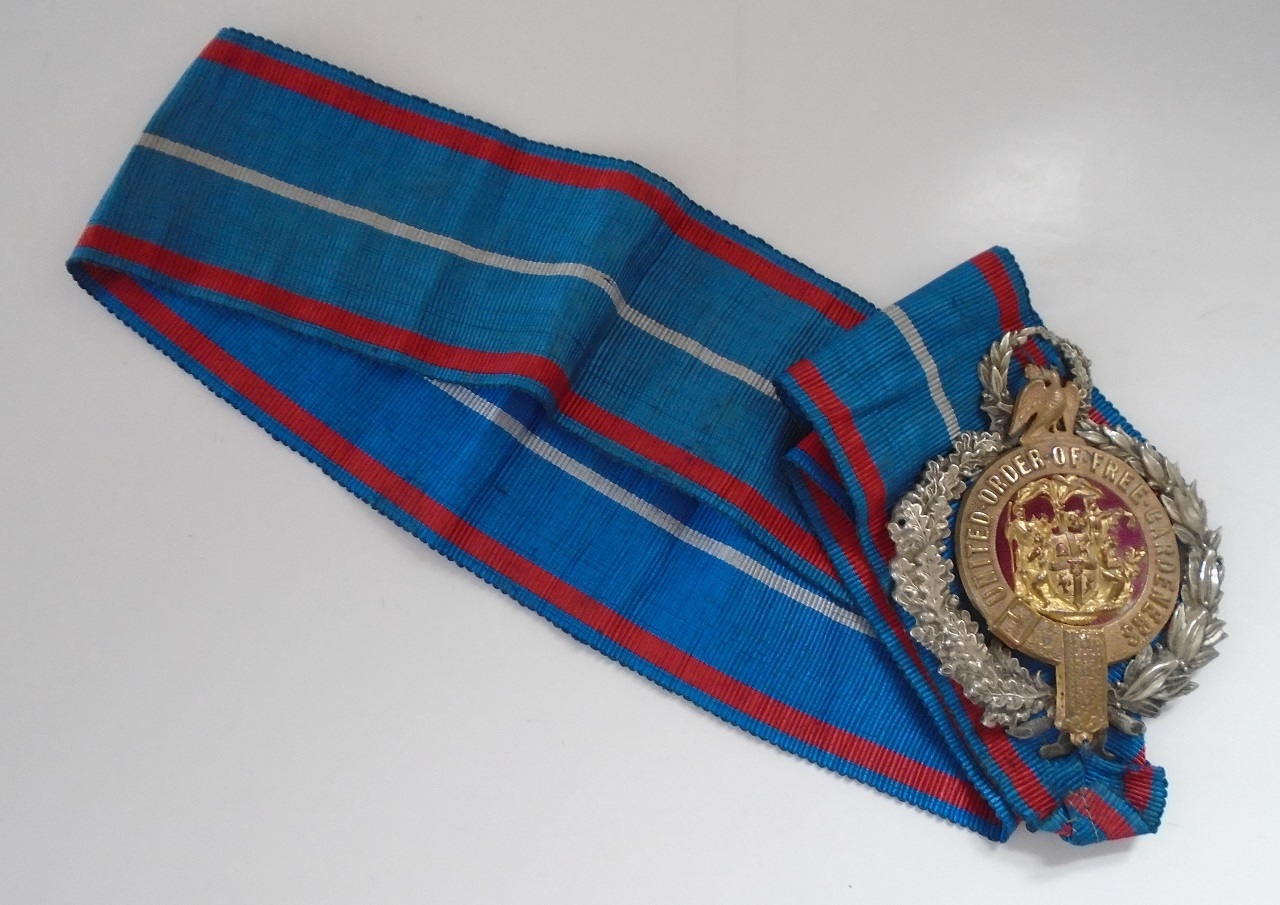
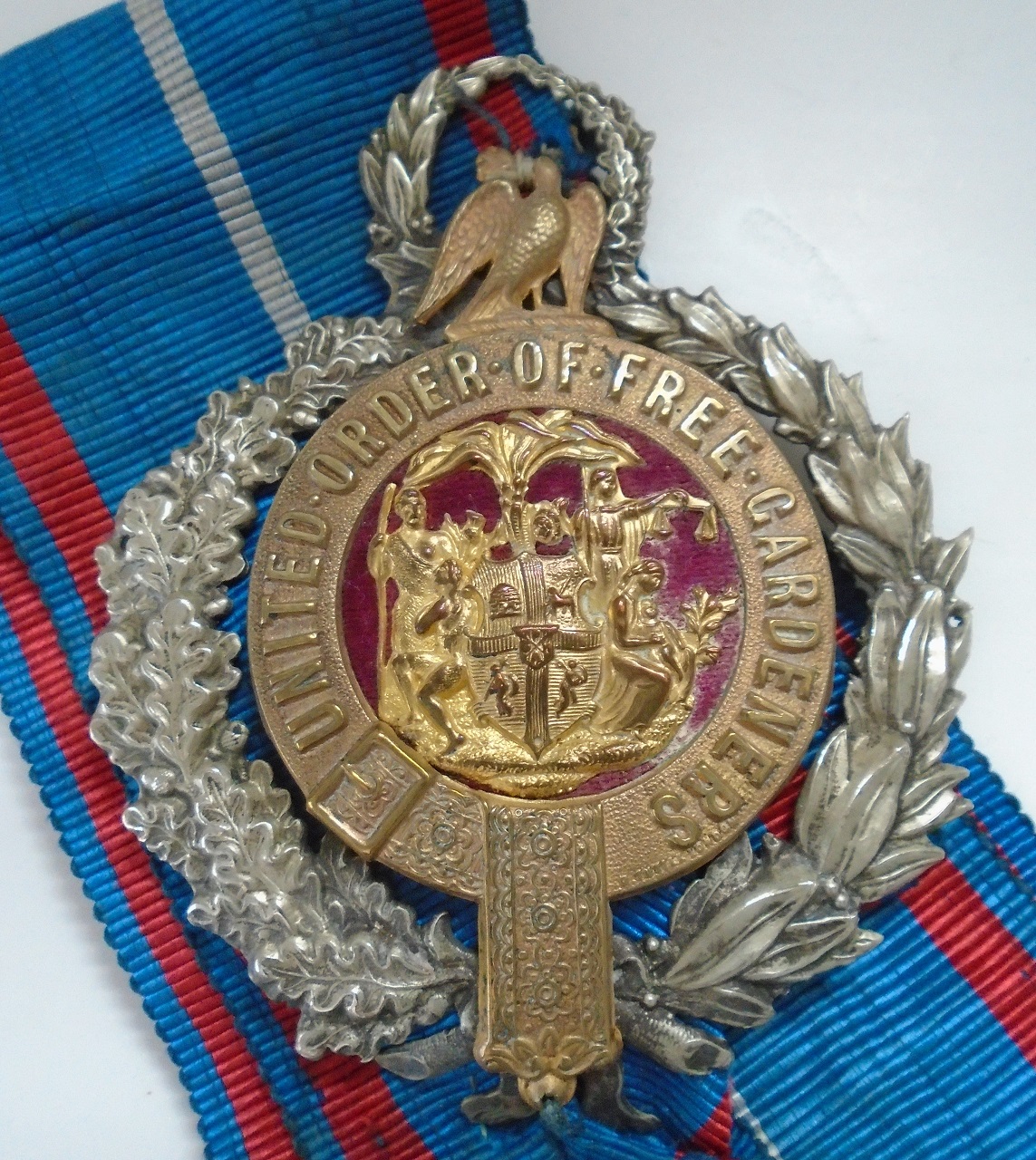

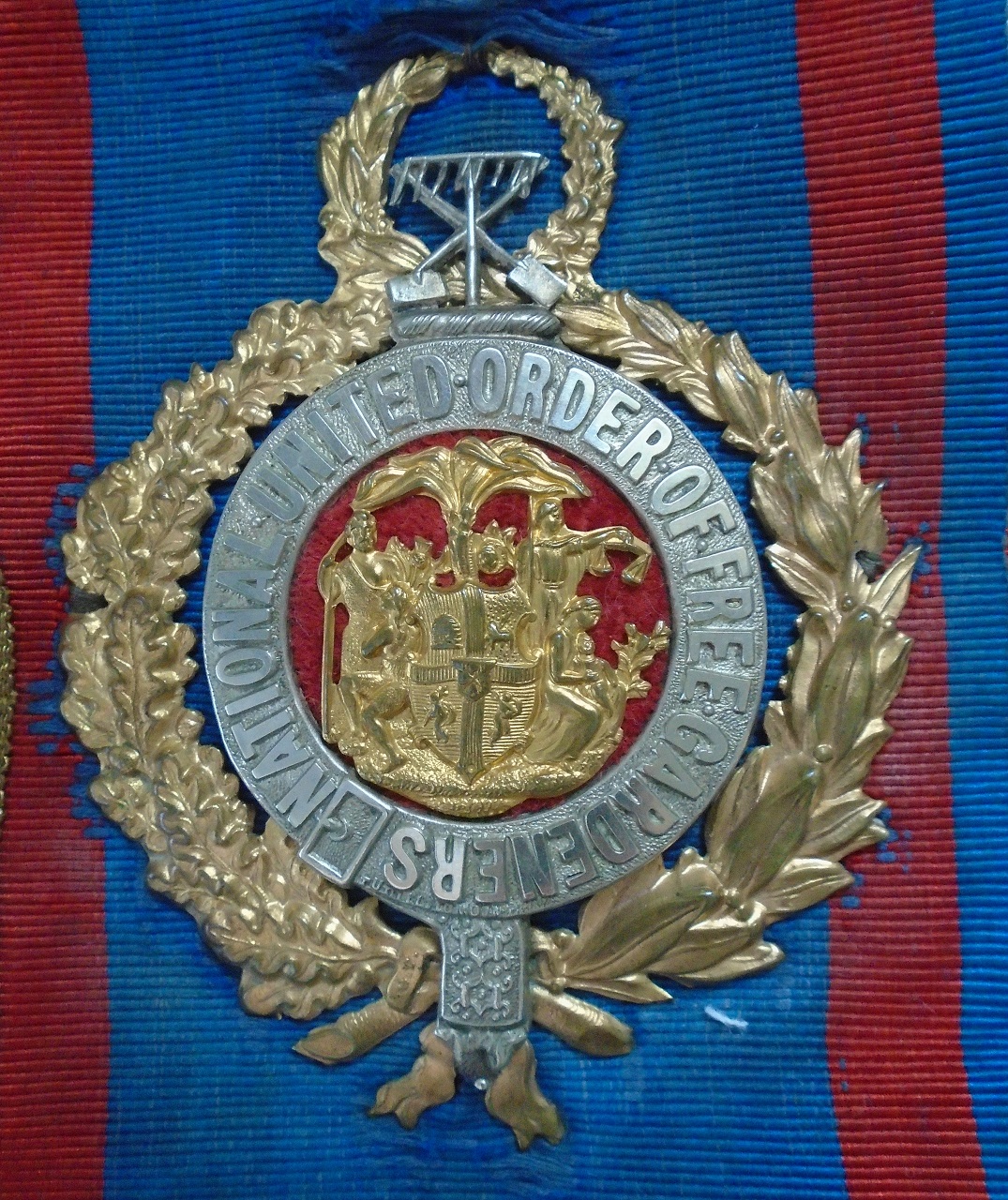
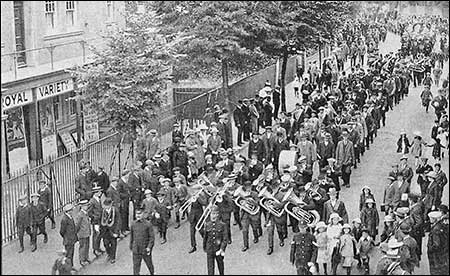
Free Gardeners’ Parade c1920
Hello, we have a beautiful wall plaque (I suppose you’d call it) with the following on it: “Presented by Orme & Sons Billiard Table Makers to Rushden and District Orme Billiard League, Rushden”. My husband acquired it prob in the 1980s while doing a removal in London. He tried hard to find an owner for it but couldn’t and since then it’s been stashed away in a barn with us in Wales. It is very much of the style of your First WW plaque. Do you know anyone who would like it? It’s big and heavy. I could send a photo if you give me an email address. Looking forward to hearing from you.
Hello Rosemary, If it’s big we probably don’t have room for it, but if you can email me a photo and the size of it we can decide from that. We would definitely like to see a photo of it. The email address is info@rushdenmuseum.co.uk.
Many thanks.
Gill