
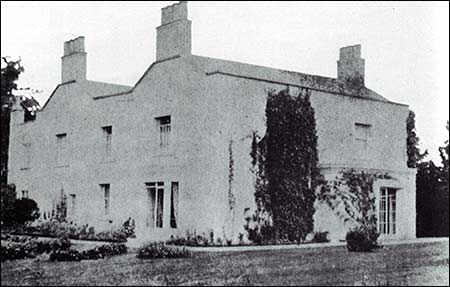
This article about The Cottage in Rushden is written by Mr. Clive Wood with information from various sources and with some speculation and imagination.
When I visited Mrs. Ripley, daughter of Mr. F. U. Sartoris of Rushden Hall, she used to say the Sartoris children (herself and brother Hugh) used to visit Rushden Cottage to see the Campbell-Praeds, and she had a photograph of Rushden Cottage in the family album. They would travel from the Hall by carriage – they were not allowed to walk there. The High Street would have been considered a bit rough and would have still been a lane, no hard surface, dry in Summer and a muddy track in the Winter.

Rushden Hall
It is very difficult to be precise without printed dates, although we have some. Rushden must have been in a fever of activity with all the house and factory building in the town. I thing the ‘Gentry’ would not have mixed with the ‘Manufacturers’ – most of whom were self-made men – Clicker to Master in one generation!
The confusion arises when Mrs. Ripley talked of visiting ‘The Cottage’ as children to see the Campbell-Praeds who lived in the seventeenth century building which was later demolished to be replaced by a new building on the same site, and re-named ‘Rushden Cottage.’ This later building is authenticated by a superb photograph of the Cave family and their servants suitably arranged for the photograph. The Cave family moved into Rushden Cottage in 1882.
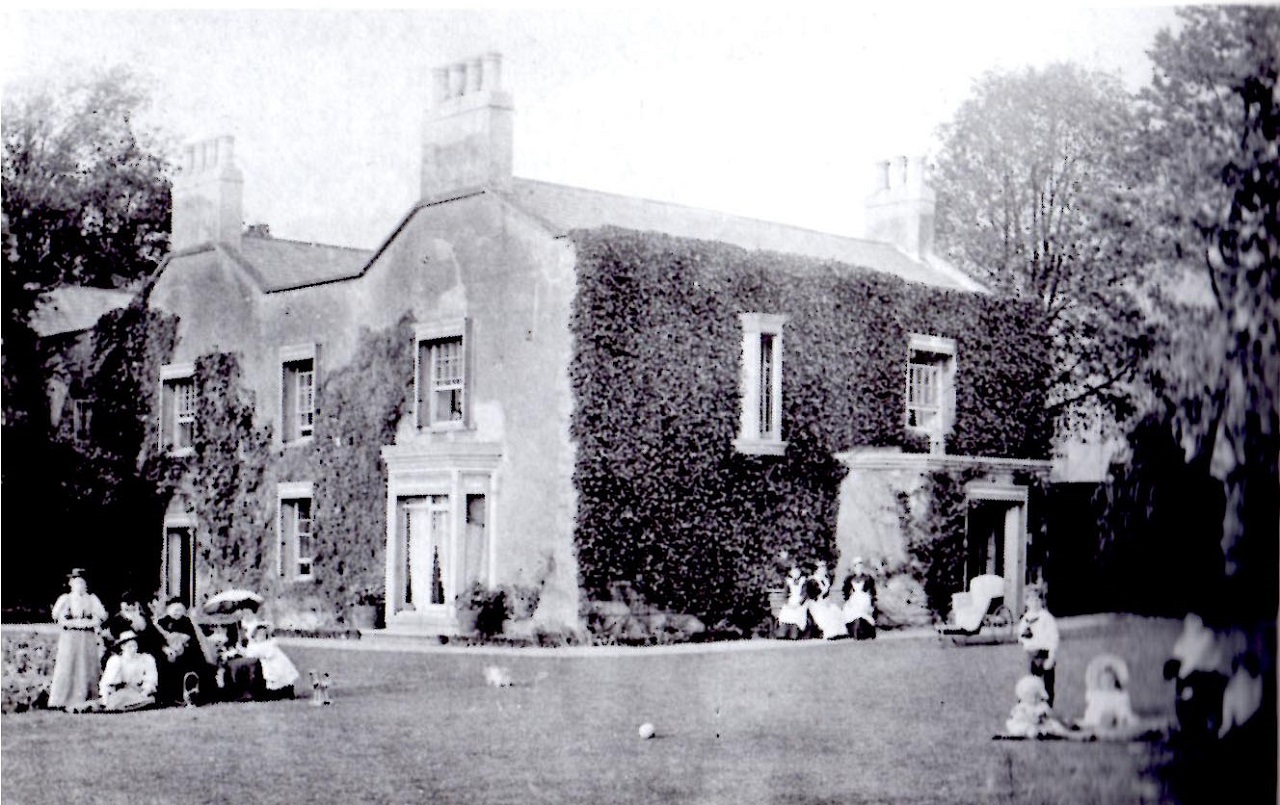
The Cave family and servants outside the Cottage
Here one can speculate as to who did the building – Campbell-Praeds or Caves? Since Cottage No. 2 was in Mrs. Ripley’s photograph album I think Cambell-Praeds lived there for a time – but as the builder or as a tenant is open to speculation. I think it is sometimes difficult to realise how quickly buildings can be destroyed and new ones erected; we think now that buildings go up like mushrooms but when you consider the size and complexity of a new shoe factory such as John Cave’s huge factory in the developing High Street, to build a new residence like Rushden Cottage No. 2 would not take long, and it did contain a dated over-mantle from an earlier building. The Victorian age was a period of great change and industrialisation. I often look at the Parish Church and wonder how beautiful it would have appeared in its rural setting, not hemmed in by other buildings. Charles Leaver’s picture of 1876 is a fortunate record. Having lived in Rushden all my life (except for 6 months) it is something of a shock to realise that many of the fields and rural settings I knew have gone forever under the housing, industrial estates and road systems we take for granted. It must have been the same 120 years ago, much that had existed for centuries was swept away in the name of progress.
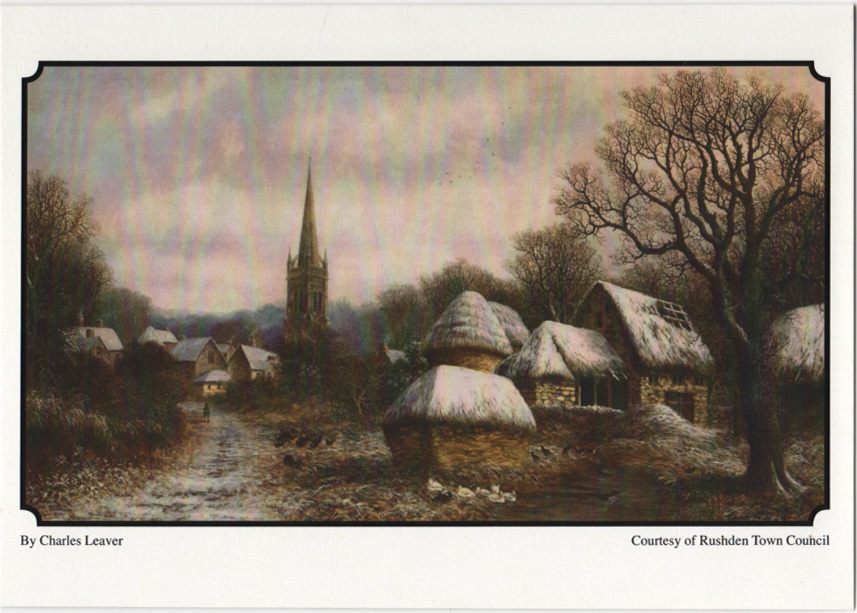
Painting of the church by Charles Leaver looking up what is now Church Street

On the left of the picture is John Cave’s first factory built in the High Street. It was destroyed by fire in 1877.
Depending on your point of view, land for development is seen as a good thing or regrettable. Now it seems to be developers who purchase land, obviously with an eye to build. The ownership of land is a subject of its own, sufficient to say that in the 1800s most of the land belonged to the Gentry, and in the case of our neighbour, Higham Ferrers, much of the town as well. It was all part of the Fitzwilliam Estate before their Grand Sale of 1914.
Rushden Cottage appears to have been a considerable ‘Gentleman’s residence,’ not as large as Rushden Hall and with a smaller park, but ideal for renting to those with sufficient means. Purchased from a Mrs. Fletcher in the early 1800s (surely must be connected with Rushden Hall – but the Fletchers have always been a bit of a mystery) it was the property of the Hon. C. W. W. Fitzwilliam, M.P., and could have been used originally by him to be near his substantial holdings in Higham Ferrers. Rushden Cottage would have been more commodious than anything in the ancient Borough and, as it appears, was readily let on a regular basis. The exact position is not known but could well have been on the same spot where Rushden Cottage No. 2 was built. It was almost as large as Rushden Hall (with thirteen bed and principal rooms, extensive stabling and two Coach Houses) and stood in about four acres of land extending to Duck Street on the west. It was a substantial property, and was furnished with all you would expect – dining chairs, beds (a handsome brass half-tester), soft furnishings, Turkey, Brussels and other carpets – all a family needed for a comfortable living. The first known tenant or possibly owner of the Cottage was Mr. & Mrs. John Tunnard in 1836, a family connected to the Rector, the Rev. George Downe who married Elizabeth Tunnard in December that year.
In 1871 it was ‘To Be Let’ and Henry William Currie appears. Mr. Currie built Rushden House in 1871 and may have lived in the Cottage while his own house was being built. Mr. Currie also built a row of seven cottages opposite the Compass Inn, but unfortunately the date stone on them was not recorded when they were demolished.

Rushden House

Row of cottages opposite the Compass Inn
It seems likely that Mr. Campbell Praed was the next tenant, who was certainly there between 1878 and 1882, and still in residence when the Hon. C. W. W. Fitzwilliam, M.P. put the entire property up for sale by auction on Thursday 11 May, 1882, allowing the tenant, Mr. Cambell-Praed, until Michaelmas (29 September) to vacate the property. One hopes there were amicable agreements between the tenant and landlord. The contents were not sold until Thursday 7 September, 1882 and since the contents were on view the day before the Sale one assumes Mr. Campbell-Praed had four months to find alternative accommodation.
Whilst the contents of the property are very interesting the additional items are even more so! 112 DOZEN OF WINES – one assumes these were stock and belonged to Mr. Campbell Praed since by the time of the sale the new owner of Rushden Cottage, Mr. John Cave, a founder of the Temperance Movement and a pillar of the Baptist Church, would certainly want this ‘Devil’s brew’ off the premises. Besides the wine, two cottages in Duck Street were also sold for Mr. Campbell-Praed, so it appears to have been an amicable arrangement. I have always assumed that Mr. Campbell-Praed was the same family as Campbell Praeds Brewery in Wellingborough, but have no idea of a residence there.

Mr. John Cave
He died in January 1904 aged 82
In conclusion, the original Rushden Cottage owned by the Fitzwilliam Estate for most of the eighteenth century was an attractive and substantial building of limestone, perhaps with a Collyweston tiled roof. We have no way of knowing if there were any notable interior fittings, only the oak over-mantle reused in the new building. I think it must be assumed that Mr. John Cave purchased the property and had it demolished, building a new house on the site. In due course it provided him with the necessary land to build a new factory after the destruction of the second High Street factory in 1901.

The second factory in the High Street destroyed by fire in 1901
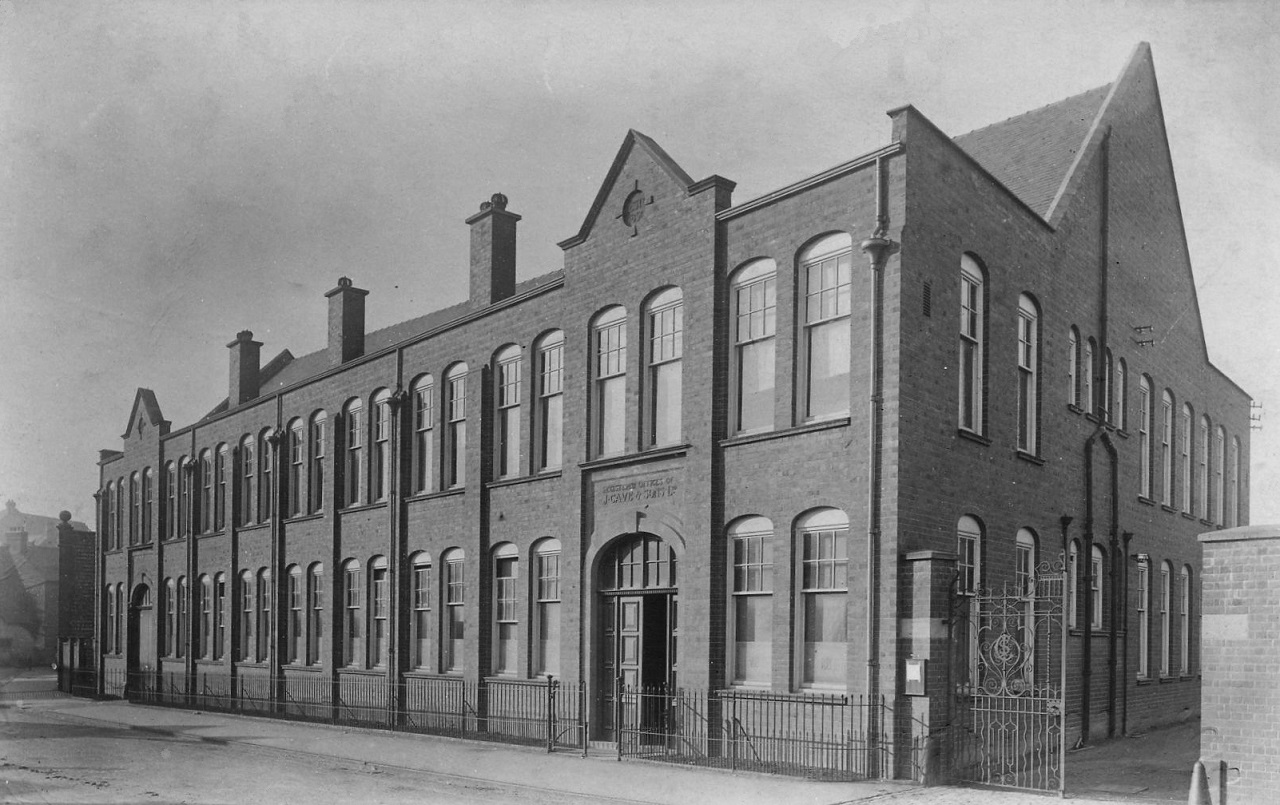
The new factory in College Street
I am very grateful to have received the photograph of the original Rushden Cottage. It was given to me when the Rotary Club were compiling the Rushden Book in 1979 by a member of the Cave family, with the comment that ‘we were always told this was the original Cottage.’ On the reverse it has – Mrs. Amos Cave – 2” oak’ – presumably instructions for framing. Since the Rotary Committee already had an authenticated picture of the Cottage it was decided not to use the older one. In retrospect a pity I think, but at least we still have it.
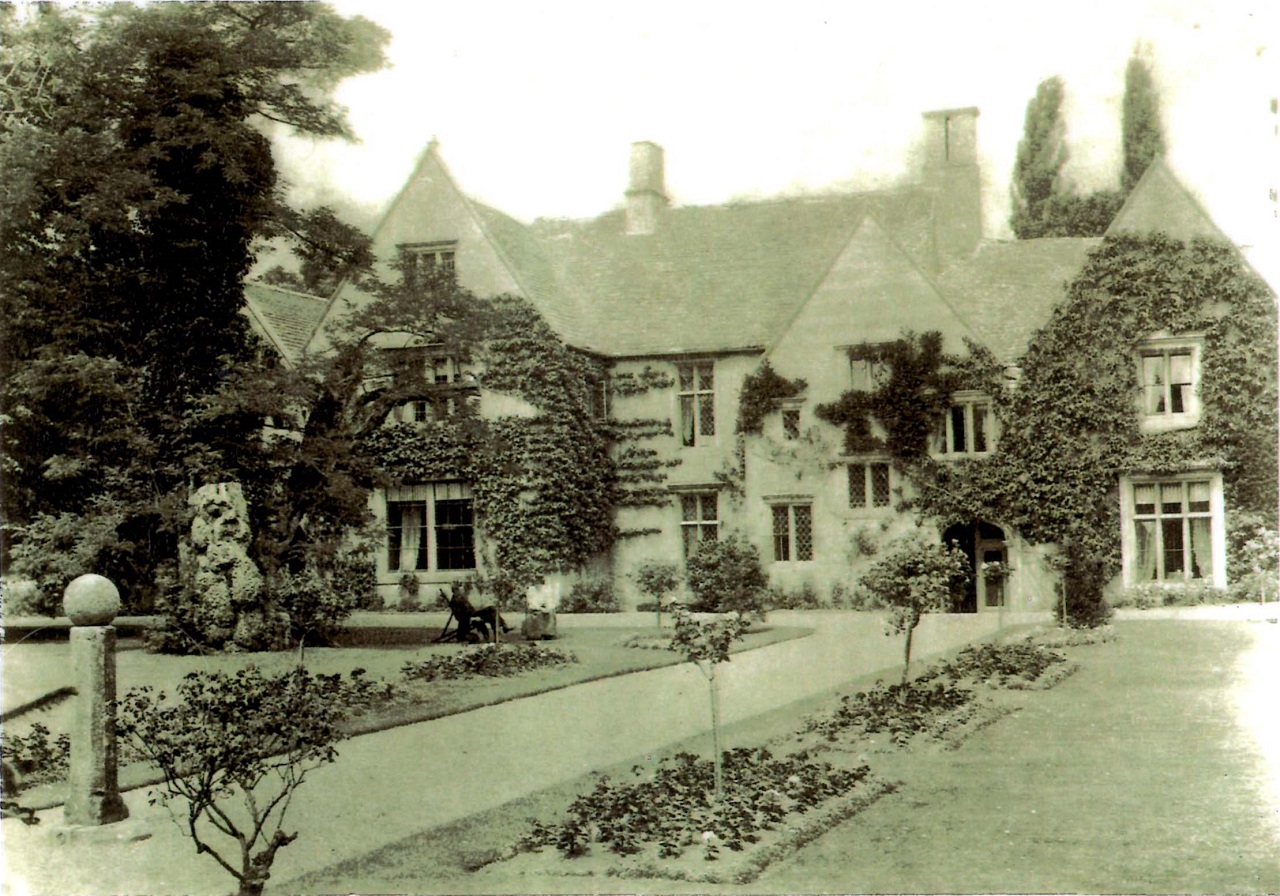
Is this the original Cottage?