

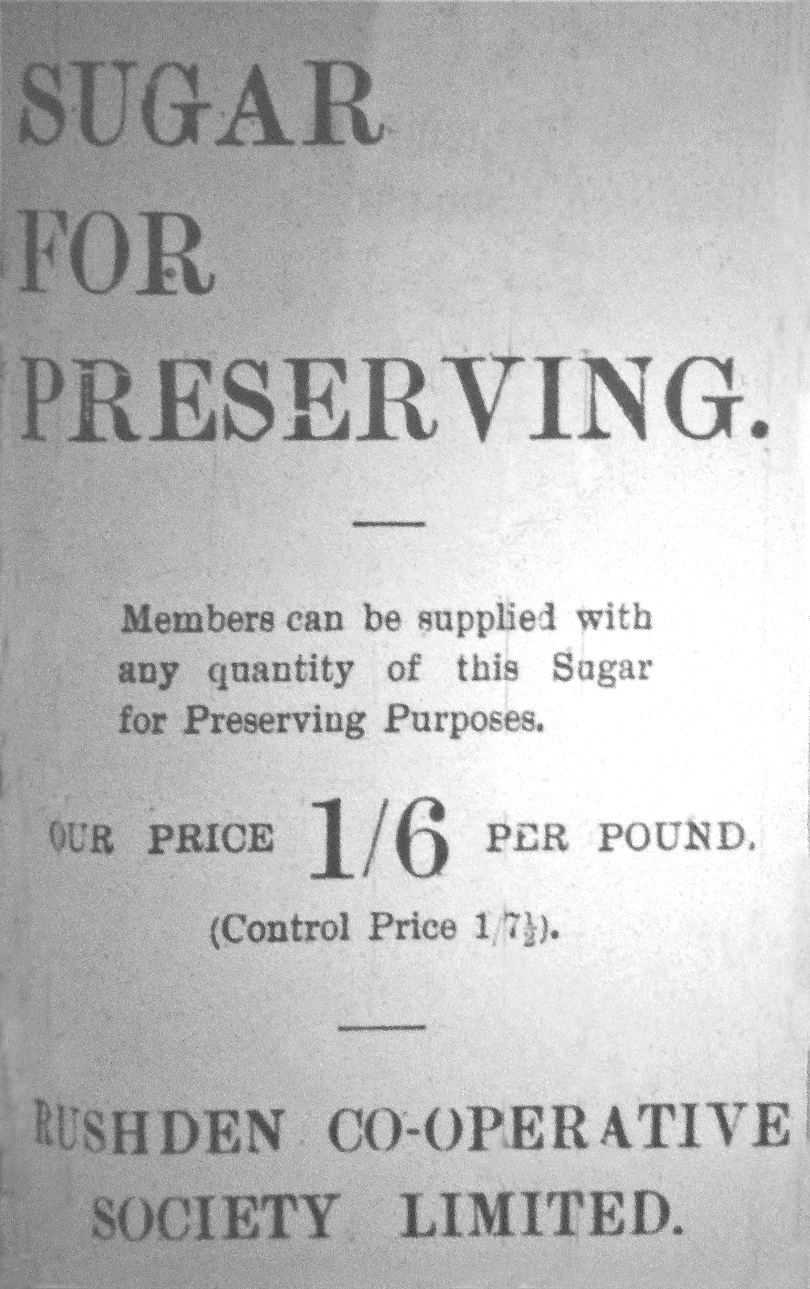
An advert from the Rushden Echo
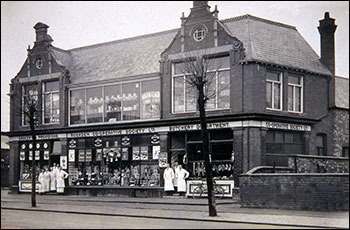
Wellingborough Road Co-op, Rushden
The Government’s Rent Restriction Bill was carried in the House of Commons by 146 votes to 19 and extended the Act of 1919 which limited the increase of rents in the case of working class and middle-class houses. The limits fixed were:- for the Metropolitan Area – Old Limit £70, New Limit £105; and elsewhere – Old Limit £52, New Limit £78, based on rents paid on the 3 August 1914 or the rent at the first letting after that date.
The Government also decided to introduce another Housing Bill, which would empower local authorities to take over unoccupied houses and enlarge the powers of local authorities to prohibit what were known a luxury buildings. It was considered desirable that local Councils should be able to requisition houses which were not let, and should be given similar authority in respect of buildings other than houses which might be used temporarily to accommodate the homeless.
At a conference of the National Union of Boot and Shoe Operatives, held in Edinburgh, a voluntary sickness benefit scheme was adopted to apply to employees in the boot trade. The object of the scheme was to provide additional income for members who suffer from long continued illnesses, and were suffering financially as a result. The benefits were to be restricted to operatives between 20 and 70 years of age who had been working in the industry at least three years before becoming entitled to benefit. Women marrying during the period of unemployment would cease to be qualified for benefits under the scheme.
The contributions were to be 3d. a month for men and 2d. per month for women, the employer to contribute an amount equal to that of the employee. The benefits would be: Married men, 17s. 6d. a week; unmarried men, 15s. a week; and women 12s. a week.

Eaton’s factory in Irchester Road, Rushden now DB Shoes
Since the Royal Welsh Fusiliers were billeted at Rushden in 1915 there had been a close bond between Northamptonshire and North Wales. Many of the soldiers married Rushden girls, and it led to an increase in the number of people from Rushden and the surrounding district heading off to North Wales for their holidays. Trains were arranged from Wellingborough, Thrapston, Ringstead, and Irthlingborough and holidaymakers were encouraged to visit Llandudno where they could enjoy “plenty of boating, perfectly safe sea bathing, perfect sanitation, and numerous motor coach tours to take a spin through the superb scenery of Welsh mountains and valleys.”
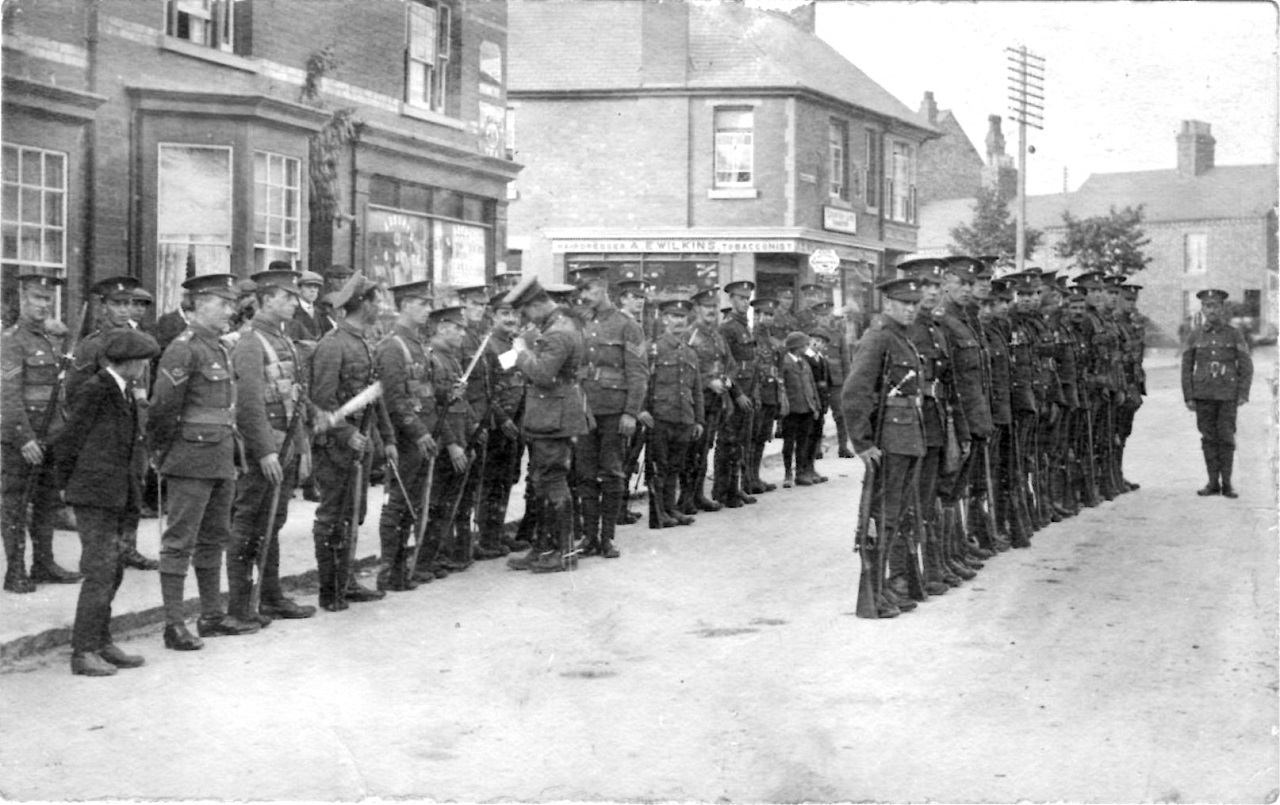
The Royal Welsh Fusiliers pictured in Washbrook Road, Rushden
At the Council meeting held on the 11 June 1920, a report was received from the Housing Commissioner stating that he had considered the lay-out of the Newton-road site and he thought it was unnecessary for any street works to be done, unless the Council wished to, in which case it could not be charged to the Housing account. It was suggested that a revised plan of sewers and drains be drawn up showing the sewer at the back of the houses. This would mean taking the sewage from the whole estate through the back gardens of the houses fronting the Newton-road. Also if the work could not be charged to the Housing account, then the building could not continue.
The Clerk, Mr. G. S. Mason, was instructed to write to the Commissioner expressing the committee’s views, and if they didn’t get a satisfactory answer to communicate with the local Member of Parliament. The report also suggested rents of 10s. and 12s. 6d. which the Council thought would be impossible for working people to pay as a good many of them in the town were on short-time. There was difficulty with labour, difficulty with materials and the working week had been reduced from 52 to 44 hours. All was not going well.
Several letters passed between the Clerk and the Housing Commissioner but no satisfactory conclusion was reached. It was decided that a deputation should meet Dr. Addison, and although the Housing Commissioner asked to meet the Council, they refused stating that they wanted a meeting with Dr. Addison.
An application was received by the Council for permission to erect a Memorial to the Fallen on the Green, and it was decided to appoint a sub-committee to meet representatives of the Fund on the site.
No agreement could be reached on the subject of the public conveniences and the matter was deferred for six months.
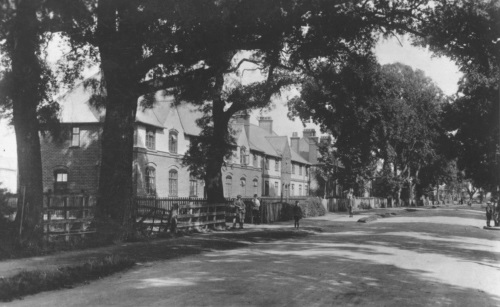
Council houses in Newton Road, Rushden
The Rushden Echo arranged with Dr. Charles R. Fisher, director of Music at Acadia University, Nova Scotia, to publish a series of articles relating to Rushden. Dr. Fisher was the son of Mr. Charles Mason Fisher who was a clock maker in Rushden from c1870 to the early 1900s. He was responsible for the care of St. Mary’s church clock from 1870 and was eventually responsible for the clocks in Shelton, Wymington, Yeldon and Podington. He died in July 1917 at the age of 84.
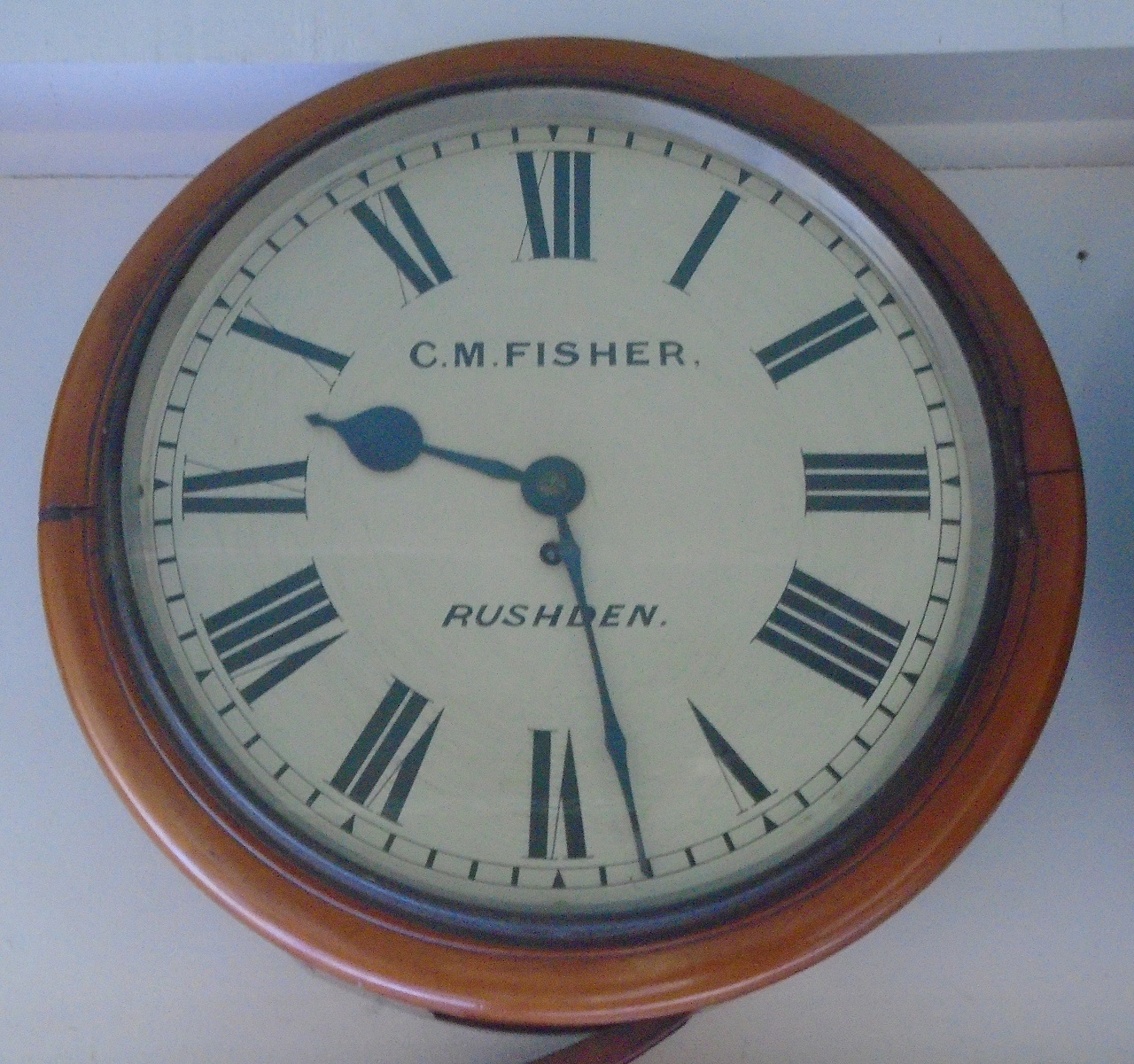
A clock with the name C. M. Fisher from the Rushden Museum collection
In Dr. Charles R. Fisher’s first article, entitled ‘Landscape,’ he describes the view of Rushden from the Stone Cross on the Irthlingborough Road, looking over the Nene Valley, as “a small rising village through which passes the Sidney brook. Mainly along this shallow depression through which the brook flows straggled the village of old Rushden, now greatly altered, but still retaining touches of its old-time appearance, whilst modern buildings on either side expands it to quite a medium-sized town.”

The Sidney Brook flowing through Rushden Hall grounds
RUSHDEN WEATHER NOTES – JUNE 1920
Summary of the records taken at the School Gardens, Station-road, Rushden.
TEMPERATURE – Mean maximum shade temperature for the month 71.85 degrees; mean minimum temperature for the same period 44.58 degrees. The highest temperature 81.6 degrees was registered on the 19 June, while the lowest temperature recorded was 324.1 degrees on the 6 June.
CLOUDS – Average for the month, 6.07 (based on the system that “0” represents a cloudless sky and “10” a completely overcast one).
RAINFALL – Amount for the month totals 1.33 inches. Total for the year to end of June 9.86 ins.
Characteristics of the weather for the month.
In spite of the title “Dripping June” the rainfall was not heavy. The heaviest falls occurred on the 27 June with .42 in., on the 12 June with .31 in., and on the 20 June with .26 in. In no other case did the amount reach one-tenth of an inch, though rain fell on 12 days altogether.
Local ground frosts occurred in places on the 6, 7 and 9 June.
Thunder and lightning were noted on the 12, 16, 18, and 19 June.