

John Thomas Barker
John Thomas Barker, Rector of Rushden from 1868 to 1890, was one of the people who ‘made Rushden.’ He was born near Whitby, Yorkshire in 1826, and attended Trinity College, Cambridge. He was ordained in 1849, following which he was curate of St. Peter’s, Pimlico, British Chaplain in Dresden, Incumbent of High Cross, Hertfordshire, and came to Rushden in 1868.
At that time Bishop Magee described Rushden as ‘the blackest spot in his diocese.’ The town was in a state of neglect, the church was dilapidated, and there were no proper schools. This was a challenge to the Rector and he set about improving matters. With the help of others he planned a new school, built a new Rectory, and restored the church at a cost of nearly £6,000. At his own expense he provided an Infant School in Coffee Tavern Lane and a school and Mission Room at the bottom of Higham Road. He was involved in the building of the Waverley Hotel and was very keen that Rushden should have a proper water scheme. It was in 1880 that the Rev. J. T. Barker was made an Hon. Canon of Peterborough.
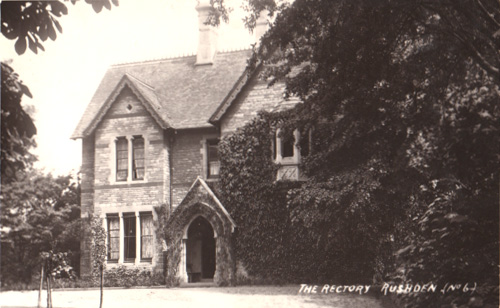
The Rectory built by Rev. J. T. Barker

A side view of the Rectory
The Church of England school, also known as the National School, was built in 1870 on land donated by Mr. F. U. Sartoris, of Rushden Hall. It cost £1,100 and could accommodate 250 pupils. The first Master was John Warren and the entry in the School Log Book for 25 April 1870 reads:- “Assisted by the Reverend J. T. Barker I opened this school this morning and admitted 146 children. By far the majority of children are very small and with few exceptions exceedingly ignorant, though not I think stupid. (The parents of 8 children took advantage of the conscience clause contained in our school rules, and objected to the Church Catechism being taught their children.) In the afternoon I tried to classify the children but found it a difficult matter, as some of them could read well but could not write at all, others could write fairly but could not read. Scarcely 10 of the children have ever been taught any arithmetic. The children are so noisy and troublesome as to render it absolutely necessary that I should have some assistance. Mrs. and Miss Sartoris visited the school in the morning.”

Mr. Frederick Urban Sartoris
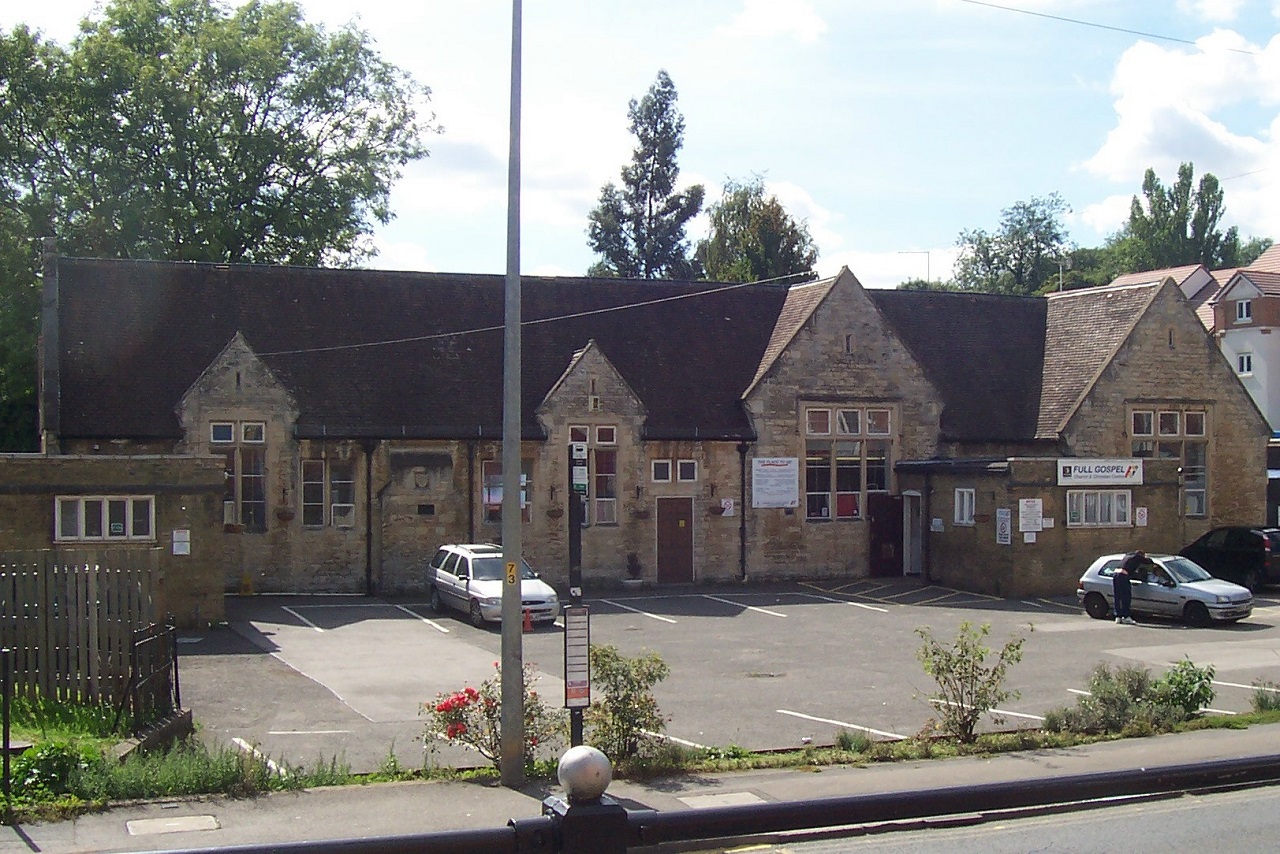
The Church of England School now the Full Gospel Church
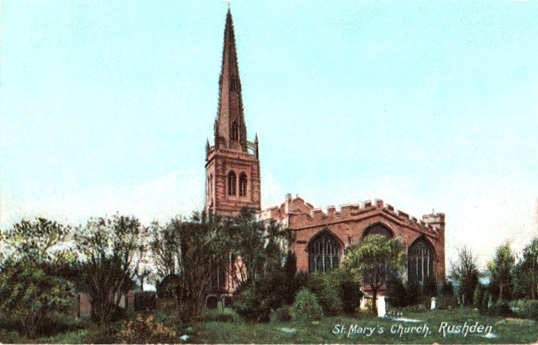
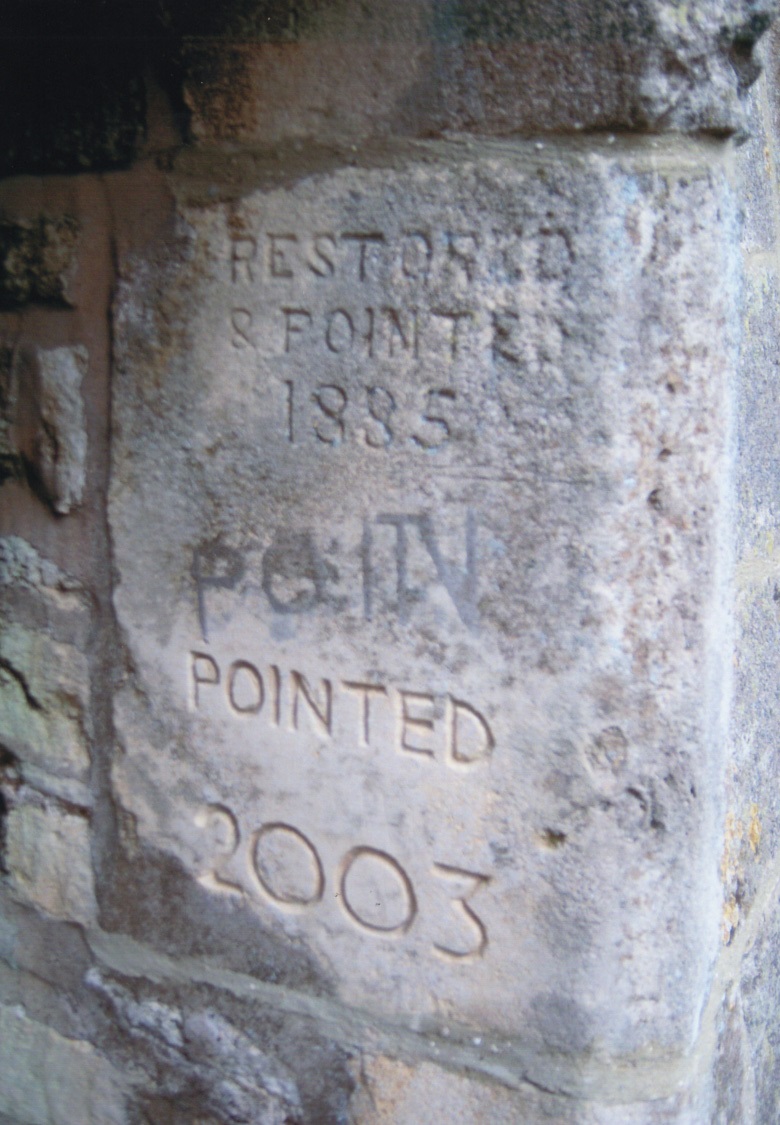
The church was re-opened in February 1875 after three year’s work and an expenditure of £5,807. In February 1885 a special service was held in the church, following which about 200 people sat down to a meal in the New Hall. Mr. Frederick Urban Sartoris thanked Canon and Mrs. Barker for all the work they had done, and Canon Barker explained how the money had been spent and thanked all those who had contributed. They still had the spire to put in order and a unanimous vote was given in favour of the proposal. The work was carried out later that year.


St. Mary’s Church, Rushden
The Waverley Hotel was opened in February 1882, and Canon Barker was one of the directors. The building included a tavern and a public hall. On the ground floor of the tavern was a large public bar, a reading room, kitchen, caretaker’s room and china closet. On the first floor there were two large rooms for billiards and other games, also suitable for public dinners or clubs, and a ladies’ room with lavatories and other conveniences. On the top floor there were six bedrooms.
The hall was 76 feet by 30 feet, with four entrances, and was fitted at one end with a platform and orchestra or gallery capable of holding over one hundred people. The work was carried out by Mr. Daniel Ireson, of Northampton, Mr. W. Moore, joiner, of Rushden, and Mr. Spencer, plumber, Rushden, under the direction and to the designs of the architect, Mr. Abraham, Wakefield, Yorkshire, at a cost of about £2,000.
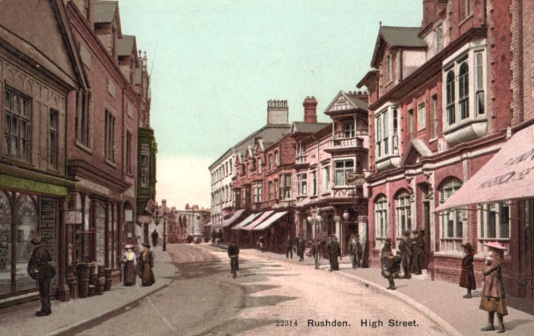
Waverley Hotel on the right of the picture
Canon Barker died in October 1890, aged 63, and was buried in Rushden. Later that month a meeting was held in the Infant Schoolroom in Coffee Tavern Lane to consider the question of a memorial to the late Canon Barker. The general opinion was in favour of a Church Institute and a committee was appointed to make enquiries on the subject.
In March 1891 another meeting was held. Mr. G. H. Skinner presented plans of a proposed institute, which showed a building with several small rooms on the ground floor and a larger one above, the upstairs room being 45 feet by 25 feet. It would cost about £600 or £700. Mr. Sartoris thought this a little too ambitious. Others favoured the scheme, and, eventually, Mr. Carter proposed, and Mr. G. H. Skinner seconded, that the memorial should take the form of an institute. The Chairman then put it to the meeting, and, several hands being held up in its favour, he declared it carried. It was then decided that the old committee be requested to collect subscriptions. Mr. J. Claridge thought a subscription list should be started at that meeting, but, after a vote of thanks to the Chairman, the meeting was closed without such being done.
In November 1901 an Institute was opened over the Windward Cycle Company’s shop in Church Street. The aim of the Institute was to provide a centre where clubs and societies could meet, and at the opening Mr. George Denton said that although they had not realised their ideal they had done what was possible, and he hoped that eventually they would increase membership and extend the premises.

The building on the left of the picture was the premises of the Windward Cycle Co.
A young men’s institute was eventually opened in the Rectory Field, with it’s entrance in Robinson Road, in November 1921. It was designed by Mr. D. E. Preston, of Rushden, and built by Messrs. Packwood and Son.

The exterior of the Institute

The interior of the Institute
In December 1907 the family of the late Canon Barker presented an angel lectern to the parish church. The dedication service was conducted by the Ven. Archdeacon Kitchin, who gave a brief account of the work Canon Barker had done for the town and spoke of the respect which was held for his memory. “To live in the hearts we leave behind is not to die.”

The Angel Lectern