

At a meeting of the Rushden Education Sub-committee held on the 16 March, 1920, it was reported that all the infants’ schools had been closed by order of the Medical Officer of Health because of an epidemic of measles.
An agreement was reached between the National Union of Boot and Shoe Operatives and the employers in regard to the recent claim for increased wages. The agreement, which affected 50,000 workers, gave male operatives an increase from 56s. to 68s. per week. The increase for women was from 30s. to 40s. a week for day work. Piece-workers, both male and female, were to have a five per cent. increase.

One of Rushden’s boot and shoe factories – C. W. Horrell Ltd. – now converted into apartments.
At the council meeting, held at the Council Buildings on 10 March, 1920 plans were discussed for public conveniences on the Green at a cost of £1,750, but agreement could not be reached because of the high cost, and it was referred back to the Plans Committee.
Arguments continued over whether there should be a Cottage Hospital or a Cenotaph with Mr. Perkins pointing out that the Cenotaph was a memorial to the men who had fallen, but the Cottage Hospital was a memorial to the Great War, and there was no reason why they shouldn’t have both as the cost of a Cenotaph would be quite small.
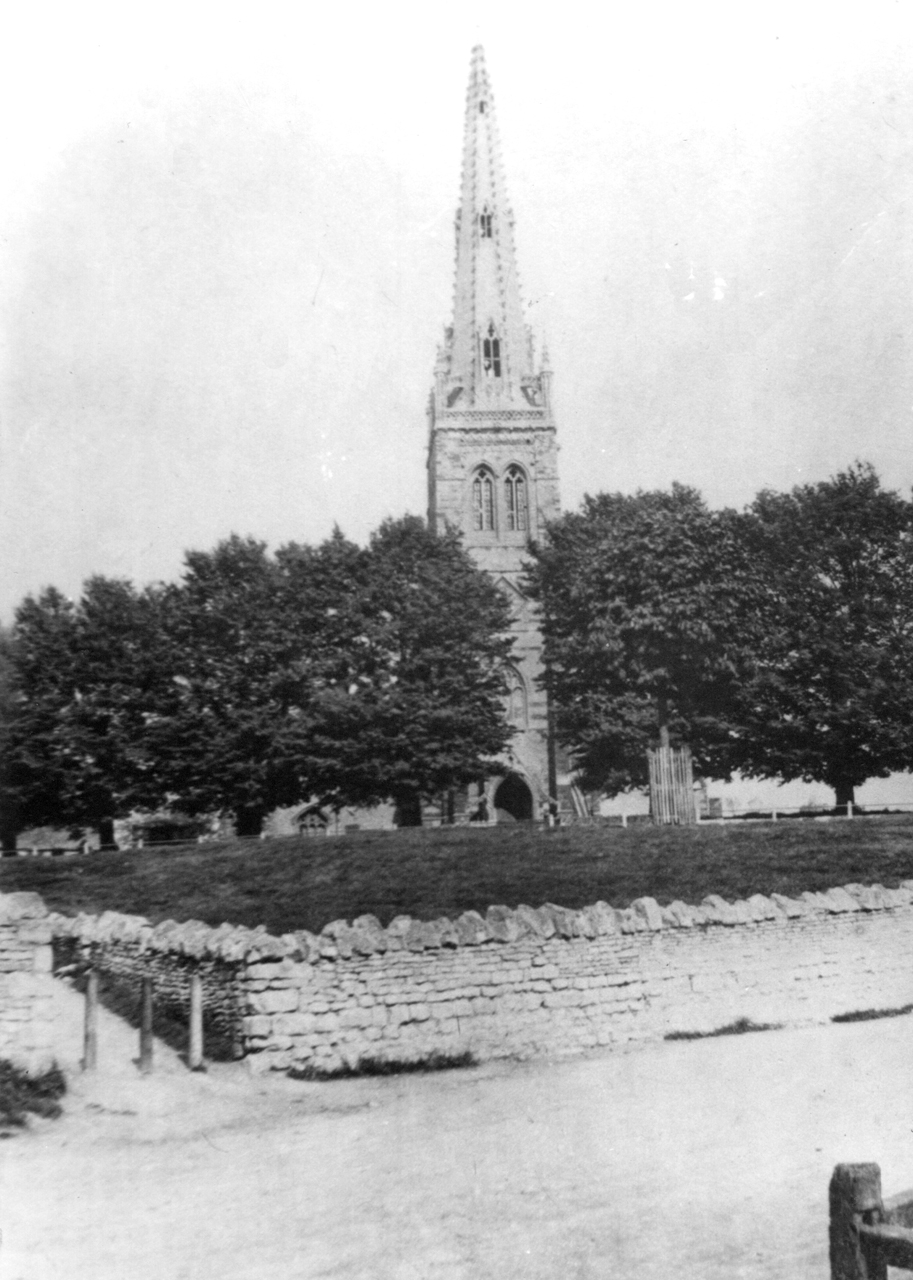
The Green, before the War Memorial was built.
A meeting was held at which it was decided to form a Tenants’ League for Rushden, so that tenants would be prepared for the conditions which would exist after the Rents Restriction Act expired. The Rents and Mortgage Interest Restriction Act 1915 restricted increases in rent and the rate of mortgage interest during WWI and was intended to last until six months after the end of the war. The aim of the Tenants’ League was to prevent the illegal raising of rents, and to enforce obligations on landlords under the Housing and Town Planning Act. It was stated that no increase in rent should be allowed except for structural improvements, and even then the landlord might charge only six per cent on the outlay of his money or on increased rates charged on the house. The tenant should have four weeks’ notice of any increased rent, and could also claim to see a statement of the landlord’s outlay or the increased rates. At the same meeting figures were produced to show that a landlord in Rushden, owning several houses, received only £76 6s. 7d. from the rents, which amounted to £149 10s. At that time it was not possible for landlords to obtain six per cent. on their capital. Mr. Bazeley, who had been speaking at the meeting, explained that as so much work had been left undone during the war, it was impossible for the Rushden Urban Council to keep down the district rate to its present amount.
By the end of the month a new Rate had been set for the ensuing year with an increase from 5 shillings to seven shillings and four pence.
Rushden Weather March 1920
Summary of the records taken at the School Gardens, Station-road, Rushden.
TEMPERATURE : Mean maximum shade temperature for the month 54.96 degrees; mean minimum temperature for the same period 37.91 degrees. The highest temperature 71.8 degrees was registered on the 22nd, while the lowest temperature recorded was 23.1 degrees on the 9th.
RAINFALL: Amount for the month totals 1.69 inches. Total for the year to end of March 4.38 inches.
Characteristics of the weather for the month.
Absence of the boisterous days generally associated with March, except on the 25th and 26th, when very strong winds were experienced.
Higher maximum and minimum temperatures than usual for March.
Rain fell on 17 days out of 31. The heaviest falls were .39 inches on the 14th, and .31 inches on the 15th. Snow fell on two occasions; a heavy fall on the 15th and a lighter one on the 7th. Frosts were registered on six nights only, none being very severe.