
In November 1908 the Rushden Echo reported that about £20,000 was to be spent in the boot and shoe industry in Rushden. A new factory was to be built and various extensions were planned.
Sanders and Sanders were planning to build a new factory in Spencer Road to replace their existing one on the corner of High Street and Station Road. It was to occupy a site about 95 feet wide and 121 feet deep and would be built on one floor, generally known as the American system. The offices were to be at the front with the gas engine and plant at the back. Building was to start as soon as the contracts were entered into.

On the right of the picture is Sanders first factory on the corner of High Street and Station Road
Mr. C. W. Horrell was to extend his factory in Fitzwilliam Street and Moor Road with a new room about 90 feet by 50 feet built on one floor. The architect was Mr. Scrivener of Northampton and the builder was Mr. Robert Marriott of Rushden. Work had already started on the new building which was to be used for the rough stuff and making-room. It was expected that the room would be completed by the 16 January 1909. More extensions were proposed but would be done in sections so that the business would not be disrupted.
This factory closed in 1976 with the loss of 100 jobs, and was later converted into flats.

Mr. C. W. Horrell
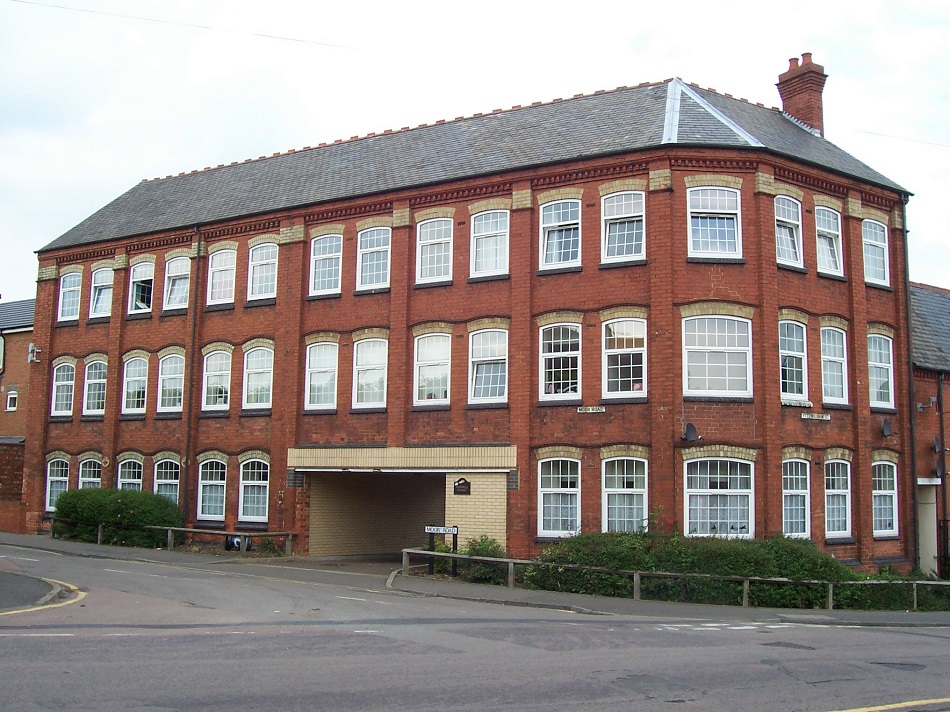
Horrell’s factory converted into flats
Mr. F. Corby was to build a new room about 60 feet by 50 feet to be used as a leather-store and machine-room. It was to be one storey with north lights in the roof. It was hoped the work would be completed by Christmas.
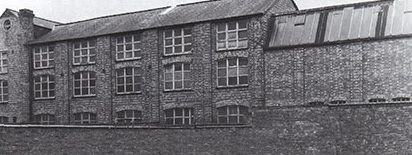
Fred Corby’s factory in John Street
James Hyde had two factories in Glassbrook Road with a row of cottages between them. Land at the rear of the cottages had been purchased and plans were before the Council to build a room 330 feet in length, on the one floor system, with north lights in the roof. The output at the time was 5,000 pairs of boots a week, and once the building work was completed the output would be doubled. It was also hoped to employ 100 more workers.
The factory was taken over by Dubiliers during WWII, and following the war it became Walter Sargent’s.

The row of houses between the two factories
The Co-operative Wholesale Society was planning important extensions to their factory in Portland Road which would allow for an increase of 25% on the present output. The capacity at that time was 10,000 pairs a week and this would increase to 12,500 pairs. The building work was to start as soon as the plans were passed.
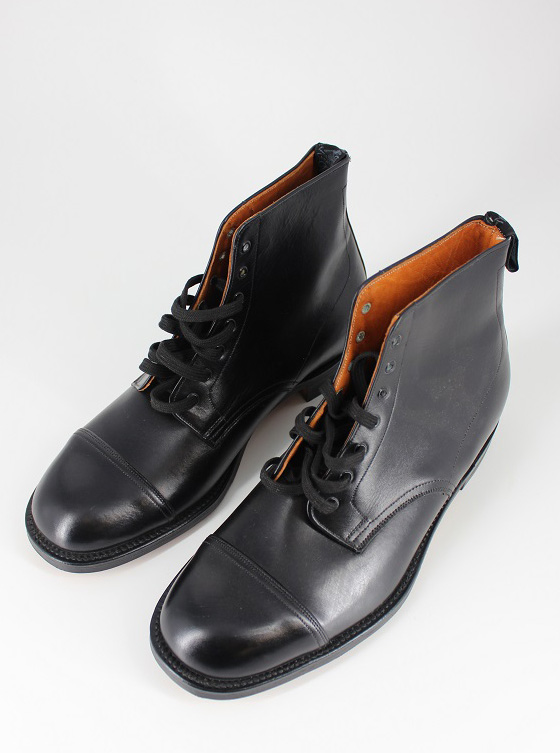
A pair of C.W.S. boots
The C.W.S. owned land abutting Rectory Road and had agreed to sell some of this land to the Council who wanted to carry out improvements to Rectory Road. At a special meeting of the Council held on 25 November 1908 it was decided to go ahead with the improvements and to apply to the Local Government Board for sanction to borrow £1,000 to carry out the scheme. Following this, Mr. Edgar Dudley, F.S.I., an Inspector of the Local Government Board, held a public inquiry in the Council Chamber on Saturday 30 January 1909.
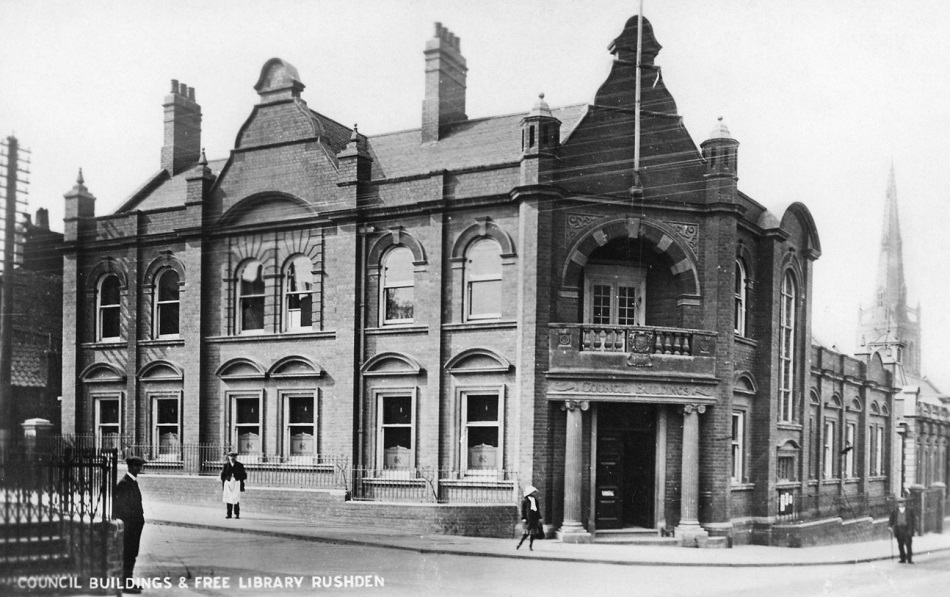
The Council Buildings where the inquiry was held
The case for the Council was put by Mr. Mason, the clerk. He pointed out that High Street and Rectory Road were the only two roads leading from one end of the town to the other. As the High Street was usually busy and full of traffic it would be a great advantage to have a second through road. It was hoped that, at some time in the future, the road from the Midland Railway Station to Newton Road could be made up to 36 feet wide for the whole length. If the Council did not buy the land and carry out the work from Queen Street to Portland road now, the C.W.S. factory would be built right up to Rectory Road and the opportunity to widen the road would be lost. The C.W.S. originally asked for £180 but agreed on £100. Mr. Ebenezer Claridge did not want to sell the adjoining property, house, shop and cottages, but eventually agreed to sell for £720.

Mr. G. S. Mason, clerk to the Rushden Urban District Council
Mr. Bazeley, chairman of the Council, said that the Council would not have considered carrying out the work at that time if it had not been for the circumstances that had arisen. He felt that if the C.W.S. factory was built up to the present building line, at some time in the future the Council would be blamed for not carrying out the improvements.
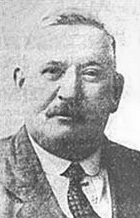
Mr. Bazeley.
The Rate Payers’ Association were very much against the proposal and Mr. Stimson, the Barrister instructed by the Association, made a strong speech against it saying it was costly and unnecessary. As the Council had no plans to widen the rest of the road in the near future, the £1,000 expenditure was useless. He pointed out that there would be other difficulties with Beaconsfield Terrace, and the Salvation Army Barracks on the corner of Queen Street.
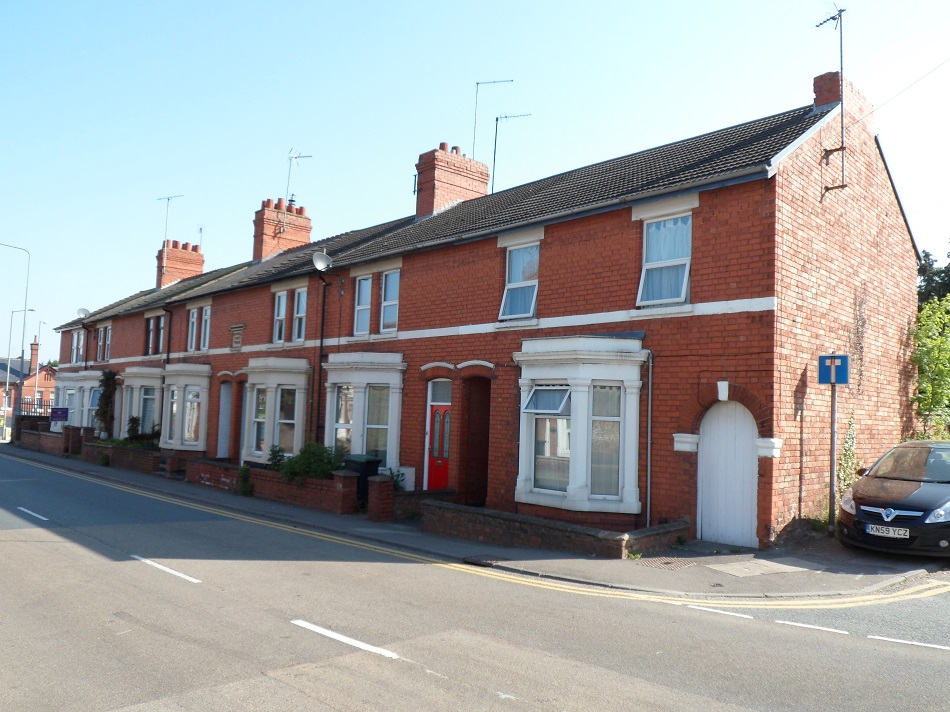
One side of Beaconsfield Terrace
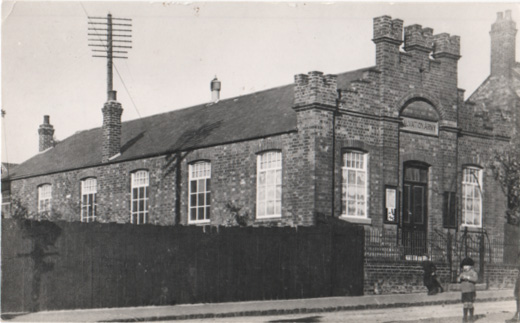
The Salvation Army Barracks on the corner of Queen Street and Rectory Road
After more discussion the meeting closed, and the Inspector was to report to the Local Government Board in the usual way. At the Council meeting on the 10 March 1909 it was reported that the loan had been sanctioned. The matter was to go before the Plans Committee at their next meeting.
It wasn’t until June 1910 that the Clerk was instructed to negotiate the loan of £1,000 which he did with Liverpool Victoria Legal Friendly Society at £3/17/6 per cent. The seal of the Council was affixed to it, the repayments to be spread over 30 years.
In August 1910 the Surveyor advertised for tenders for pulling down the buildings up to the proposed new building line. The highest offer was that of Mr. W. Packwood at £12/10/0 which was so low the Council decided to demolish the buildings themselves and retain the materials.
At the Council meeting in September 1910 the Surveyor, Mr. Madin, was instructed to proceed with the making up of Rectory Road between Queen Street and Portland Road and to employ direct-labour.
It was in February 1911 that the Surveyor was able to report that the work was complete. The cost amounted to £310/12/11. His original estimate was £300.
The C.W.S. factory was demolished in 1987, with the office block on the front of the building being converted into flats.