


An advert from the Rushden Echo
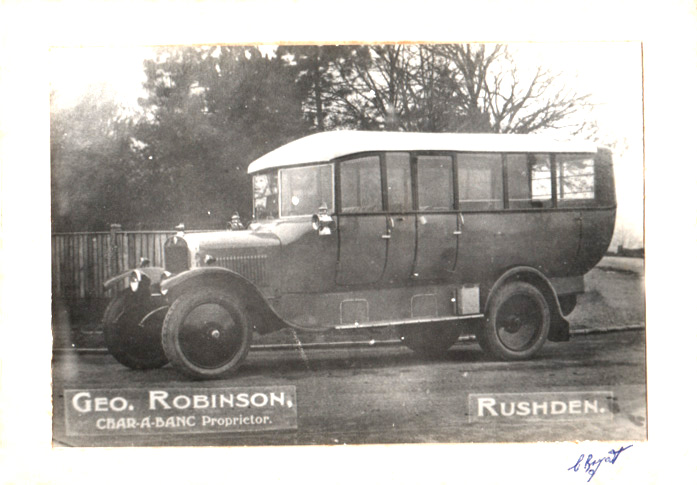
One of George Robinson’s Char-A-Bancs.
Photograph from the Colin Bryant Collection.
When the Old Age Pensions committee met at the beginning of March one pensioner was disqualified, having entered the workhouse, and one application, carried over from the previous meeting, was granted 10s per week.

Wellingborough Union Workhouse, now the Isebrook Hospital
Unemployment in the town and district continued to be high. About 400 were out of work, most of them suspended, which meant that they no longer received benefit from the Trade Union. The Distress Committee expressed appreciation of the £200 donated by the Rushden Boot Manufacturers’ Association, and they were hoping that those still in work would also make donations. The teachers of the town also agreed to contribute a sum regularly. The Unemployment Grants Committee were authorised to make a grant of 60 per cent. of the wages bill of works carried out for the benefit of the unemployed, provided at least 10 men were employed. The grant was not to exceed £180.
Work, to include the unemployed, was to be carried out in Spencer Park and the plan was to widen the pipe track to provide a walk with seats and steps down to both sides. There were to be three tennis courts and two bowling greens. The total cost would be about £1,350, of which £1,000 would be for labour. If the scheme were carried out it was considered that the Park would be more attractive but a full time caretaker would be necessary at an annual cost of about £200. It was thought that the Council could employ about 24 men to carry out the work, and if they gave them half-time work it would be 48, which was still not a large number. It was pointed out that if they were not working more than 3 days a week they could still claim unemployment benefit.
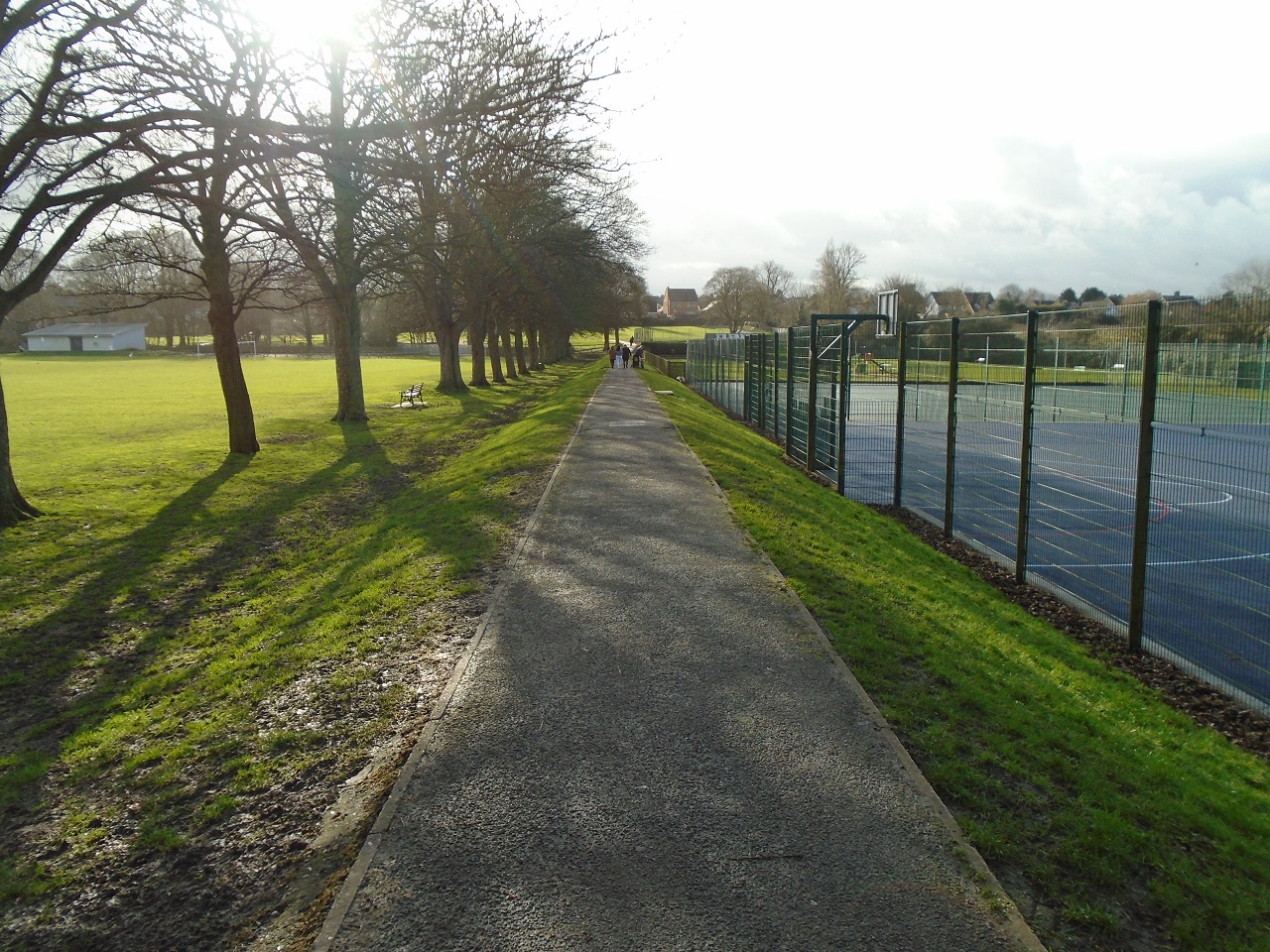
Spencer Park showing the walk and tennis courts. Beyond the courts, what were the bowling greens, is now a children’s play area.
Rushden Education Sub-Committee met to discuss the Employment of Children Act, 1920. It was pointed out that children aged 13 could leave school providing they were to be employed at some class of work, which, while being beneficial to the child, was not of an industrial nature. It was agreed that children of 13 could not be allowed to work in any department of a boot factory or boot office.
In order that the teachers could attend lectures at Northampton for Education Week it was decided to close the schools for a week. It was also decided that when the schools re-opened after Easter, the afternoon session was to begin at 2 p.m. instead of 1.30 p.m.
At a meeting of the managers, it was reported that Mrs. S. L. Hales had been appointed as temporary uncertificated teacher at the Alfred Street Infants’ School.

The photograph above is Alfred Street Boys c1900 when Mr. Walter Wood was headmaster. Sadly Mr. Wood died suddenly on Saturday 15 October 1904 at the age of 53. He had spent the afternoon at Northampton with his wife and daughter, and returned to Rushden by the 6.42 p.m. train. After leaving the station Mr. Wood complained of feeling unwell and rested a few minutes in the Co-operative Stores on the corner of Queen Street and Rectory Road. Mrs. Wood’s friend, Mrs. Chamberlain, lived nearby in Rectory Road, and Mr. Wood was taken there. Dr. Owen was called and he found Mr. Wood in a critical condition. The doctor did all he could but unfortunately Mr. Wood passed away at about 7.30 p.m.
Mr. Wood first came to Rushden in 1877 when the Rushden School Board had recently been formed. He had charge of the school in the Old Temperance Hall in Newton road, and when the Alfred Street School was built Mr. Wood became headmaster of the boys’ school. Mrs. Wood was in charge of the infants’ department.
Mr. and Mrs. Wood occupied the headmaster’s house at the school until it was damaged in the fire at John Cave’s factory in 1901. The house was demolished and the school extended. At the time of his death he lived in Essex Road.

The British Women’s Temperance Hall in Newton Road
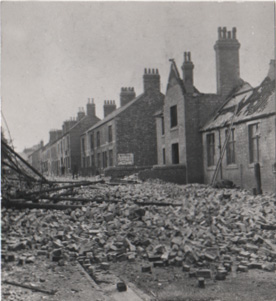
Alfred Street after the fire, showing the damaged headmaster’s house next to the school.