

Rushden High Street has always had its problems right from the early 1900s. Shopkeepers were always being warned about having their blinds too low, or blocking the pavement by displaying goods outside, and, with no proper road, mud in the winter or dust in the summer was always a cause for complaint.
There was much congestion in the High Street, and it was thought that if Rectory Road was made up to 36ft. wide from the M.R. Station to Newton Road, this would take much of the traffic from the High Street. The matter was brought to a head in 1909 when the C.W.S. proposed to considerably extend their factory along Rectory Road. A public inquiry was held and in February 1909 the Local Government Board sanctioned a loan of £1,000 for the improvement, from Queen Street to Portland Road, to be carried out. This work was completed by February 1911.
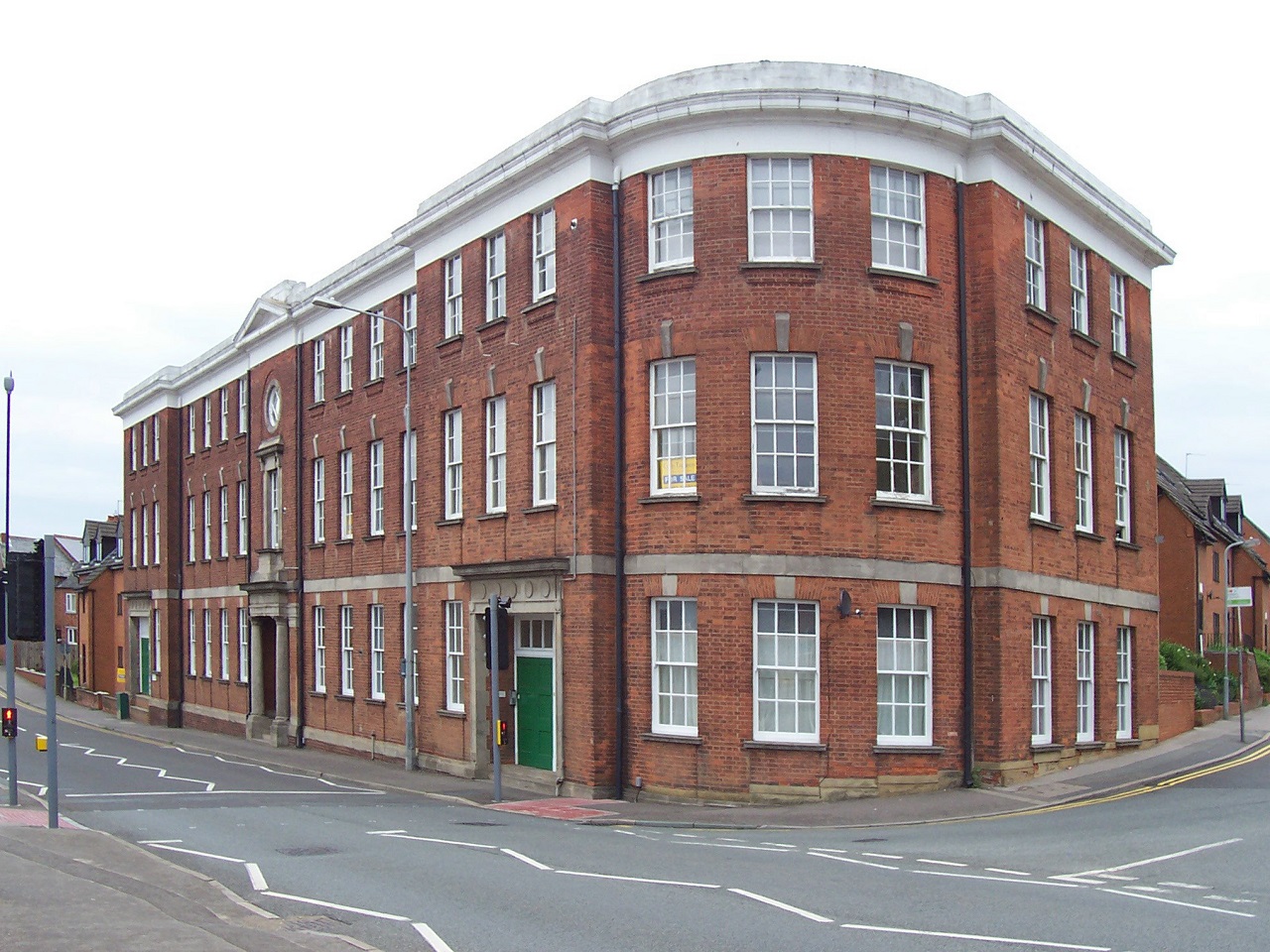
The C.W.S. factory and offices showing the stretch of road from Queen Street to Portland Road
The first major improvement in High Street was in 1910 when the road was widened by setting back the wall opposite the Independent Wesleyan Chapel at the bottom of Queen Street. This wall was part of the garden belonging to The Cottage, which was owned by Mr. John Cave, the boot manufacturer. The improvement involved the purchase of 256 sq. yds. of land at 10 shillings (50p) per yard and an expenditure of about £192 to carry out the work.
By the 14 October 1910 the work was complete, the cost being as follows:
Purchase of land – £128 0s. 0d.
Material and labour – £206 9s. 2d.
Reconstruction of Culvert – £20 18s. 4d.
The County Council contribution was £185.

High Street showing the wall and trees belonging to The Cottage

This postcard is post dated 1915 and shows the wall has been demolished
In September 1922 a census of traffic in Wellingborough Road showed that 6,538 vehicles had passed along the road during the week. Apparently a considerable increase on the previous year. Also at that time an application was made for heavy mechanically propelled vehicles to be prohibited from Little Street, Manning’s Lane, and Duck Street from Wellingborough Road to College Street and from Carnegie Street to High Street. Obviously the few yards in the middle were OK. A year later the Ministry of Transport arranged for an inquiry into the application although notices had already been posted at each end of the streets. There was no opposition but it was July 1924 before it was finally agreed what signs should be put up. It was decided to use iron plates at a cost of 35 shillings each.
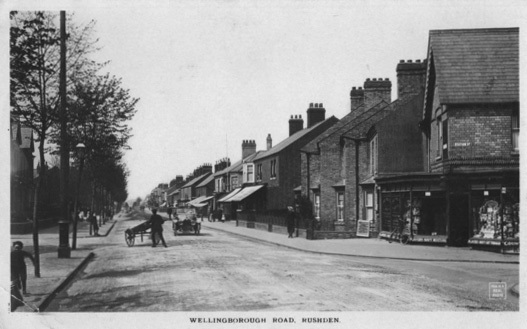
Wellingborough Road, Rushden
A census of traffic on Irchester Road, during the week commencing 19 August 1923, showed that the total numbers of vehicles using the road was 3,192.
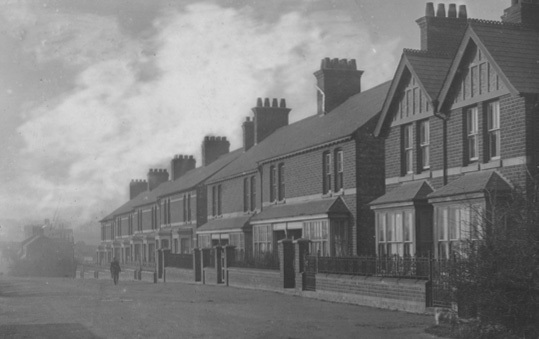
Irchester Road, Rushden
One of the danger spots in Rushden was the Oakley crossroads. In February 1934 the matter was discussed at the council meeting but the County Surveyor had already informed them that it was not considered necessary to erect ‘caution’ signs. There had already been two fatal accidents at the crossroads so the council were disappointed at the response. They considered ‘automatic signals’ but as there were none in Kettering or Wellingborough they doubted if automatic signals would be helpful. It was decided that the main problem was speed. Cars were travelling down the Irchester Road at speeds of 20 or 30 miles an hour, and they thought that if the speed could be restricted to 12 miles an hour there would be no more accidents.
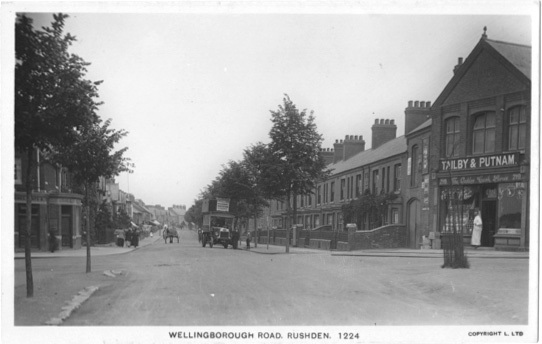
The Oakley Crossroads
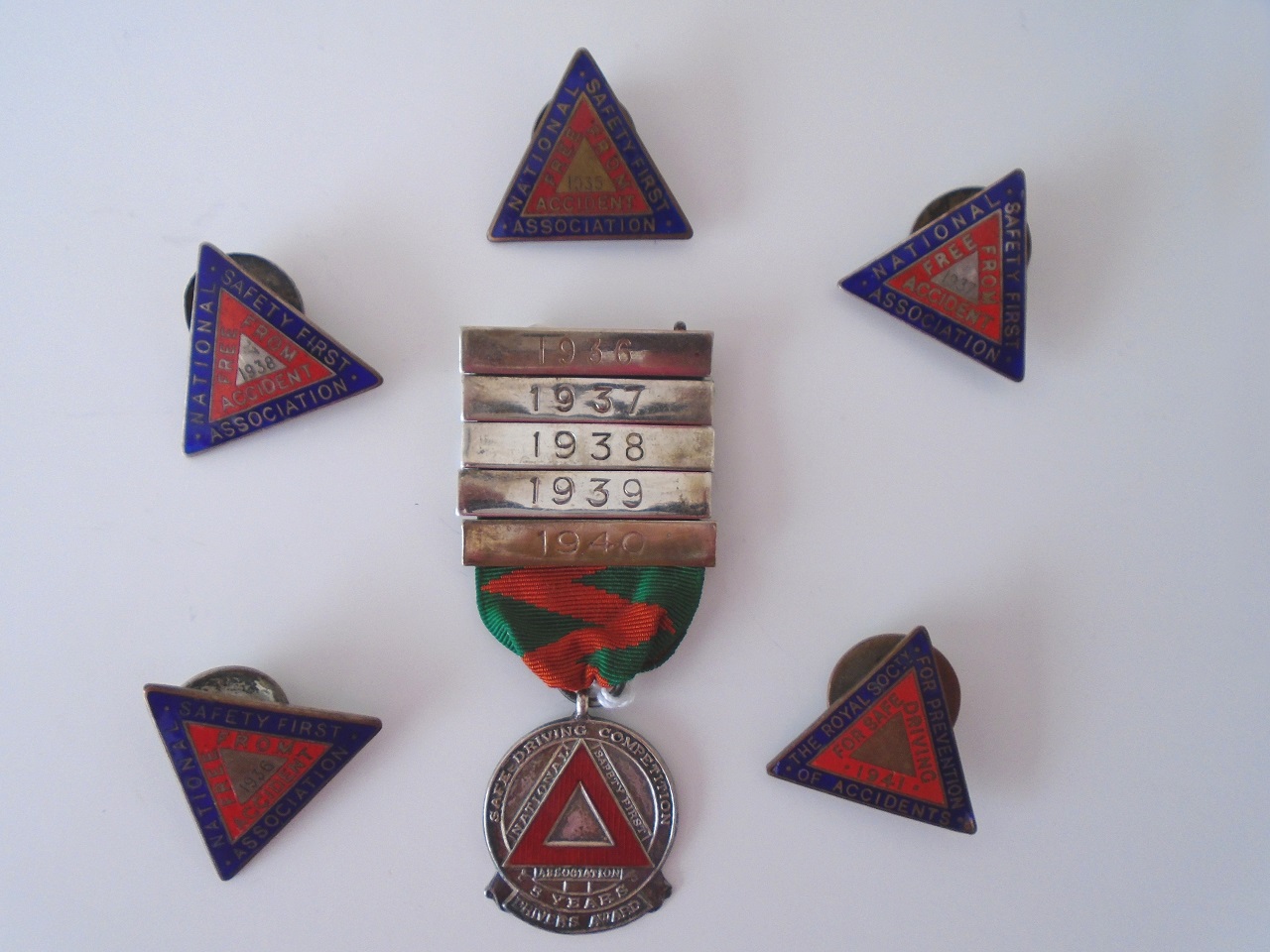
These ‘Safe Driving’ badges were presented to Mr. William Brown, who was for thirty-five years chauffeur and commercial van driver for the Rushden Co-operative Wholesale Society Ltd., boot and shoe works. Mr. Brown lived in Purvis Road and retired at the age of 65, when he was presented with a gold watch from friends in the factory. Over the years he had driven more than 300,000 miles and for his clean driving record he had received three medals in silver and gold, with 17 bars to them. These were awarded by the Safe Driving Competition Association between 1936 and 1954.
On the 12 and 14 January 1949 a census of traffic was taken in the High Street which showed that 2,400 and 2,527 vehicles used the road, besides the 2,561 and 2,876 bicycles. A one-way system was discussed but some thought “the remedy was worse than the disease.” The Bus companies and the Chamber of Trade objected to the proposal.
A public inquiry was held in October 1949, and it was suggested that North bound traffic could use Wellingborough Road and Washbrook Road. If that proposal had gone ahead Washbrook Road would be great fun at peak times now. By the time the inquiry was brought to a close most people were in favour of Rectory Road being used for the North to South route.
In 1951 Rushden applied for traffic lights to be installed at the crossroads near the church, the junction of Church Street and High Street. The Ministry of Transport were not impressed with the application, but in February 1952 it was reported that the Ministry of Transport had no money for traffic lights anyway. Things don’t change a lot, do they?
Eighteen months later, the whole traffic arrangements in Rushden were to be reconsidered, but the councillors grumbled that it had taken 18 months to reach the stage where they only had “great hopes” of getting the traffic lights. It was another year before the lights were installed.

Traffic lights at the top of the High Street
It was 1958 before a major plan to convert High Street and Rectory Road into one-way streets was approved. Traffic travelling south to north would use High Street, and traffic travelling north to south would use Rectory Road. The system began at the beginning of October but drivers were not always noticing the signs and there was a danger of meeting vehicles coming the other way for at least a week.
As there were “No Waiting” signs in the High Street and only one-way traffic it now became very quiet and shop keepers were complaining of lost trade. The Chamber of Trade called a meeting to discuss the situation. One observer counted 143 road signs incidental to the one-way system, and after the route was inspected by highways officials there were even more signs.
A year later, suggestions for improving the one-way system included painting “No Entry” on the road at the north end of High Street and at the bottom of Skinners Hill. This resulted in Rushden having “No Entry” signs at both ends of its main street. The Chamber of Trade was not happy.