

By the amount of rain we have had in June this year it is hard to imagine ever being short of water again, but in the late 1800s Rushden was very short of water. The town was growing fast with the coming of the shoe factories as more houses were being built to provide homes for the workers. The water supply was totally inadequate, with several families often having to share a pump and walk some distance to obtain enough water for daily use.
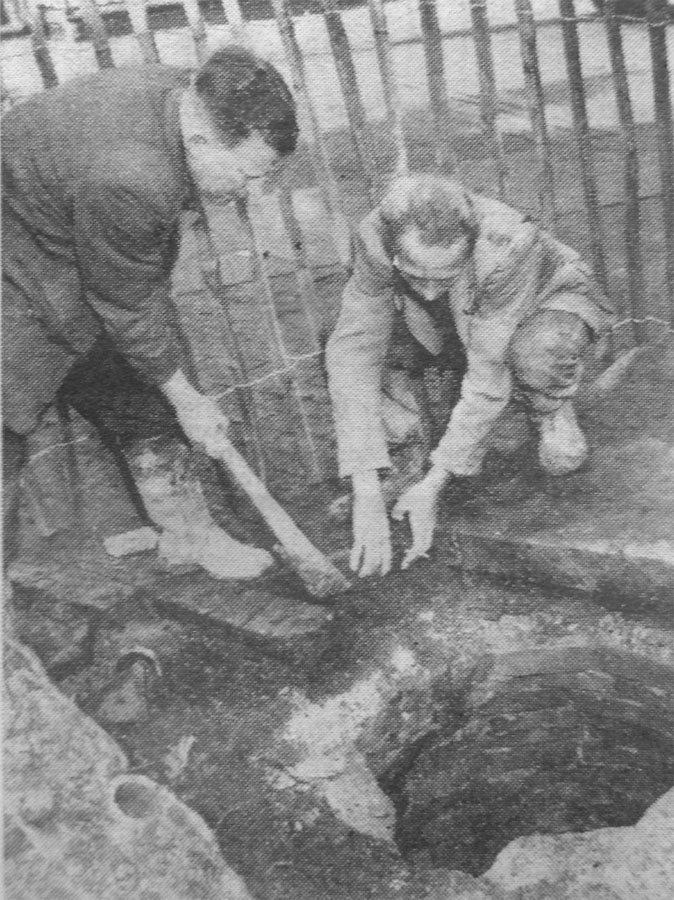
At the beginning of March 1957, workmen found this well, which had been concealed for at least 50 years. The men, who were employed by Arthur Sanders Ltd., were clearing a site next to what was at that time E. Warren Ltd., butcher’s shop, prior to the building of a new shop for that firm. The well was 22 feet deep and contained 18 feet of water. It was lined with brick near the top and stone in the lower parts, and had a lead pipe running to the bottom. In 1891, when the well was probably being used, the shop was occupied by Charles Edwin Knight who was also a butcher.
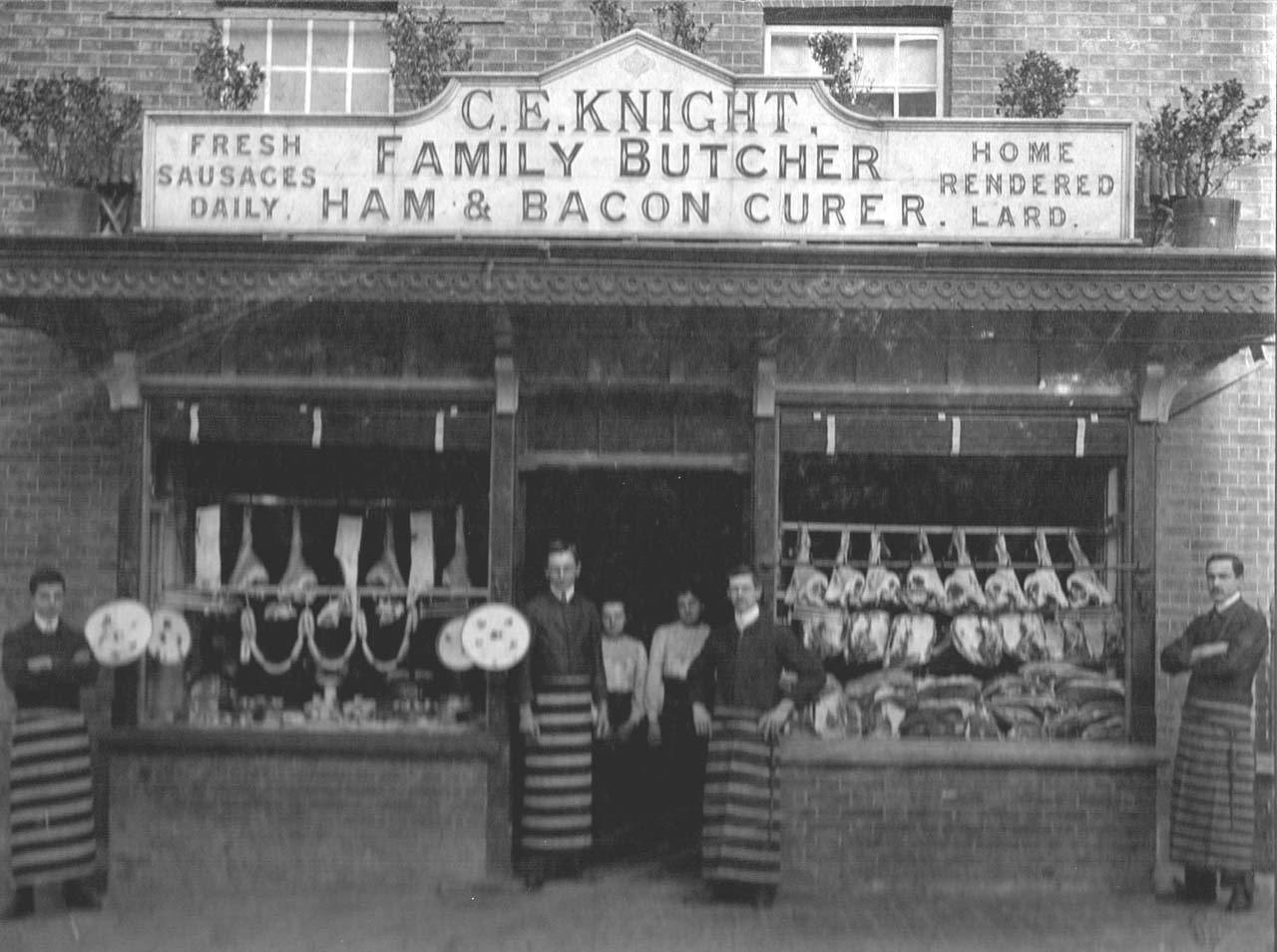
Knight’s shop in the High Street, Rushden
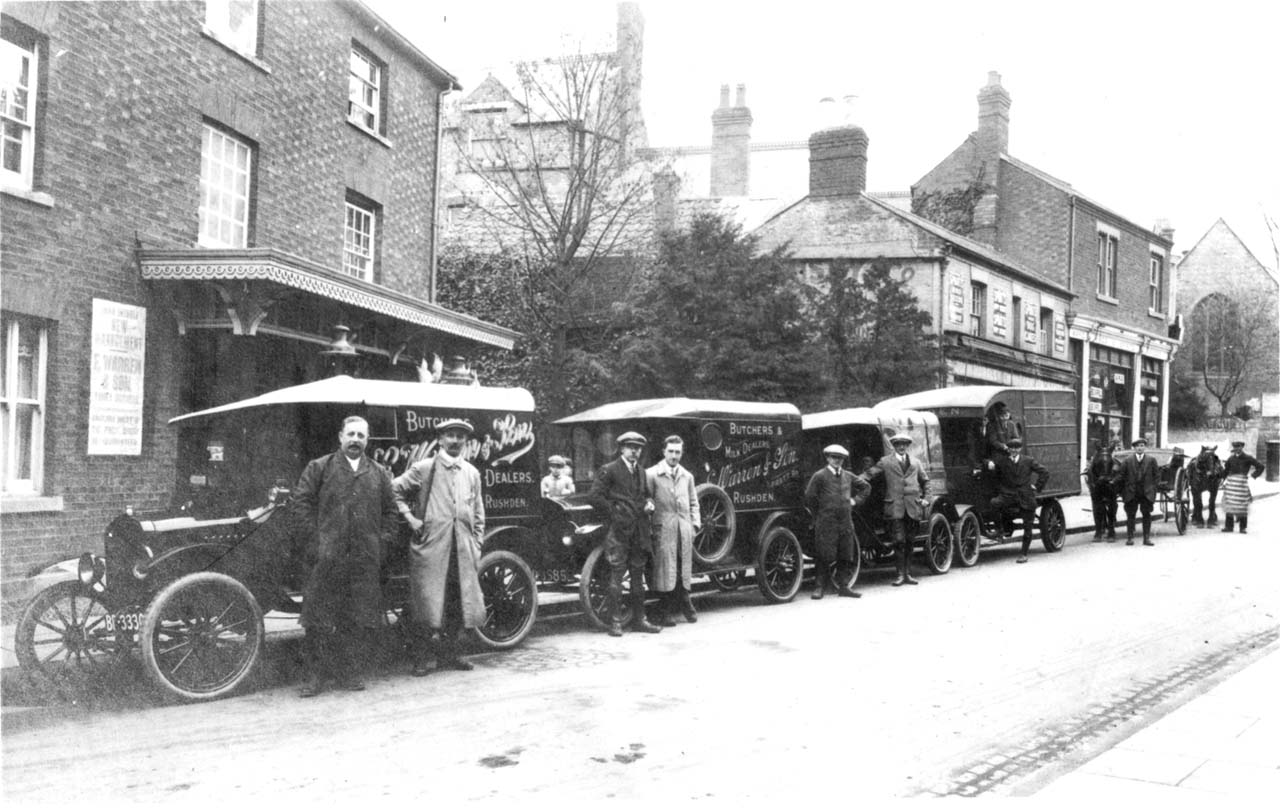
Vehicles lined up outside the shop during the time of Edward Warren
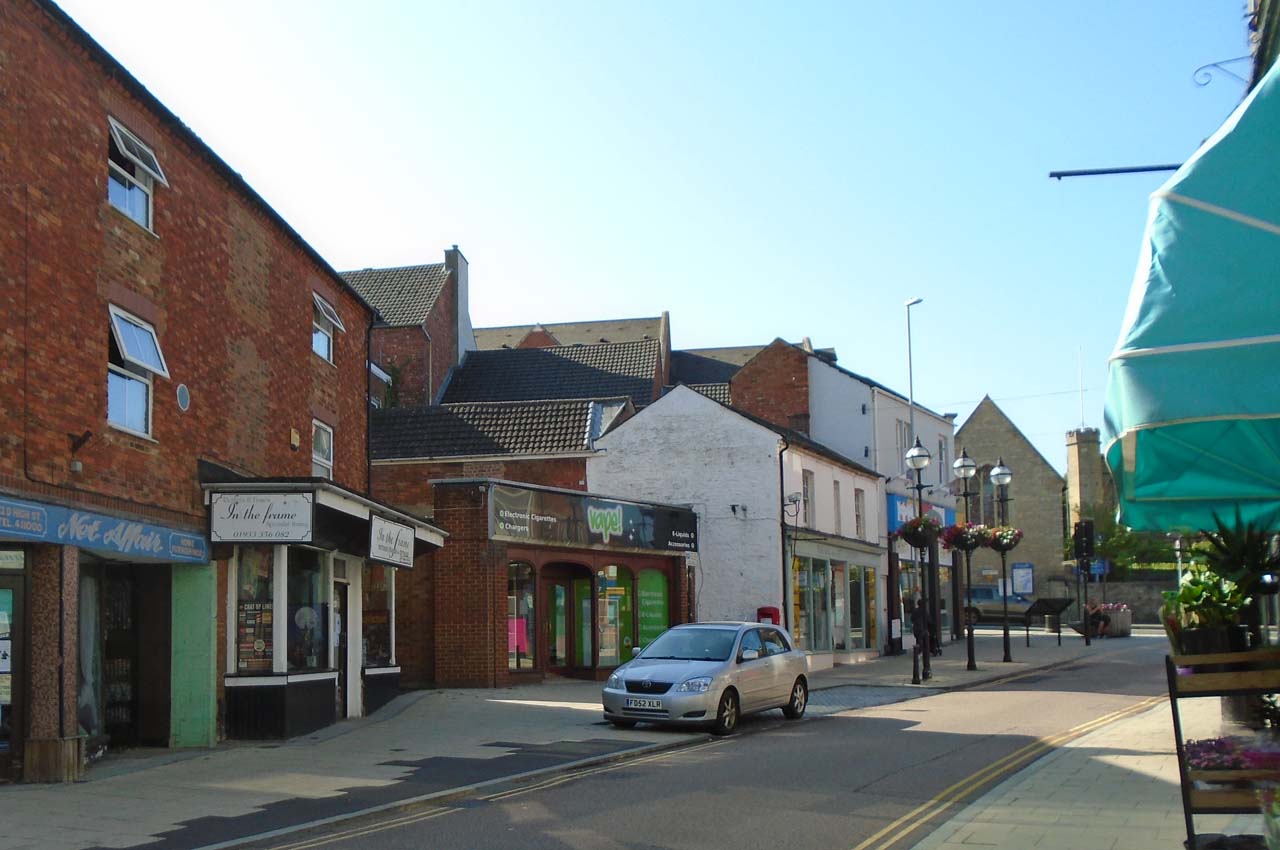
The same view in 2019
The following is an extract from a letter printed in the Wellingborough News on 1 July 1887:-
….in many cases on the Wellingborough-road and the vicinity the water supply is very meagre at the best of times, and at this season of the year is totally inadequate, many of the occupiers of the cottages on this road and in Pemberton-street having daily to walk a long distance to obtain sufficient for every-day consumption. At the present time there are no fewer than 19 houses in the street and road mentioned without water. Twelve of them (six fronting Wellingborough-road and six in Pemberton-street) have drawn all their supplies from one pump, which owing to the incessant demand upon its scanty resources has been unable to stand the strain, and is now out of repair, and since Saturday last the whole of these 12 houses have been without a water supply. The immediate repair of the said pump is a doubtful question.

The houses on Wellingborough Road and Pemberton Street 2019.
To help with the search for water the Rushden council engaged Mr. Eunson, C.E., a water expert, and trial boring was due to start in January 1898. By the end of February boring still had not started. By May a trial bore was sunk at Wymington, costing over £400, and the bore went to a depth of 300ft before it was decided not to go any further. On the advice of Mr. Eunson, the council tried dynamite, which in some instances had had the effect of making way for the water to run into the bore, but in this case, although the vibration was felt for many yards around, there was no water.
In September 1898 another bore was sunk at Knuston. At a depth of 80 feet they were still in clay and there was no sign of water. At this point one of the councillors suggested they ask Mr. Eunson for his bill and square up. He thought they “might have a very long bill.” By the middle of November, and at a depth of 117 ft. with no water, Mr. Eunson advised the council to discontinue the boring.
Various other wells were sunk at Sharnbrook and on the Bedford Road, Rushden, some producing water but still not sufficient. There was some piped water in the town, from the waterworks at Wymington, but this was often turned off at night and on Sundays. In 1901 it was decided to construct another reservoir in Bedford Road, 40ft. higher than the one at Wymington, and in June 1903 the Surveyor was requested to arrange for the town water supply to be switched on, on Sunday mornings, at the same time as weekday mornings. This proved to be ‘a great convenience’ to the public but resulted in the reservoir being 4 feet lower than it was in May.
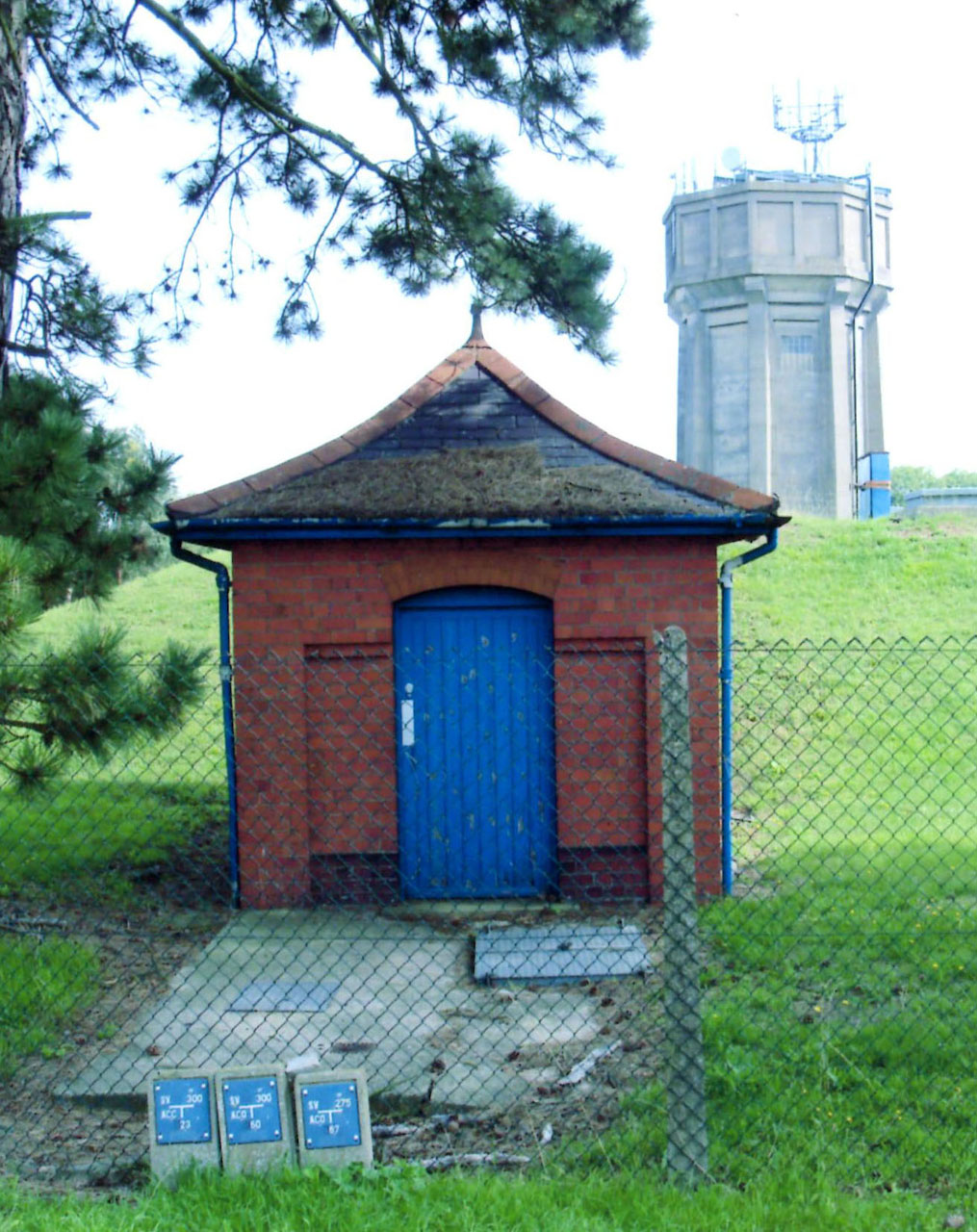
The Water Tower in Bedford Road, Rushden.
When the factory of John Cave and Sons, Ltd., boot manufacturers, caught fire in 1901 there was very little water available. One newspaper report stated –
“The members of the Rushden Fire Brigade were quickly on the spot, but their efforts were impotent, on account of the scarcity of water. Nothing could be done to save the factory and in half an hour the fire spread to the adjoining premises. Brigades from all parts of Northamptonshire were telephoned for and three were soon on the way, but the brigades at Northampton and Kettering, learning that there was no water, declined, it is said, to proceed.” The report also states – “Twenty years ago Rushden was a small village, but it has grown with remarkable rapidity owing to several successful shoe manufacturers establishing factories there. The growth in population has been so phenomenal that it has been impossible for the local authorities to keep pace with the increase. The water supply at present is only that of an overgrown village. The brigades, in consequence, were all but powerless. The intense heat emitted by the immense body of flame was another great impediment to effective work, it being impossible, except by entering adjacent houses, to approach within measurable distance of the flames.”
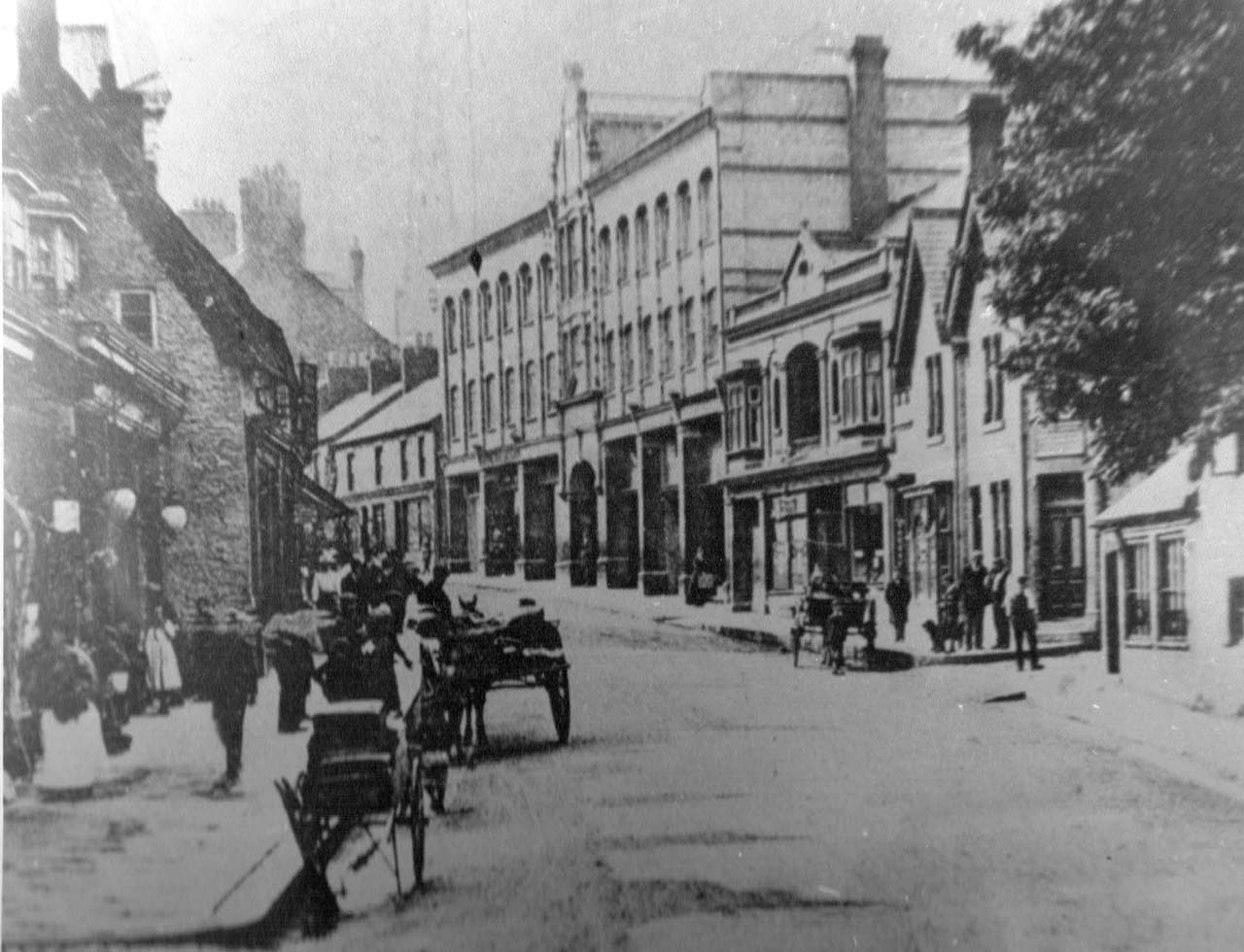
Rushden High Street showing Cave’s factory before the fire.
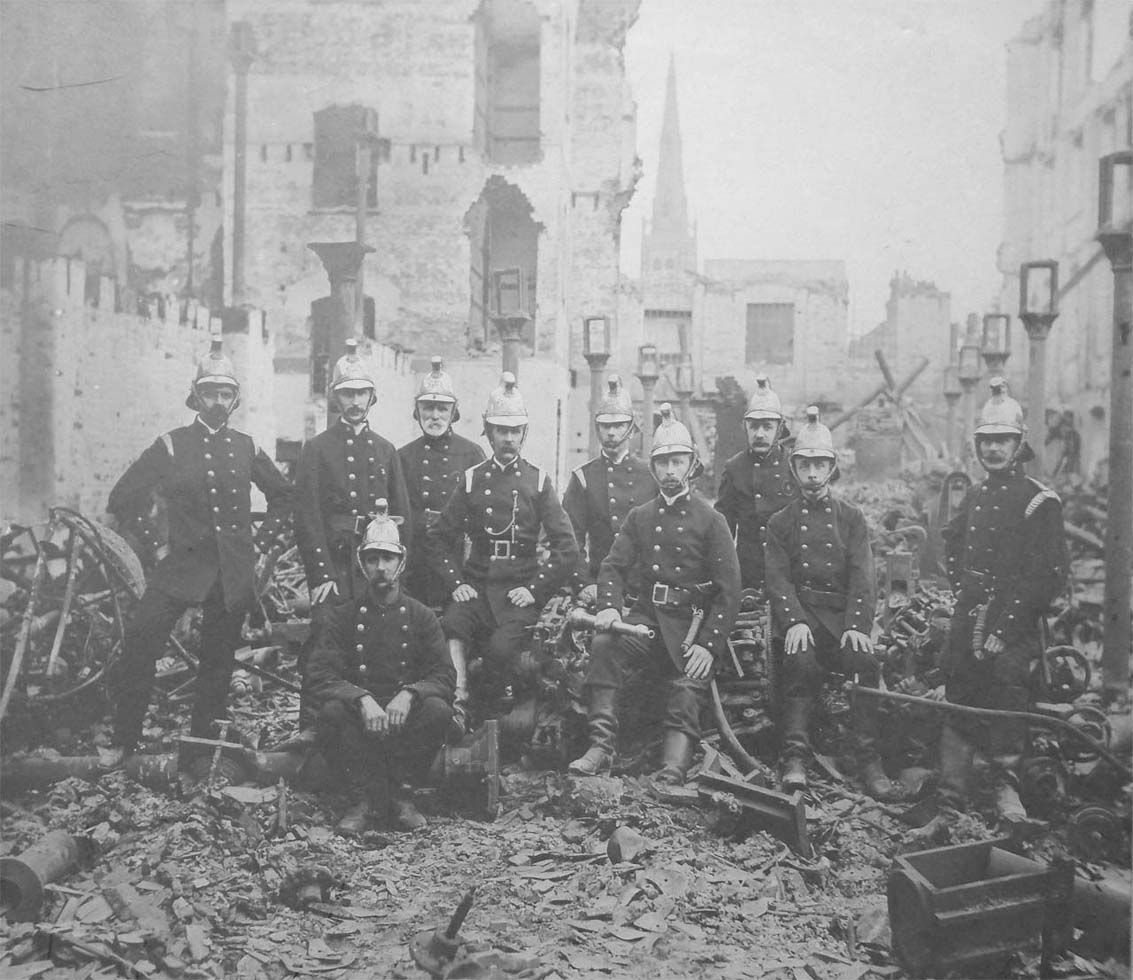
Firemen in the ruins of the factory.
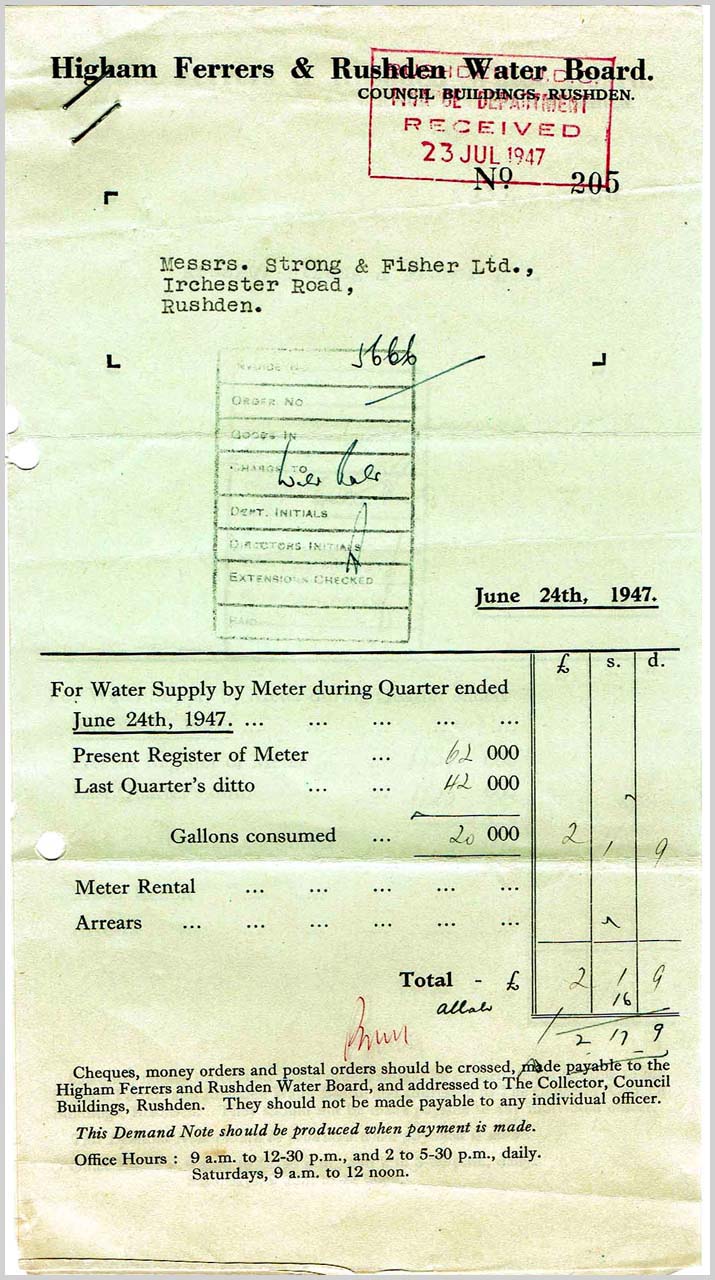
Town meetings were held in Rushden and Higham Ferrers in December 1901 and in Rushden Mr. George Denton outlined the steps that had already been taken to find a water supply to meet the needs of Rushden, and how they had all failed. It was proposed to form the Higham Ferrers and Rushden Water Board and the resolution was passed.
It soon became obvious that the Higham Ferrers and Rushden Water Bill would encounter strong opposition on its way through the legal stages. The area required for the works amounted to just over 133 acres and included land from three estates: Ecton, Overstone and Mears Ashby. The Act of Parliament would allow compulsory purchase of the land, but local people were worried that the reservoir would take their natural water, and that fishing and shooting activities would be lost.
Certain concessions were negotiated between the Board and some of the parishes and Councils so that, despite their initial cautiousness, one by one the various authorities approved the scheme.
On 12th March 1902, the Rushden and Higham Ferrers Water Bill was considered in committee at the House of Commons. The clauses added to the Bill, to meet the objections and requirements of the Northamptonshire County Council, the Wellingborough Rural District Council, the Bedfordshire County and Rural District Councils, the Midland Railway, the London and North-Western Railway, and the Nene Valley Navigation Commissioners, were passed without question. A somewhat lengthy discussion took place over a large number of amendments suggested by the Local Government Board. So far as they did not affect the main principle of the Bill, or materially limit its working, the promoters accepted them. However, the objections raised by the Local Government Board, especially those dealing with the financial proposals in the Bill, were contested. The Local Board’s objection as to the period to be allowed for the repayment of the loans was overruled and the 60 years provided by the Bill allowed to stand, although for a comparatively small amount for extras, improvements and working expenses, the period of repayment was reduced to 40 years. The Bill then passed through all its stages in the House of Commons.
The Bill received the Royal Assent in June 1902 and the two towns chose their representatives: six from Rushden and three from Higham Ferrers. The first meeting was held in July and Mr. George Denton was elected chairman with Mr. Owen Parker as vice-chairman and Mr. G. S. Mason as clerk. Mr. W. B. Madin was appointed Surveyor to the Board.

Mr. George Denton
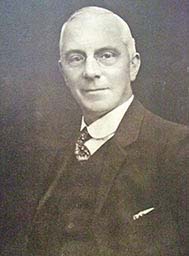
Mr. Owen Parker
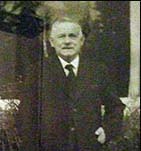
Mr. G. S. Mason
In September, the members met to review the tenders received. Ultimately the tender of Mr A E Nunn, of Tenterden, Kent, was accepted, the amount being £57,072 2s 0d [£57,072.10].
Work at Sywell began and by March 1903 Mr Middleton, the engineer, reported that there were 38 men employed at the site at Sywell, and the average number at work on the service reservoir and laying the pipe-track was 100.
The scheme was finished by the end of 1905, and during the next six months the water accumulated in the reservoir.
In June 1906 Rushden Fire Brigade were able to carry out a series of drills to test the pressure of water, and in an experiment near the church they were able to demonstrate that a stream of water could easily be thrown over the church.
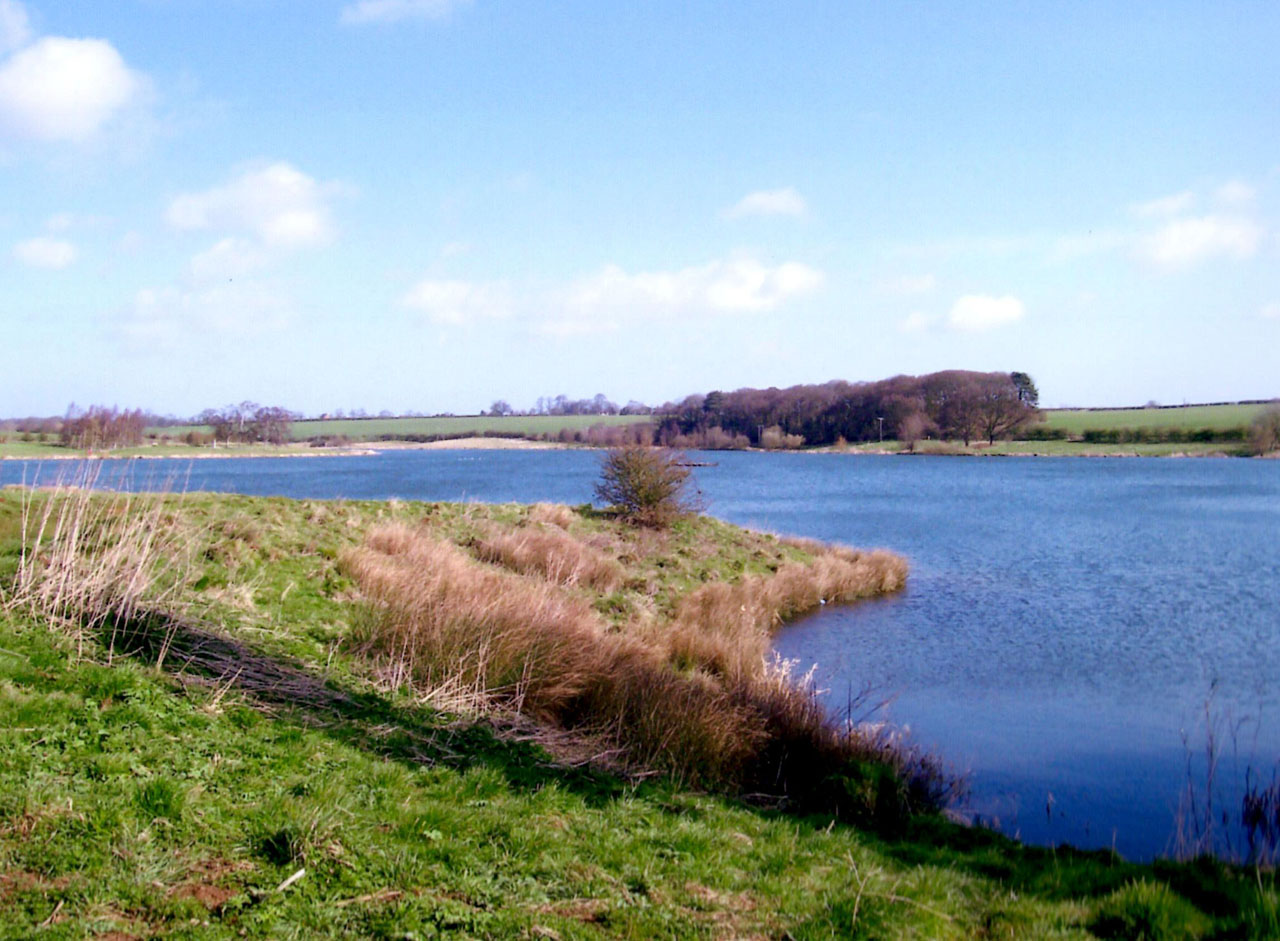
Sywell Reservoir was officially opened at the beginning of July, 1906 by George Denton, chairman of the Joint Water Board for Higham Ferrers and Rushden.
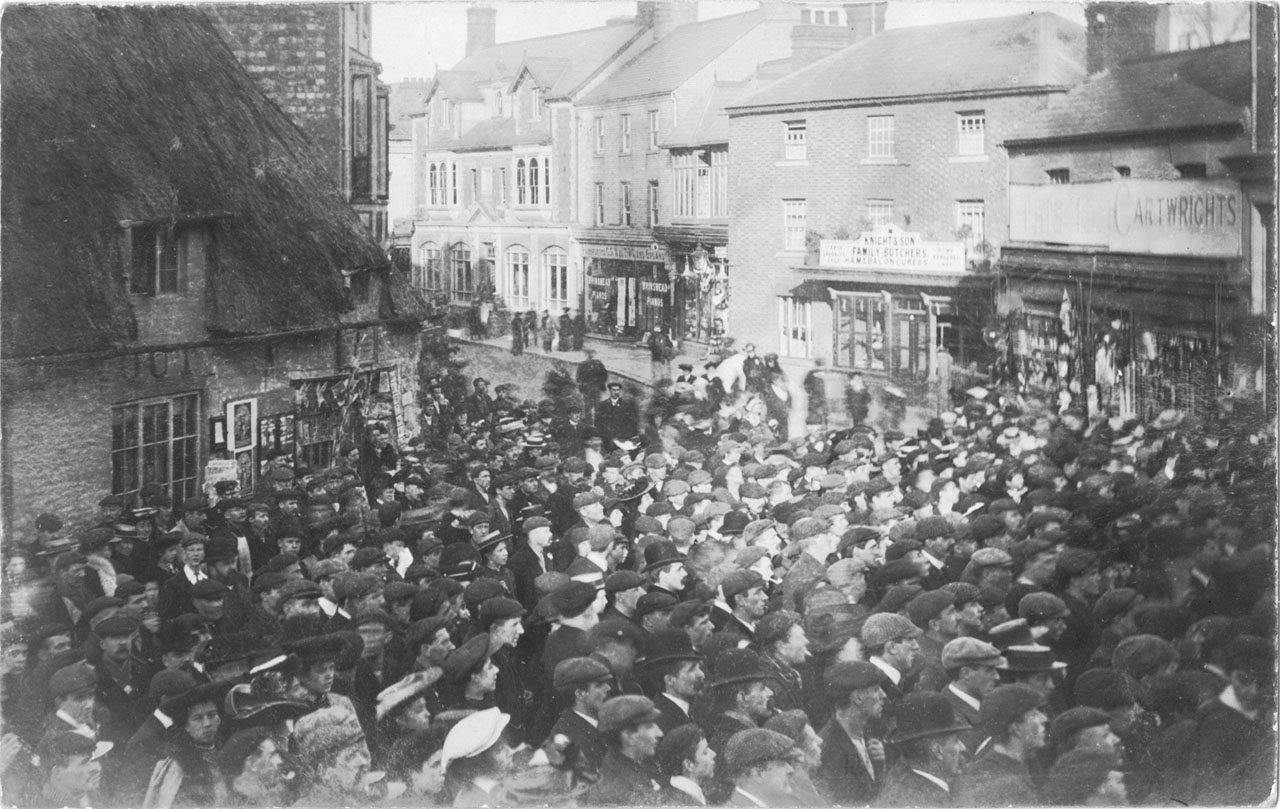
The crowds watching as the water was turned on in Rushden.
· It took nearly 3½ hours for the water to travel from Sywell to Rushden.
· It was 3½ miles round the edge of the water.
· The cost of construction was about £70,000.
· The mains passed through Earls Barton, Doddington and Wymington.
· The land draining into the reservoir was 1,740 acres.
· The scheme allowed for a supply of about 660,000 gallons of water per day.
· The dam was about 1,000 feet long.
· The water area was about 70 acres.
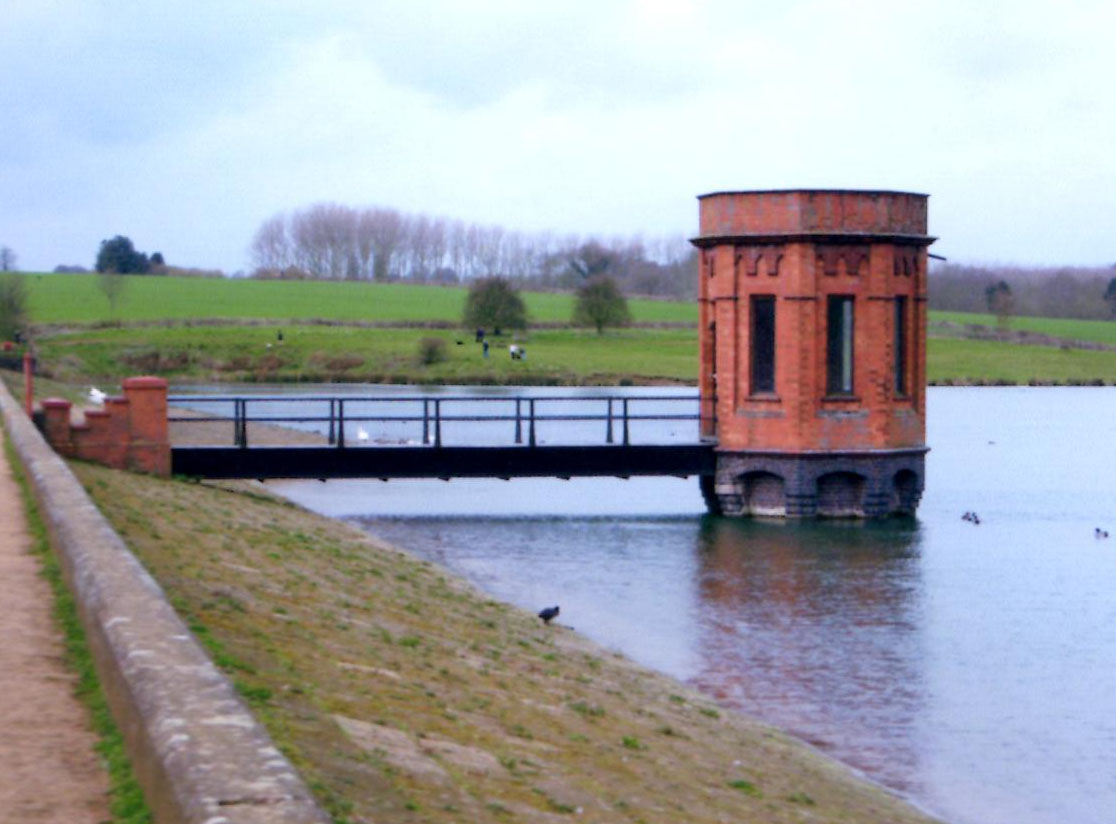
Sywell Reservoir
Sywell Reservoir