
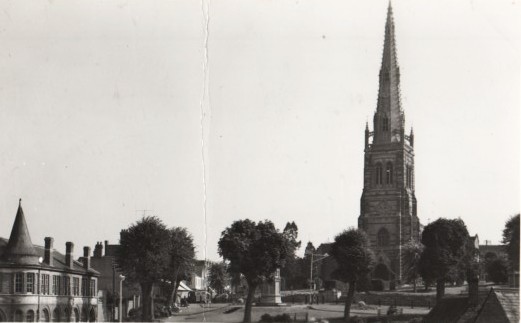
According to Dr. Fisher, whose writings on Rushden Past and Present were published in the Rushden Echo in 1920, it is almost certain that Rushden’s Parish Church, St. Mary’s, had a clock in 1500. The wooden frame and driving wheels were probably made by the village carpenter and blacksmith.
In the eighteenth century a new clock was installed in the church tower, the old one being given to Wymington. The new clock which eventually found its way to Hargrave Church, was made by Eayre of Kettering.
When the Rev. J. T. Barker came to Rushden in 1868 the parish church and the town in general were in a poor state. He set about improving both and spent almost £6,000 restoring the church, money raised by mortgaging some of his land. The repair of the church clock was to be part of the restoration, but when it was taken down and examined it was decided it would be better to have a new clock.
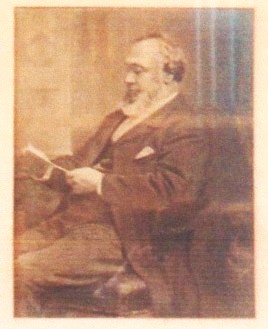
Rev. J. T. Barker – made Hon. Canon of Peterborough in 1880
At a parish meeting in May 1879, held in the Vestry Hall, and presided over by the Rector (Rev. J. T. Barker) the business was to decide the kind of clock to be placed in the church tower. The chairman pointed out that the funds in hand, amounting to £100, would be enough to provide a plain clock. One that chimed the quarter-hours would cost about £30 more. All were in favour of a clock that chimed the quarter-hours and £13 was donated in the room. It was decided to appeal to the parish for the remaining £17 pounds.
A concert was held which raised £10 following which Mr. J. Enos Smith, the church organist, arranged another concert to be held in the National Schools on the 15 November 1878. Despite the bad weather about 200 people attended, including Mr. and Mrs. F. U. Sartoris from Rushden Hall, accompanied by one of their daughters, Mr. F. Robinson, and Mrs. Currie of Rushden House.
J. E. Smith – organist at St. Mary’s Church
The concert was very successful and raised £5 which was handed to the Rector.
By September 1879 the new dial and hands were in place, but the clock was not working. According to a report in the Wellingborough News talk about the church clock had replaced talk about the weather. All questions were answered towards the end of September when the hands and bells announced the completion of the work. At the invitation of the Rev. J. T. Barker the clock committee had met earlier in the week to inspect the new clock and to have its mechanism explained. The makers had sent a skilled workman, Mr. Martin, to explain the new clock’s workings.
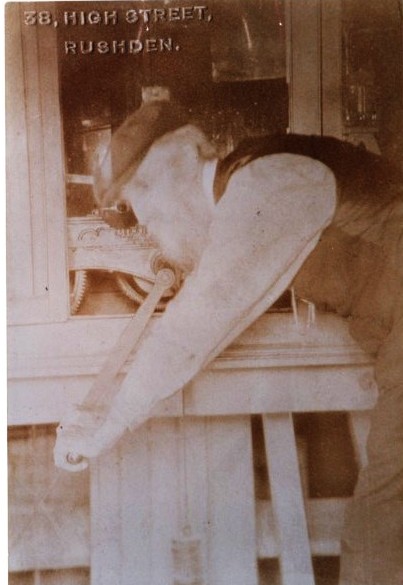
After the inspection the committee returned to the Vestry Hall and decided to place the winding and general care of the clock in the hands of Mr. Fisher, a local watchmaker. The clock had been supplied by the Croydon firm of Gillett, Bland and Co., and had all modern improvements. The cost, excluding masons and carpenters’ work was about £120. This amount had already been promised or collected, leaving the cost of the masons and carpenters’ work still to be provided for.
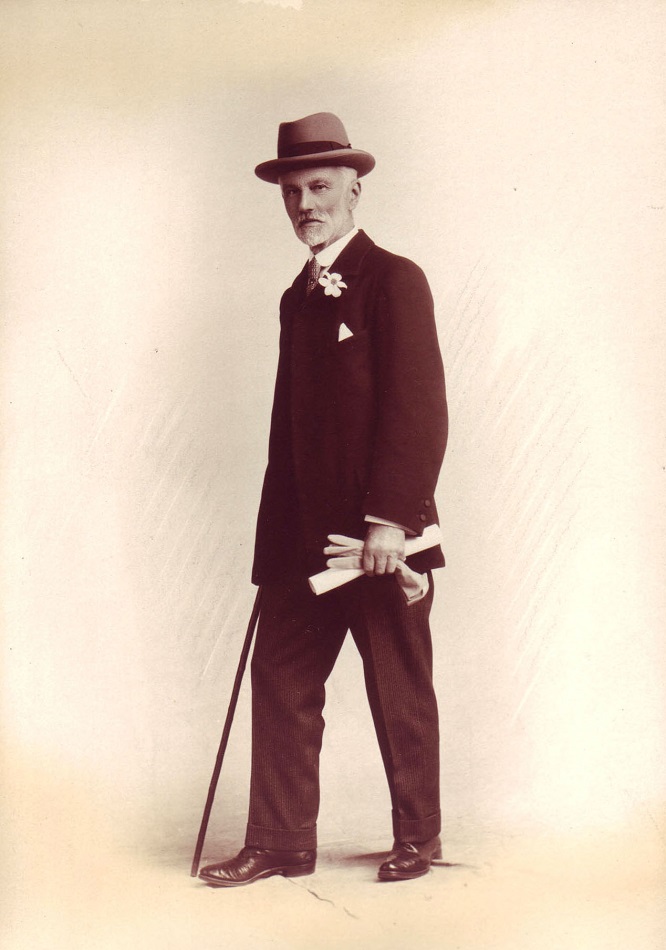
Mr. Charles Fisher c1910 when he was 80 years old
On 6 February 1880 the Rev. Canon Whyley gave an interesting lecture, in the National School, on “The Life and Genius of Handel,” with illustrations from his oratorios by a band and chorus conducted by the Rev. J. E. Stocks, vicar of Market Harborough. The proceeds were to go to the Church Clock Fund. Unfortunately, the attendance was small.
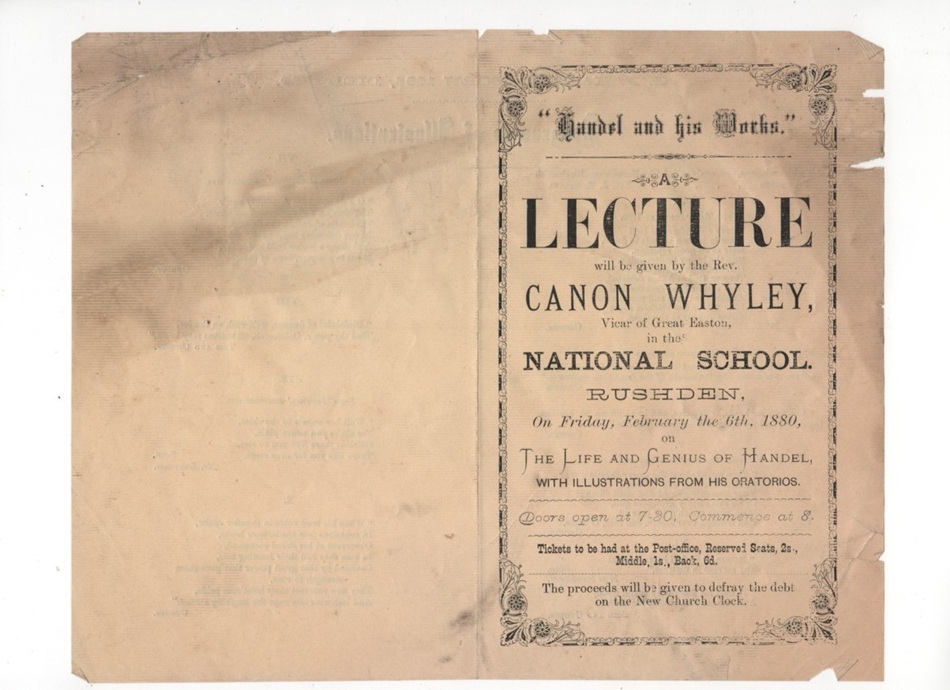
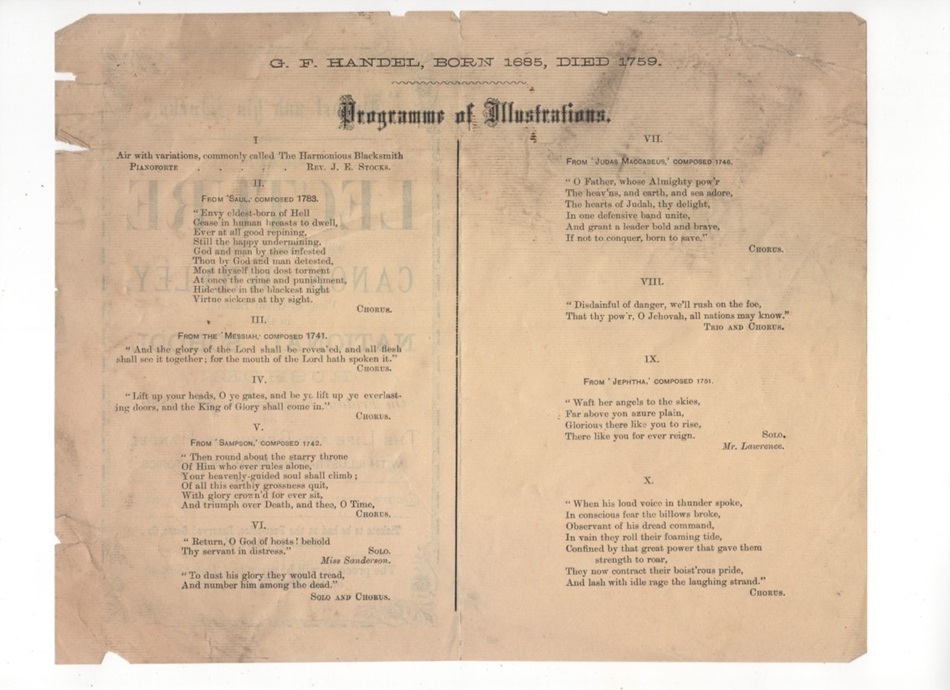
The programme for the Lecture held on 6 February 1880
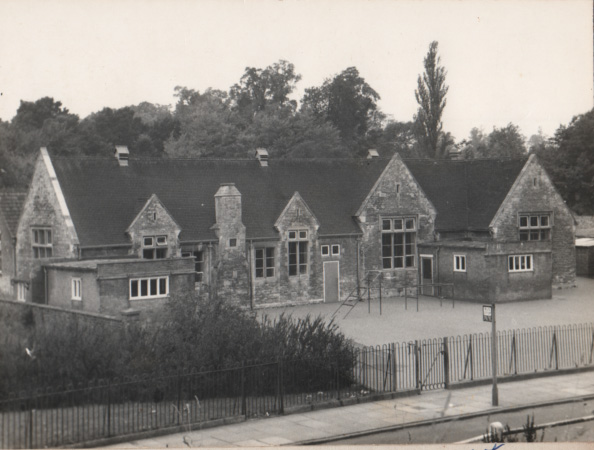
The National School – later South End School
By 1986 the same clock was in the care of Mr. Peter White. He had taken on the job in 1952 when work had been carried out to the church spire and an extra face was added to the clock. In an article in the Evening Telegraph Peter said: “The clock was made in 1879 and has been refurbished. It is very reliable, but the pendulum is made of wood and has to be regulated depending on the weather. The wood shrinks in the dry weather and makes the clock go faster, so it has to be compensated.” The work had to be carried out every other day and involved climbing 66 steps.
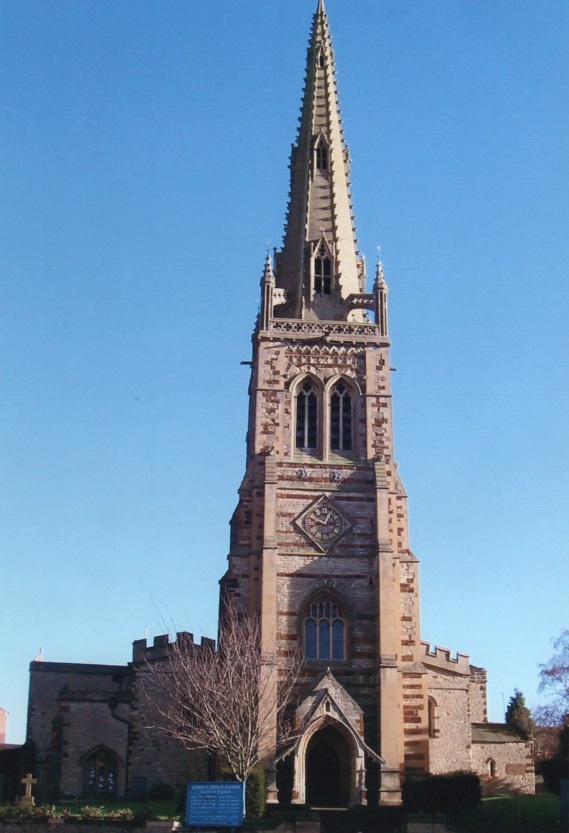
St. Mary’s Church, Rushden