

Rushden Urban District Council purchased Rushden Hall and Park from Mr. Morris Wheeler in 1939 for £5,000. Nine years later it was a big problem, and they needed to decide what to do with it.
During World War II the Hall was requisitioned by the War Office, and in August 1944 a unit of USAF men of the 860 Ordnance Heavy Auto Maintenance Company came to Rushden. The unit was based in Hall Park and Nissen huts were erected along the avenue from Hall Avenue towards the Hall.
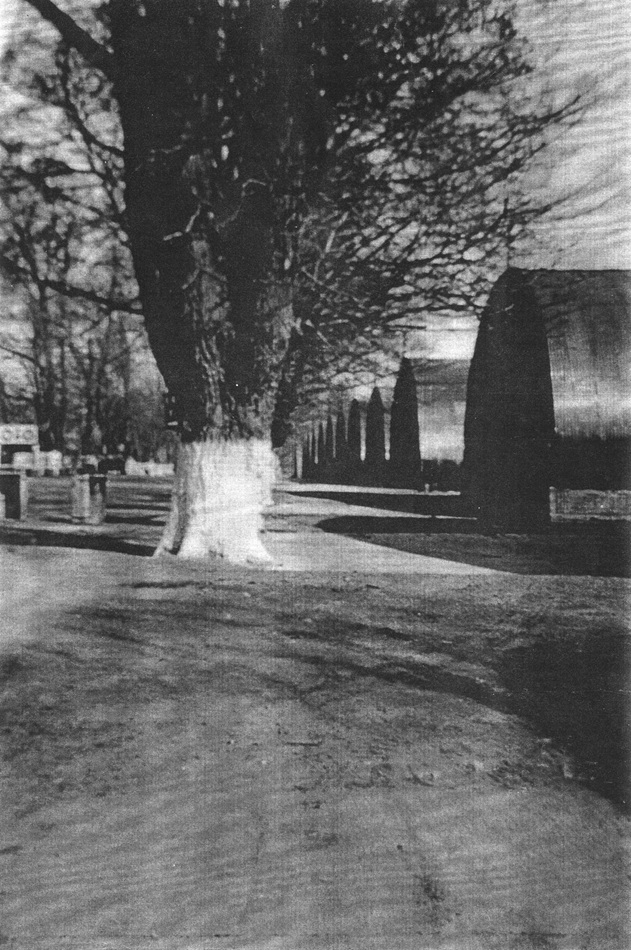
Nissen Huts in Hall Park
By 1948 Rushden Hall was in need of serious attention. The Council had to decide whether to allow it to fall into a state of complete decay and then demolish it, or to undertake comprehensive repairs and put it to good use.
At the time the Hall was not being used to the best advantage, or with care, and was rapidly deteriorating. The previous year repairs had been carried out to the parts of the roof and other parts covered to prevent further damage to the interior. An estimate of £5,000 to £6,000 was suggested for complete restoration including adaptations for and equipment for public use, but this was very approximate. As materials were in short supply following the war, it was thought there would be difficulties in obtaining the necessary permits, materials and labour to carry out the work. It was considered that the question of the future use must be decided before any work could be undertaken.
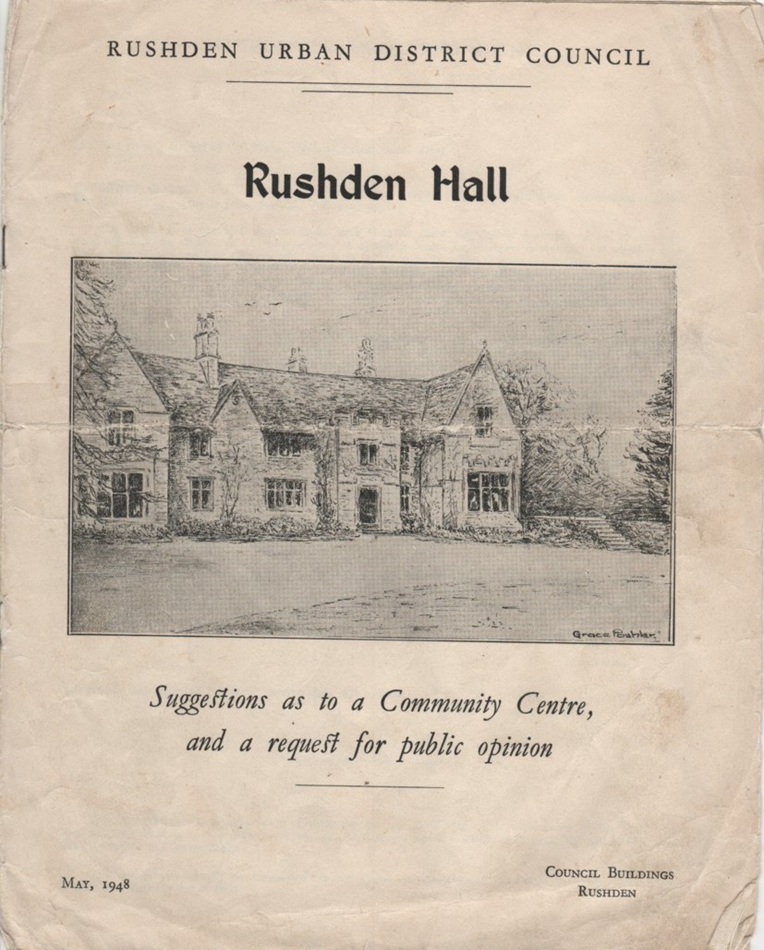
The report produced by Rushden Urban District Council
Several suggestions had been put forward including offices, but it was thought that the Hall was not structurally suitable for that purpose.
Refreshment Rooms for the Hall Grounds. Although an attractive feature it was decided the demand for such facilities would not justify the exclusive use of the accommodation.
Library. The building would be suitable for use as a library, but Rushden already had a library and there would be difficulties in transferring the library from its present site.
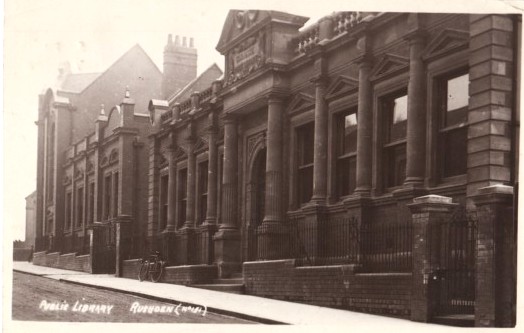
Rushden Carnegie Library in Newton Road
Museum. The Hall had been used as a museum before the war, but it would need a person with adequate knowledge and time to devote to the proper classification and display of exhibits.
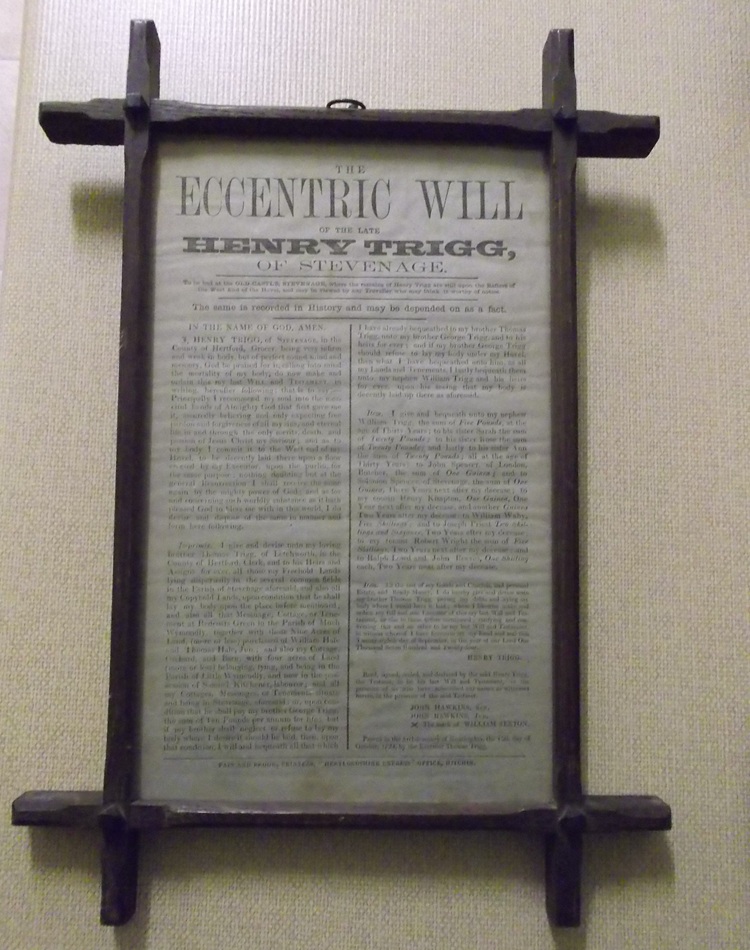
The Eccentric Will of Henry Trigg was one of the exhibits in the museum before WWII
Art Society. The building might be suitable for this purpose but again it was thought that the demand would not be sufficient to justify the use of the whole building.
Community Centre. This was the most popular suggestion as several of the ideas could be incorporated in a Community Centre. The need for Community Centres had been expressed by the Ministry of Education with the comment that with the reduction in working hours, a new social problem had arisen in providing facilities for social and recreative activities for the large numbers who had the leisure time to enjoy those facilities. At that time the Ministry of Health agreed to pay £10,985 to reimburse the Council for any damage caused during the time the building was requisitioned.
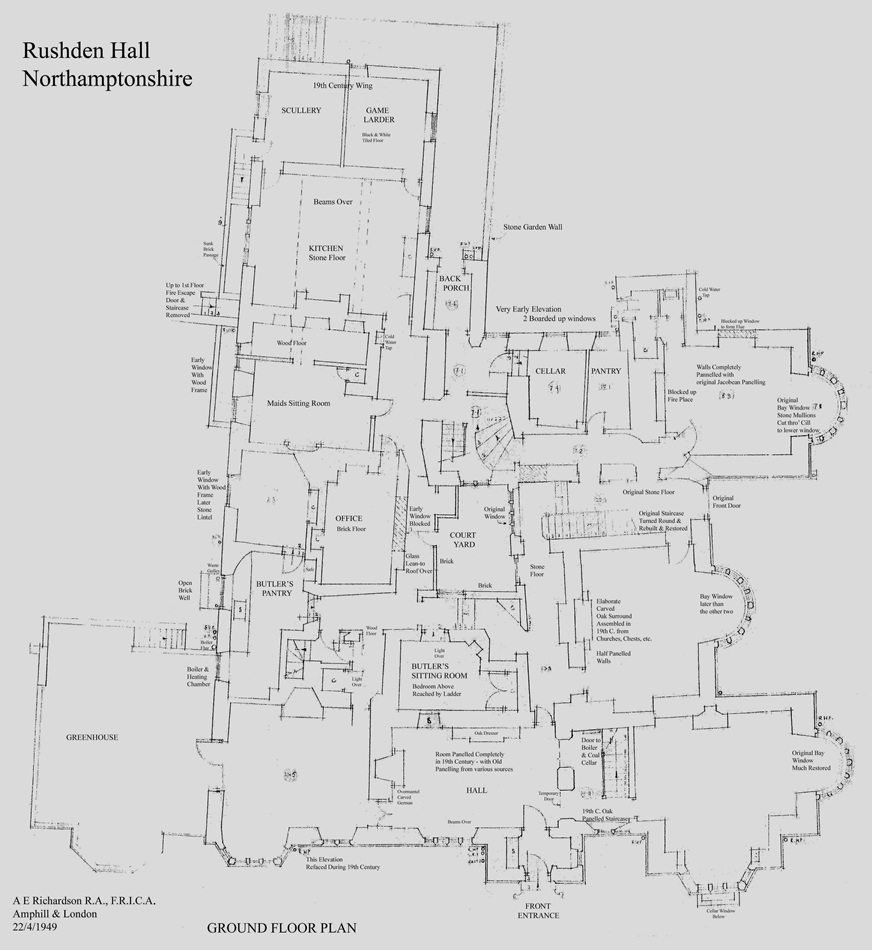
A plan of the ground floor of the Hall in 1949
By January 1949 it was agreed that the Hall should be used as a Community Centre but the months went by and not a lot happened. In March 1950 the Avenue was replanted with Cypresses and Red Chestnuts which was paid for out of the compensation money, and a scheme was finally put in place to restore the Hall. The kitchen service room, and other rooms were to be used for cultural and educational purposes and the upstairs rooms as a repository for local records. It was planned for it to be ready for the Festival of Britain in 1951.
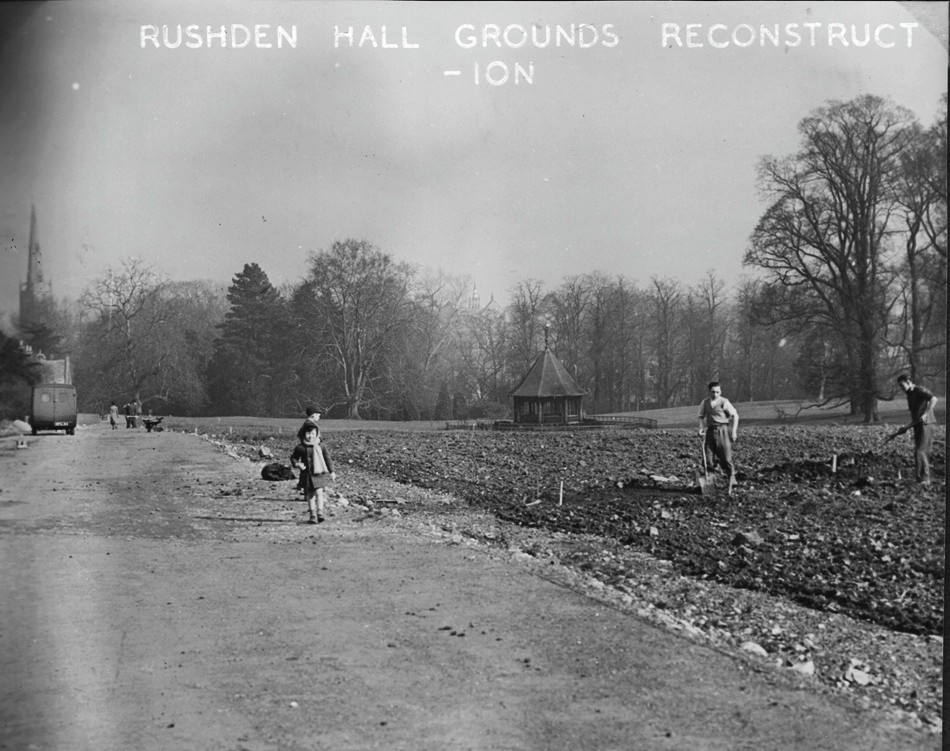
The start of replanting the Avenue.
The Hall continued to be used by various organisations but by the 1960s it was again in big trouble and in danger of being demolished. That is another story.

A recent photograph of Rushden Hall, now well used and well cared for