
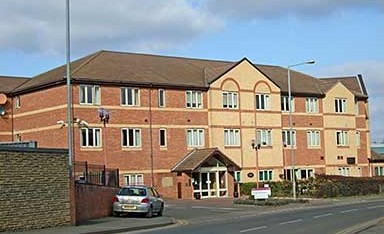
On 12 November we paid a visit to Imperial Court in Duck Street, Rushden, and gave a talk about Rushden to some of the residents. The talk was based on a walk through the town centre by a visitor to the town who had arrived by train.
The town of Rushden was built on the boot and shoe industry, and it was the manufacturers who persuaded the Midland Railway to put in the branch line from Higham Ferrers to Wellingborough. Previously goods had to be taken to Irchester or Irthlingborough. The line opened for goods in 1893, and the first passenger train ran from Higham Ferrers on 1 May 1894.
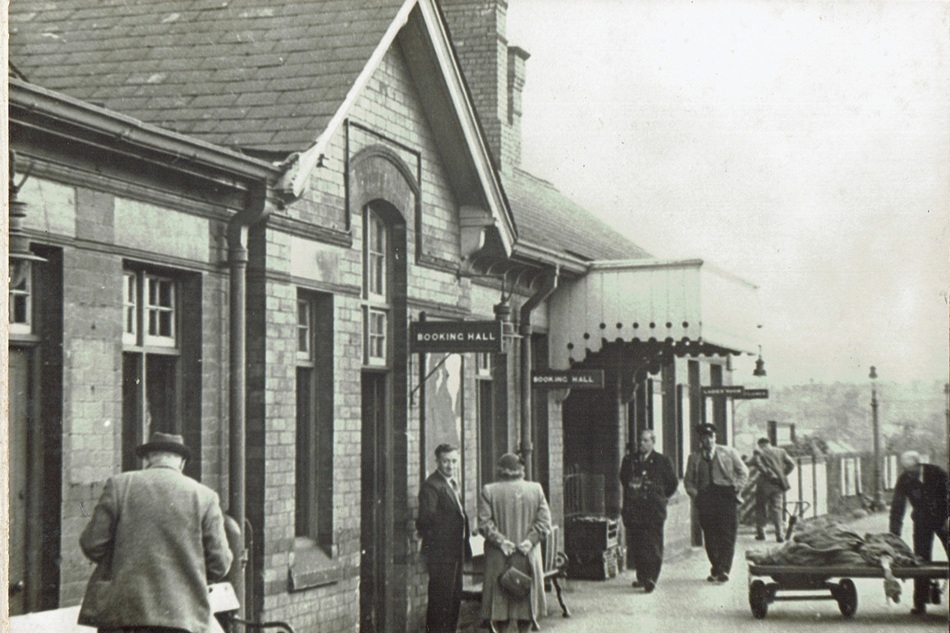
Rushden Station opened in 1893 for goods, the first passenger train running in 1894
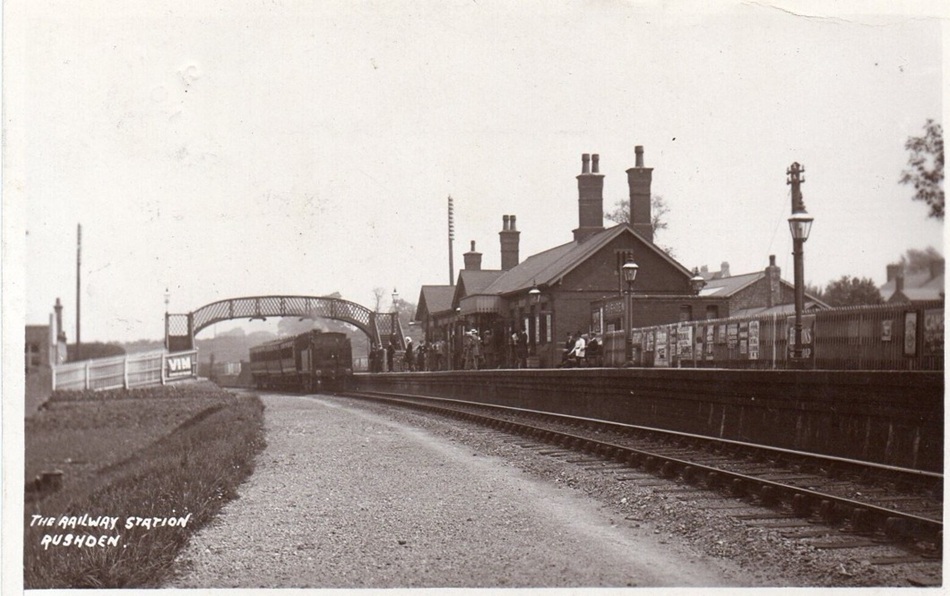
Rushden Station closed in 1959
Having arrived at the station our visitor crosses the footbridge into North Street and the first building he sees is Rushden Police Station which was built in 1900. It had a large room which was occasionally used as a court, 3 cells and a drying room for wet clothes. There was also an exercise yard. Upstairs were bedrooms and a bathroom. It was demolished in 1975.
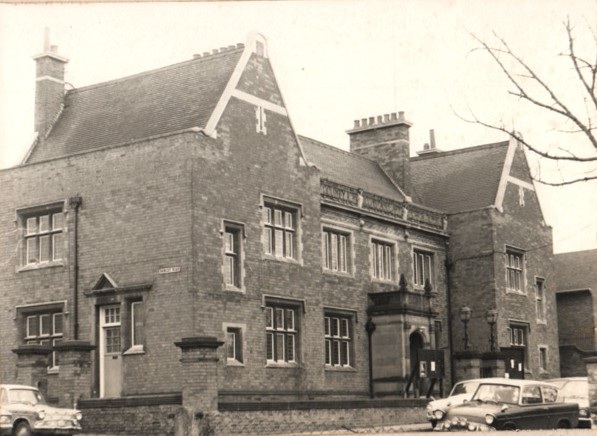
Rushden Police Station was built in 1900
Walking down Shirley Road to the main road our visitor will see Birch’s Bus Garage which was built in 1937. The buses ran from London to Rushden and operated hourly in the 1950s. On the 14 September 1969 the 203 and 203M bus routes were sold to United Counties together with twelve vehicles. The depot in Rushden was also sold.
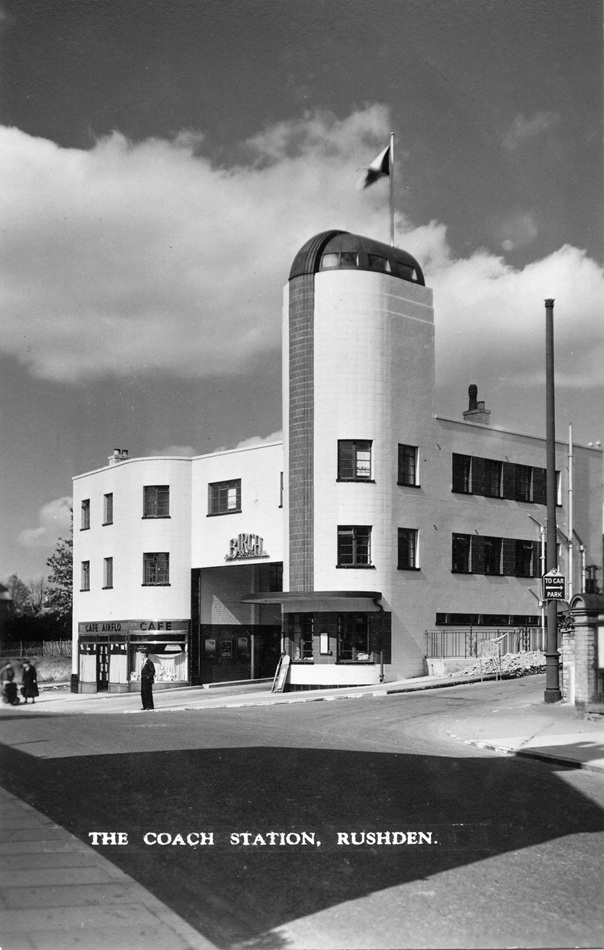
Birch’s Bus Station at the bottom of Shirley Road
Turning towards the town centre our visitor will see the Queen Victoria Hotel. The Northampton brewers Phipps and Company took on the project to build the hotel following the arrival of the railway, and it was opened in 1899. Our visitor could have popped in here for a cup of coffee but would not have been able to buy “intoxicating liquors ….except during permitted hours.”

The Queen Victoria Hotel
On the opposite side of the road stood the Royal Variety Theatre which was opened in September 1911. The stage was one of the largest in the county, and the Theatre had its own orchestra. The plan was to run it on variety shows, pictures and occasional pantomimes in the winter. The Royal Junior Club catered for children on Saturday mornings and during the 1960s Teenbeat shows were held on Saturday afternoons for teenagers.
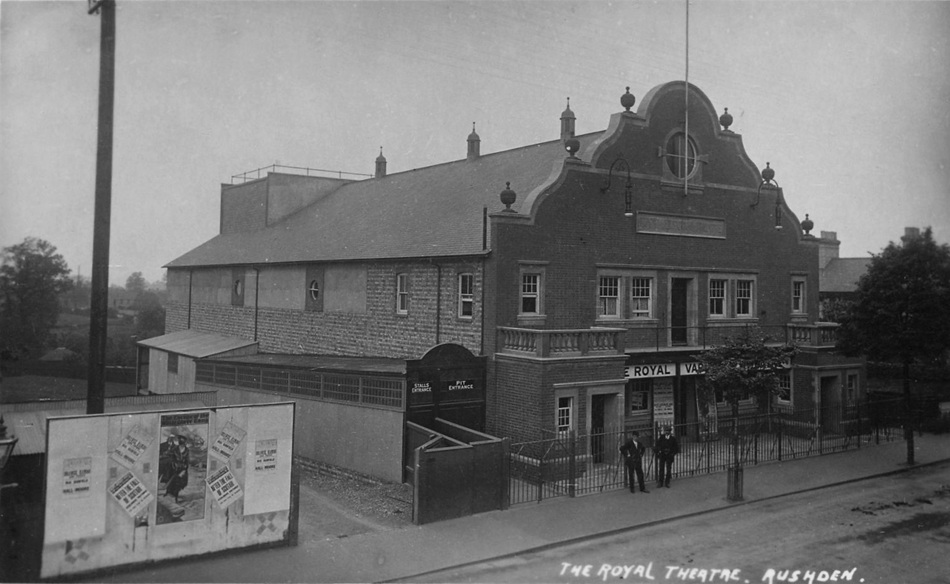
The Royal Variety Theatre opened in 1911 and closed in 1961
Further along the High Street our visitor would come across Stonehurst. This was also built by Phipps in 1896, originally as a wine store. It was known locally as the Belgian House, owing to the fact that Belgian refugees were housed there during WWI. It was damaged during the bombing in October 1940 but was restored and lived in until 1963. It was demolished in 1976.
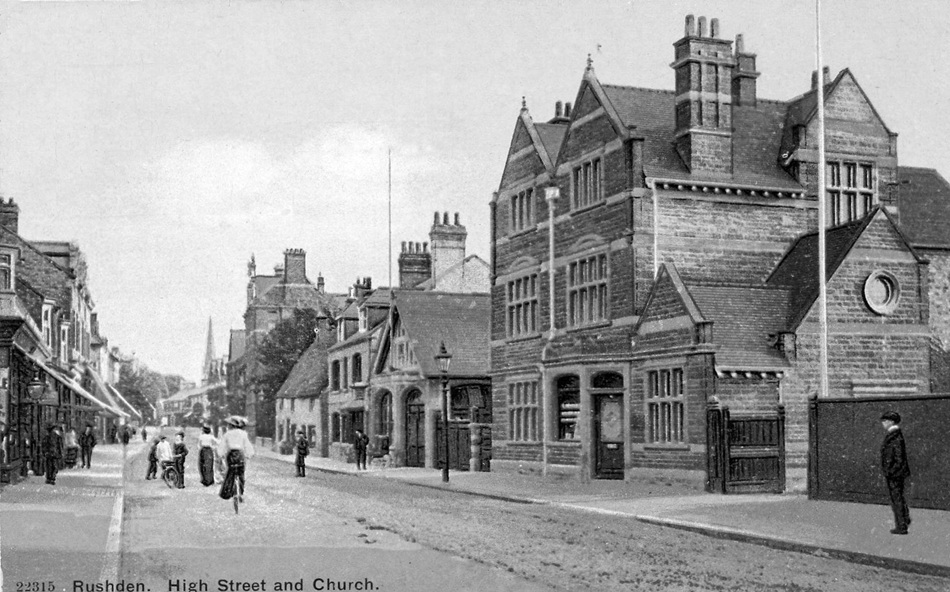
Stonehurst, built in 1896 and demolished in 1976
Just a few yards further along is the Railway Inn. This was originally called the New Inn but the name was changed when the railway passenger service arrived. Since that time it has had many names but in 2011 it was taken over by Wetherspoons, extended, and reverted to the Railway Inn.

The Railway Inn
The talk took our visitor along the High Street, making a brief detour into College Street to the Ritz Cinema. This cinema was opened in 1936 and closed in 1982 the owners blaming the recession, illegal pirate videos and changing leisure habits. It became a bingo hall and that closed in 2022.
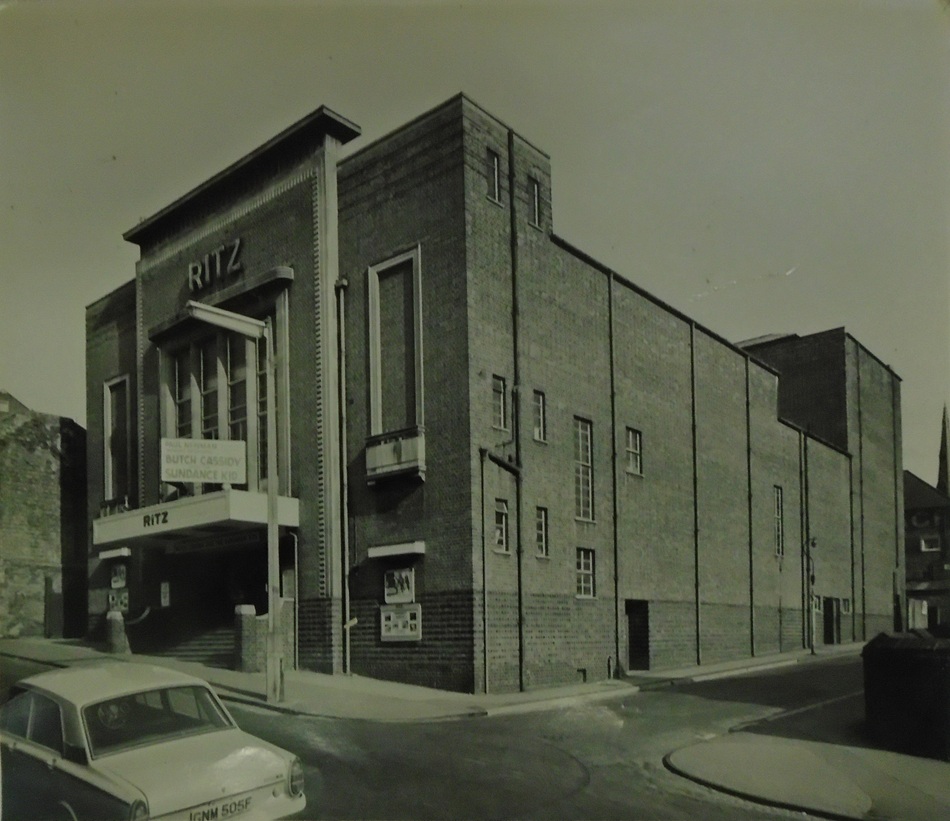
The Ritz Cinema which opened in 1936
The walk continues along the High Street to St. Mary’s Church, and then turns down Church Street. Looking back up Church Street the Congregational Church can be seen, which is now the Salvation Army. The church was built in 1888 the first service being held in May. The Salvation Army took over the building in 1949.
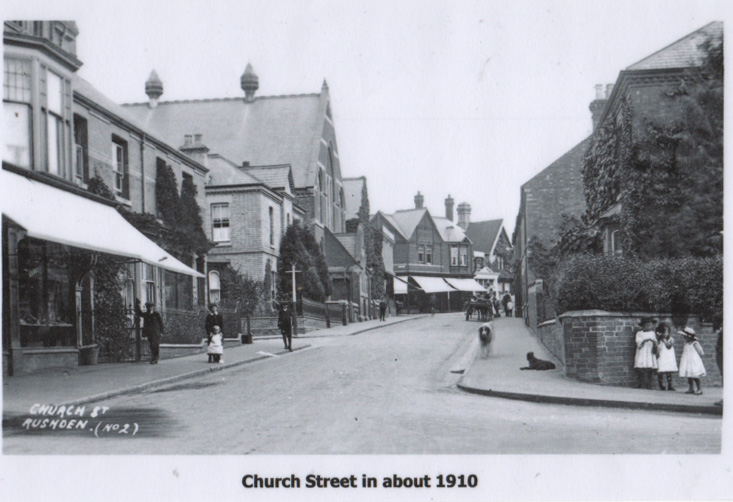
Church Street showing the Congregational Church
Our visitor is then taken passed the Lightstrung Garage and into Duck Street where the tour ends with Imperial House, the offices of ‘Totectors’ who made safety footwear. This is now the site of Imperial Court.

The Lightstrung Garage on the left of the picture
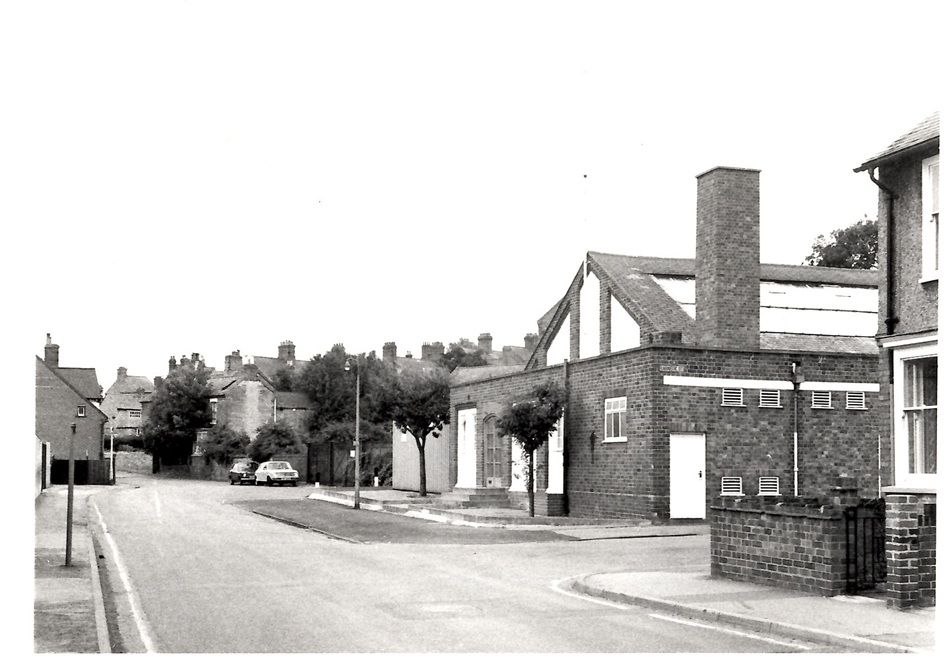
Duck Street and Imperial House the offices of ‘Totectors’
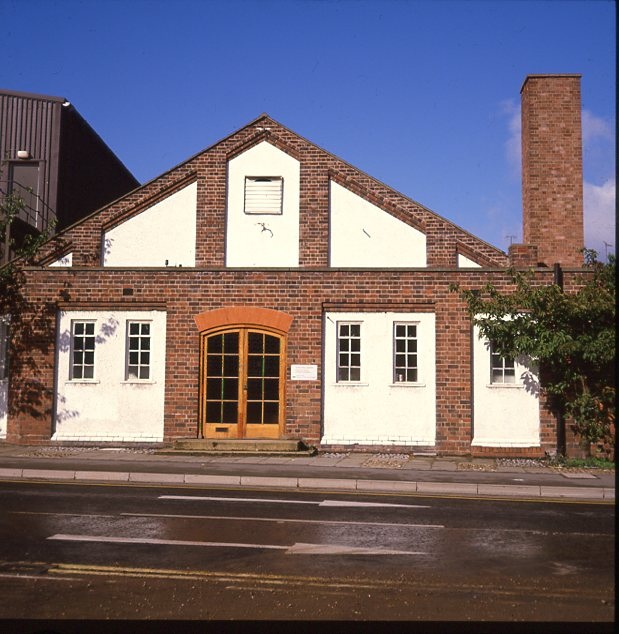
Imperial House
This is just a part of the talk given to the residents. Only the town centre is covered, a small part of the town, but they seemed to enjoy it and we enjoyed meeting them and hearing some of their memories.
We hope to be able to visit them again and cover another part of the town.